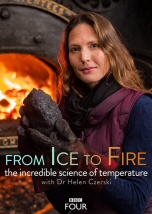
Physicist Dr Helen Czerski journeys to the extremes of the temperature scale, where the everyday laws of physics break down and a new world of scientific possibilities begins. In the first part, Frozen Solid, Helen reveals how cold has shaped the world around us and why frozen doesn't mean what you think it does. She meets scientists pushing temperature to the limits of cold, driving technologies such as superconductors. The second part, A Temperature for Life, explores the narrow band of temperature that has led to life on Earth, how life began where hot meets cold and how every living creature depends on temperature for survival. In the last part, Playing with Fire, Helen Czerski explores the science of heat. She reveals how heat is the hidden energy contained within matter with the power to transform it from state to state.
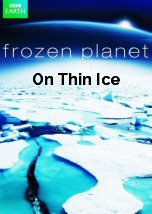
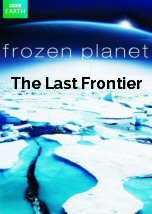
Sir David Attenborough journeys to both Polar Regions to investigate what rising temperatures will mean for the people and wildlife that live there and for the rest of the planet. David starts out at the North Pole, standing on sea ice several metres thick, but which scientists predict could be Open Ocean within the next few decades. The Arctic has been warming at twice the global average, so David heads out with a Norwegian team to see what this means for polar bears. He comes face-to-face with a tranquilised female, and discovers that mothers and cubs are going hungry as the sea ice on which they hunt disappears. In Canada, Inuit hunters have seen with their own eyes what scientists have seen from space; the Arctic Ocean has lost 30% of its summer ice cover over the last 30 years. For some, the melting sea ice will allow access to trillions of dollars worth of oil, gas and minerals. For the rest of us, it means the planet will get warmer, as sea ice is important to reflect back the sun's energy. Next David travels to see what's happening to the ice on land: in Greenland, we follow intrepid ice scientists as they study giant waterfalls of meltwater, which are accelerating iceberg calving events, and ultimately leading to a rise in global sea level. Temperatures have also risen in the Antarctic - David returns to glaciers photographed by the Shackleton expedition and reveals a dramatic retreat over the past century. It's not just the ice that is changing - ice-loving adelie penguins are disappearing, and more temperate gentoo penguins are moving in. Finally, we see the first ever images of the largest recent natural event on our planet - the break up of the Wilkins Ice Shelf, an ice sheet the size of Jamaica, which shattered into hundreds of icebergs in 2009.
The documentary series reveals the extraordinary riches and wonders of the Polar Regions that have kept people visiting them for thousands of years. Today, their survival relies on a combination of ancient wisdom and cutting-edge science. Most Arctic people live in Siberia, either in cities like Norilsk - the coldest city on earth - or out on the tundra, where tribes like the Dogan survive by herding reindeer, using them to drag their homes behind them. On the coast, traditional people still hunt walrus from open boats - it is dangerous work, but one big walrus will feed a family for weeks. Settlers are drawn to the Arctic by its abundant minerals; the Danish Armed Forces maintain their claim to Greenland's mineral wealth with an epic dog sled patrol, covering 2,000 miles through the winter. Above, the spectacular northern lights can disrupt power supplies so scientists monitor it constantly, firing rockets into it to release a cloud of glowing smoke 100 kilometres high. In contrast, Antarctica is so remote and cold that it was only a century ago that the first people explored the continent. Captain Scott's hut still stands as a memorial to these men. Science is now the only significant human activity allowed; robot submarines are sent deep beneath the ice in search of new life-forms, which may also be found in a labyrinth of ice caves high up on an active volcano. Above, colossal balloons are launched into the purest air on earth to detect cosmic rays. At the South Pole there is a research base designed to withstand the world's most extreme winters. Cut off from the outside world for six months, the base is totally self-sufficient, even boasting a greenhouse.
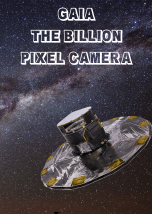
The Milky Way, our galaxy, is a magnificent sight in the night sky, but we know surprisingly little about it for certain. What is its shape? How many stars does it actually contain? What lies at its centre? The Gaia space telescope will answer these questions, being armed with the most advanced camera to leave our planet, and it will allow us to see our galaxy as we've never seen it before. The Sky at Night visits the factory in Chelmsford that made the astonishing sensor at the heart of the mission.
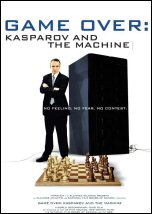
Garry Kasparov is arguably the greatest chess player who has ever lived. In 1997 he played a chess match against IBM's computer Deep Blue. Kasparov lost the match. This film shows the match and the events surrounding it from Kasparov's perspective. It delves into the psychological aspects of the game, paranoia surrounding it and suspicions that have arisen around IBM's true tactics. It consists of interviews with Kasparov, his manager, chess experts, and members of the IBM Deep Blue team, as well as original footage of the match itself.
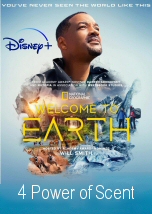
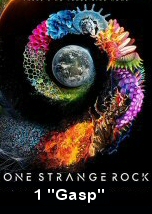
The extraordinary story of Earth and why it is special and uniquely brimming with life among a largely unknown but harsh cosmic arena. It will be told by eight astronauts from their unique perspective of being away from Earth. In the first episode, Astronaut Chris Hadfield reveals the unlikely and unexpectedly interconnected systems that allow life on our planet to breathe.









The second part, A Temperature for Life, explores the narrow band of temperature that has led to life on Earth, how life began where hot meets cold and how every living creature depends on temperature for survival. In the last part, Playing with Fire, Helen Czerski explores the science of heat. She reveals how heat is the hidden energy contained within matter with the power to transform it from state to state.