We as humans often question the creation of the universe. How was the universe created? How does it work? This series uses global experts from organizations like NASA and CERN to help us understand how this works, and uses CGI to demonstrate the phenomena. Episode 1 starts the new season as we dive deep into the black holes. The galaxy M87 is known for having at the core a super massive black hole. This black hole is the first ever photographed and we will witness the experts trying to find out the secrets of this famous black hole. In the meantime, they have overcome the scorching winds and death ray jets. And of all its hurdles, the event horizon will be the most difficult. This place is known for its uniqueness of time and space, where time stays still while the laws of physics fail.
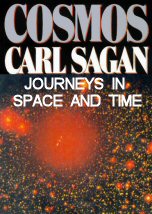
Ideas about time and space are explored in the changes that constellations undergo over time, the redshift and blue shift measured in interstellar objects, time dilation in Albert Einstein's theory of relativity, the designs of both Leonardo da Vinci and spacecraft that could travel near light speed, time travel and its hypothetical effects on human history, the origins of the Solar System, the history of life, and the immensity of space. In Cosmos Update, the idea of faster-than-light travel by wormholes (researched by Kip Thorne and shown in Sagan’s novel Contact) is discussed.
This documentary journeys with the scientists into the heart of a giant. Juno is the Nasa mission designed to peer through Jupiter's swirling clouds and reveal the wonders within. By projecting a 70-foot-wide, life-size Juno on a Houston rooftop, Scott Bolton, head of Juno, shows us how its fragile electronics are encased in 200kg of titanium. As Scott puts it, 'we had to build an armoured tank to go there.' Professor Andrew Ingersoll, Juno's space weatherman, reveals they have seen lightning inside Jupiter, perhaps a thousand times more powerful than Earth's lightning. This might be evidence for huge quantities of water inside Jupiter. Under the extreme conditions of Jupiter thousands of miles under the surface, hydrogen becomes a liquid metal. Juno is finding out how much liquid metallic hydrogen is inside Jupiter, and scientists hope to better understand how this flowing metal produces the most powerful aurora in the Solar System. But what is at Jupiter's heart? In Nice, Prof Tristan Guillot explains how Juno uses gravity to map the planet's centre. This can take scientists back to the earliest days of the solar system, because Jupiter is the oldest planet and it should contain clues to its own creation. By chalking out an outline of the Jupiter, Tristan reveals there is a huge rocky core - perhaps ten times the mass of Earth.
Across the universe, galaxies are going dark, and scientists don't know why the stars are losing their shine. Something is slowly drawing the curtains closed on the universe. Our milky way is under threat. Astronomers race against time to uncover the truth behind how galaxies are born and how they die before all of the lights go out.
Written and presented by David Attenborough, who said: 'One of the most wonderful things about filming plants is that you can reveal hidden aspects of their lives, you can capture the moment as one plant strangles another, and as they burst into flower. But whilst time-lapse photography allows you to see things that no human being has ever seen before". David begins his journey inside the magnificent Palm House, a unique global rainforest in London. Here, he explores the extraordinary plants that are so well adapted to wet and humid environments and unravels the intimate relationships between wet zone plants and the animals that depend on them. It was in the wet zones of the world that plants first moved on to land and in the Waterlily House David reveals how flowers first evolved some 140 million years ago. Watching a kaleidoscope of breath-taking time-lapses of these most primitive of flowers swelling and blooming in 3D, he is able to piece together the very first evolutionary steps that plants took to employ a wealth of insects to carry their precious pollen for the first time. David discovers clues to answer a question that even had Charles Darwin stumped: how did flowering plants evolve so fast to go on to colonise the entire planet so successfully?
In March 2022, the Russian army was closing in on the Ukrainian capital of Kyiv, and it was expected to fall in a short period of time. But in fact, many citizens chose to remain in their beloved city and provide resistance in whatever way they could. Despite daily missile attacks and the fear of an impending urban war, they were united in their efforts to protect their freedom and democracy. This documentary looks at the people of Kyiv through the eyes of a Ukrainian filmmaker.

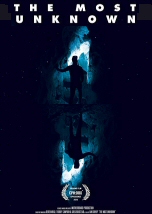











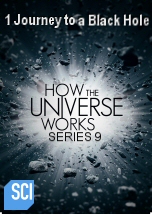





Episode 1 starts the new season as we dive deep into the black holes. The galaxy M87 is known for having at the core a super massive black hole. This black hole is the first ever photographed and we will witness the experts trying to find out the secrets of this famous black hole. In the meantime, they have overcome the scorching winds and death ray jets. And of all its hurdles, the event horizon will be the most difficult. This place is known for its uniqueness of time and space, where time stays still while the laws of physics fail.