



Last Watched

"EU"  Sort by

The Genius of Charles Darwin: The Fifth Ape

   2008    Culture
Richard Dawkins deals with some of the philosophical and social ramifications of the theory of evolution. Dawkins starts out in Kenya, speaking with palaeontologist Richard Leakey. He then visits Christ is the Answer Ministries, Kenya's largest Pentecostal church, to interview Bishop Bonifes Adoyo. Adoyo has led the movement to press Kenya's national museum to sideline its collection of hominid bones pointing to man's evolution from ape to human.[5] The collection includes the Turkana Boy discovered by Kamoya Kimeu, a member of a team led by Richard Leakey in 1984. Dawkins discusses social darwinism and eugenics, explaining how these are not versions of natural selection, and that 'Darwin has been wrongly tainted'. He then meets with evolutionary psychologist Steven Pinker to discuss how morals can be compatible with natural selection. He goes on to explaining sexual selection, with peafowls as an example. To find out whether sexual selection plays a role for altruism and kindness among humans, he visits women who are looking for sperm donors, as well as a sperm bank manager. Dawkins also explains kin selection and selfish genes.
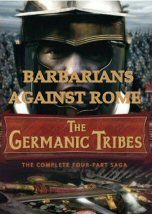
The Germanic Tribes: Barbarians Against Rome

   2007    History
This acclaimed multi-million dollar 4 part series shows the rise of the tribes of a primitive culture on the fringe of northern Europe to become the heirs of the Roman Empire. Since the age of Caesar this Roman-Germanic conflict was characterized not only by fierce battles but also by phases of co-existence & cooperation. the Germans dug the grave of the Roman Empire, but were also the preserves of the Roman legacy.
Series: The Germanic Tribes

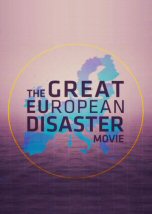
The Great European Disaster Movie

   2015    Science
Annalisa Piras and former editor of The Economist Bill Emmott, which explores the crisis facing Europe. Through case studies of citizens in different countries, the film explores a range of factors that have led to the present crisis, economic and identity challenges across Europe. High-level experts analyse how and why things are going so wrong. The film includes fictional scenes, set in a post-EU future, which feature archaeologist Charles Granda (played by Angus Deayton) travelling on a flight through a menacing storm, explaining to a child passenger what the EU was. Sombre, thought-provoking and witty, the film frames Europe through the eyes of those who have most at stake - the Europeans themselves.

The Incredible Human Journey: Australia

   2009    History
Dr Alice Roberts looks at our ancestors' seemingly impossible journey to Australia. Miraculously preserved footprints and very old human fossils buried in the outback suggest a mystery: that humans reached Australia almost before anywhere else. How could they have travelled so far from Africa, crossing the open sea on the way, and do it thousands of years before they made it to Europe? The evidence trail is faint and difficult to pick up, but Alice takes on the challenge. In India, new discoveries among the debris of a super volcano hint that our species started the journey much earlier than previously thought, while in Malaysia, genetics points to an ancient trail still detectable in the DNA of tribes today. Alice travels deep into the Asian rainforests in search of the first cavemen of Borneo and tests out a Stone Age raft to see whether sea travel would have been possible thousands of years ago, before coming to a powerful conclusion.
Series: The Incredible Human Journey

The Incredible Human Journey: Europe

   2009    History
When our species first arrived in Europe, the peak of the Ice Age was approaching and the continent was already crawling with a rival: stronger, at home in the cold and even (contrary to their popular image) brainier than us. So how did the European pioneers survive first the Neanderthals and then the deep freeze as they pushed across the continent? Alice Roberts reconstructs the head of the 'first European' to come face to face with one of our ancestors; she discovers how art became crucial for survival in the face of Neanderthal competition; and what happened to change the skin colour of these European pioneers from black to white.
Series: The Incredible Human Journey

The Irrational Health Service

       Medicine
Richard Dawkins examines the growing suspicion the public has for science-based medicine, despite its track record of successes like the germ theory of disease, vaccines, antibiotics and increased lifespan. He notes a fifth of British children are currently not immunised against measles, mumps and rubella, attributing it to fears arising from a highly controversial report linking the vaccine with autism. Dawkins criticizes the growing field of alternative medicine which does not pass the same objective and statistical rigour as scientifically derived treatments using controlled double-blind studies. Without verifiable evidence, alternative therapies must rely on biased anecdotes and word of mouth to perpetuate. Dawkins observes these treatments have fanciful rationales and rituals behind them, with many alternative treatments employing pseudoscientific jargon such as "energy", "vibration" or "quantum theory" to give themselves greater credence to patients.
Series: Enemies of Reason
Cosmos

Cosmos

1980  Science
Generation Iron

Generation Iron

2018  History
Hiroshima

Hiroshima

2005  History
The Last Dance

The Last Dance

2020  Culture
Reel Rock

Reel Rock

2014  Culture
Becoming Human

Becoming Human

2010  History