Charles Franz talks about his relationship with Father Maskell as a young student and reveals what he knows about the Church’s involvement with Maskell. Cathy’s sister sees the necklace given by Edgar Davidson and questions if it has significance. Potential DNA and evidence could exist for the crime, and the police might be forced to act. A push for victims’ rights in Maryland goes to a committee but getting justice might be more difficult... and time doesn’t stand still for anyone.
Richard Dawkins deals with some of the philosophical and social ramifications of the theory of evolution. Dawkins starts out in Kenya, speaking with palaeontologist Richard Leakey. He then visits Christ is the Answer Ministries, Kenya's largest Pentecostal church, to interview Bishop Bonifes Adoyo. Adoyo has led the movement to press Kenya's national museum to sideline its collection of hominid bones pointing to man's evolution from ape to human.[5] The collection includes the Turkana Boy discovered by Kamoya Kimeu, a member of a team led by Richard Leakey in 1984. Dawkins discusses social darwinism and eugenics, explaining how these are not versions of natural selection, and that 'Darwin has been wrongly tainted'. He then meets with evolutionary psychologist Steven Pinker to discuss how morals can be compatible with natural selection. He goes on to explaining sexual selection, with peafowls as an example. To find out whether sexual selection plays a role for altruism and kindness among humans, he visits women who are looking for sperm donors, as well as a sperm bank manager. Dawkins also explains kin selection and selfish genes.
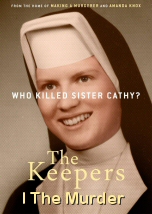
A seven-part docuseries about the unsolved murder of a nun and the horrific secrets and pain that linger nearly five decades after the death of her. In the first episode, two former students launch a dogged investigation into the cold case of Sister Catherine Cesnik, who was slain in Baltimore in 1969.
Jean Hargadon Wehner discusses how she came to remember years later the sexual abuse she suffered at Archbishop Keough High School. She also talks about what happened when she reported the abuse to Church officials and how she realized she was connected to the death of Sister Cathy Cesnik. As the can of worms is opened on the hidden world in the high school and the people begin to talk about what happened behind closed doors. With the Jean’s accusations, Abbie Schaub, Gemma Hoskins, and Tom Nugent learn about a story of a graveyard and a source nicknamed 'Deep Throat' who could hold the key.
Former students of Archbishop Keough High School reveal allegations of sexual abuse by Father Joseph Maskell, the chaplain of the school. It details the personal story of 'Jane Doe' (Jean Hargadon Wehner) who claims that Father Maskell took her to see the dead body of Sister Catherine Cesnik in Lansdowne, Maryland.
It's a timeless classic of children's literature and the third most-quoted book in English after the Bible and Shakespeare. But what lies behind the extraordinary appeal of Alice's Adventures in Wonderland to generations of adults and children alike? To mark the 150th anniversary of its publication, this documentary explores the life and imagination of the man who wrote it, the Reverend Charles Dodgson, better known as Lewis Carroll." Broadcaster and journalist Martha Kearney delves into the biographies of both Carroll himself and of the young girl, Alice Liddell, who inspired his most famous creation. Kearney's lifelong passion for Carroll's work began as a young girl, when she starred as Carroll's heroine Alice in her local village play. She discusses the book with a range of experts, biographers and distinguished cultural figures - from the actor Richard E Grant to children's author Philip Pullman - and explores with them the mystery of how a retiring, buttoned-up and meticulous mathematics don, who spent almost his entire life within the cloistered confines of Christ Church Oxford, was able to capture the world of childhood in such a captivating way












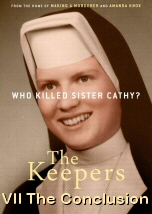




Potential DNA and evidence could exist for the crime, and the police might be forced to act. A push for victims’ rights in Maryland goes to a committee but getting justice might be more difficult... and time doesn’t stand still for anyone.