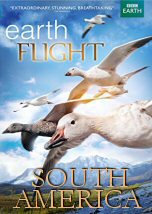
From space, Earth is a kaleidoscope. Turquoise plankton blooms trigger a feeding frenzy, China turns yellow with rapeseed flowers, and mysterious green lights appear in the ocean. Satellites give us a new perspective on its greatest and most beautiful spectacles allowing us to make new discoveries We can watch landscapes change through the seasons and marvel in the scale of their transformations. Satellite cameras capture a kaleidoscope of extraordinary colours surprising and constantly changing, created by natural phenomena, by animals and by people. These colours are revealing new insight into the health of our fragile planet, transforming our understanding of our colourful home.
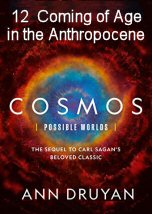
At 11 o'clock on New Year's Eve of the Cosmic Calendar, Homo erectus stood up for the first time, freeing its hands and earning the species its name. They began to move around, to explore, daring to risk everything to get to unknown places. Our Neanderthal relatives lived much as we did and did many of the things we consider to be 'human.' More restless than their cousins the Neanderthals and Denisovans, our Homo sapiens ancestors crossed seas and unforgiving landscapes, changing the land, ocean and atmosphere, leading to mass extinction. The scientific community gave our age a new name, 'Anthropocene.' Since the first civilizations we've wondered if there's something about human nature that contains the seeds of our destruction. Syukuro Manabe was born in rural Japan and took an intense interest in Earth's average global temperature. In the 1960's, he would assemble the evidence he needed to predict the increase of Earth's temperature due to greenhouse gases until it becomes an uninhabitable and toxic environment, leading to our extinction. 'This doesn't have to be,' says Neil deGrasse Tyson, 'it's not too late. There's another hallway, another future we can still have; we'll find a way.'
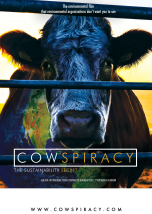
Follow the shocking, yet humorous, journey of an aspiring environmentalist, as he daringly seeks to find the real solution to the most pressing environmental issues and true path to sustainability. Discover 'The Facts' http://www.cowspiracy.com/facts
In fifth episode, you can witness how wildlife ingeniously adapts to the bustling human landscapes of Asia. Marvel at tigers establishing territories within urban areas, elephants halting traffic in search of food, and observe how 300 giant monitor lizards thrive in a central Bangkok park. Discover flying squirrels nesting in Taipei schools, proboscis monkeys venturing closer to human settlements, and swifts in Jerusalem competing for nesting sites. This story offers a captivating glimpse into the extraordinary resilience and adaptability of animals coexisting with dense human populations.
In a far cry from the steamy jungles of Rwanda or the icy waters of the Arctic, British naturalist Sir David Attenborough has donned a necktie and met with US president Barack Obama to discuss climate change and the future of the planet. The two met at the White House — a place the naturalist had never yet explored — on Sir David's 89th birthday in May to film the interview". It was the first time the respected wildlife filmmaker had met an American president and he seemed a little awed by the experience. Mr Obama, who grew up watching Sir David's programs, seemed equally thrilled. The president has the environment and climate change on his radar and is anxious to see progress made as his presidency comes to a close. He faces stiff opposition from Republicans in Congress on his plans to tackle climate change, but remains determined to make changes before leaving office. "I don't have much patience for anyone who denies that this challenge is real," he said. "We don't have time for a meeting of the Flat Earth Society." Sir David, who has been called "the godfather of natural history TV" by the BBC, brought to the meeting six decades dedicated to sharing the wonders of the natural world with television audiences. After initially being rejected for television because his teeth were deemed "too big", Sir David went on to make his Life on Earth television series, which has been watched by more than 500 million people worldwide. His name is now synonymous with nature, conservation and wildlife. During the television interview, the men discussed global warming, renewable energy and how children and young people hold the key to reversing the damage.
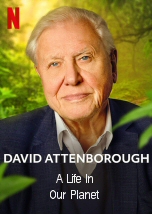
One man has seen more of the natural world than any other. This unique feature documentary is his witness statement. In his 93 years, David Attenborough has visited every continent on the globe, exploring the wild places of our planet and documenting the living world in all its variety and wonder. Now, for the first time he reflects upon both the defining moments of his lifetime as a naturalist and the devastating changes he has seen. Honest, revealing and urgent, this film is a powerful first-hand account of humanity's impact on nature and a message of hope for future generations.











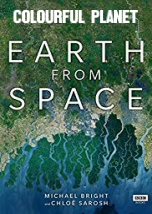






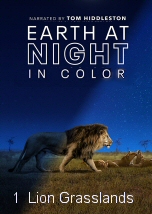


Satellite cameras capture a kaleidoscope of extraordinary colours surprising and constantly changing, created by natural phenomena, by animals and by people. These colours are revealing new insight into the health of our fragile planet, transforming our understanding of our colourful home.