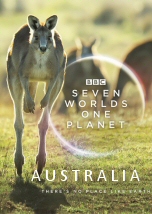
The fourth episode of the series takes viewers on a fascinating journey through the unique and diverse landscapes of Australia, a continent that drifted apart during the time of the dinosaurs. Isolated for millions of years, the weird and wonderful animals marooned here are like nowhere else on Earth. From the vast deserts to lush rainforests, this episode showcases the incredible wildlife that calls this continent home. The film highlights the fascinating behaviors and adaptations of Australia's native animals, including the elusive dingo, kangaroos, and the iconic Tasmanian devil. It also sheds light on the challenges these creatures face in a rapidly changing world, emphasizing the impact of human activities on their survival and underscoring the importance of preserving these environments and the incredible creatures that inhabit them. The stunning cinematography and intimate footage capture the beauty and struggles of Australia's wildlife, making this documentary a visual treat and a must-watch for anyone interested in wildlife and conservation.
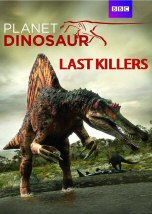
In late Cretaceous Canada, in what will be known as Dinosaur Provincial Park, a Daspletosaurus stalks a Chasmosaurus in a forest, but loses the element of surprise and is forced to retreat. The Chasmosaurus comes across a younger Daspletosaurus, before being ambushed by a group of the tyrannosaurids. The episode then cuts to the high Arctic, where Edmontosaurus are hunted by a large species of Troodon. The theropods attack at night, separating a juvenile from the herd and severely wounding it, only to be driven away by an adult. In the morning, they return to eat the carcass of the juvenile, which died during the night. The episode returns to the Daspletosaurus, who chase and bring down the Chasmosaurus. The larger adults bully the youngsters off the carcass, forcing them to wait until they have finished. The episode then cuts to Madagascar, where a mother Majungasaurus (an Abelisaurid) and her two offspring chase a group of Rahonavis off a carcass. However, they are temporarily driven off themselves by a male Majungasaurus. But, after he steals some food from one of the young, the female attacks him, before she and her young cannibalise his body. The episode returns once again to North America, where the Daspletosaurus are waiting for the annual migration of Centrosaurus. They attack during a rainstorm, killing some of the ceratopsians. The Centrosaurus make it to a flooded river and begin to swim across, and although many make it to the other side, some are caught by giant crocodilians or are severely wounded by floating debris and thus drown, or drown for unseen reasons. In the morning, the carcasses attract scavengers, including the Daspletosaurus. A montage is then shown of Daspletosaurus and Majungasaurus, the narrator saying that together, the tyrannosaurids and abelisaurids were the last of the killer dinosaurs.
Dinosaurs ruled the earth for 150 million years, then suddenly they were gone. Their disappearance is one of the planet’s greatest mysteries – unimaginable, until now. The film proposes a minute-by-minute chronology of the Chicxulub impact and its effect on the dinosaurs and other animals around the world. A blow-by-blow account of the cataclysm that ended the reign of the dinosaurs, and forever changed the course of life on Earth.
SETTING: 72 million years ago, near present-day Montana. As a young male daspletosaurus, it's Das' job to herd unsuspecting prey towards the rest of the pack. But he's easily distracted and ruins several hunts getting him in deep trouble with his mother, the pack leader. When a volcano threatens, the dinosaurs are unprepared.
Planet Dinosaur is sure to please budding paleontologists and older dinosaur fans alike. Narrated by John Hurt, more than 50 different prehistoric species featured in this series and they and their environments were created entirely as computer-generated images. The first episode is 95 million years ago, Late Cretaceous in North Africa. We will see Ouranosaurus, Spinosaurus, Onchopristis (a giant sawfish), Rugops, Carcharodontosaurus, Sarcosuchus, pterosaur.
Sir David Attenborough reveals how Mammals have conquered the Earth, uncovering the secrets to their success with their winning design, incredible adaptability, unrivalled intelligence, and unique sociability. 66 million years ago, when the reign of the dinosaurs came to an end, mammals were set free to exploit every corner of the planet. Mammals reveals the strategies, behaviours and traits that lie behind the astonishing success of this remarkable group of animals. Above all, the series celebrates the amazing intelligence that enables mammals to learn, remember, problem-solve, parent, and co-operate. Experience the complete six-episode series in a single video, showcasing how mammals have adapted to thrive in every major environment on Earth. They inhabit every ocean and continent, from frozen wildernesses and dense jungles to baking deserts, the dark depths of the ocean, and even the skies above our forests.



















The stunning cinematography and intimate footage capture the beauty and struggles of Australia's wildlife, making this documentary a visual treat and a must-watch for anyone interested in wildlife and conservation.