The film unlocks the secrets to an innovative concept called circularity, an economic system based on the idea that nothing should go to waste. It's a deceptively simple idea that is at the heart of nature and the natural world, but very few of us actually live this way. And yet, it has the potential to save our planet's resources and save us from the ravages of future climate change. The film tells the story of four visionaries from around the world, whose thinking shapes and informs the concept of circularity: 102-year-old inventor Dr. James Lovelock, biomimicry biologist Janine Benyus, engineer and designer Arthur Huang, and financier John Fullerton. The extraordinary experiences of these very different people changed the way they think about humanity's future. Through the deeply personal transformation of each visionary profiled, the film explores concrete solutions individuals and communities are using to move toward a more circular society, rethinking everything from our food, our cities, our financial system, even our fashion industry.
In this mind-bending series, Professor Jim Al-Khalili explores the vast range of size in the universe, from tiny atoms to gigantic, interconnected galaxies. In the first episode, Jim will enter the world of objects that are too tiny to glimpse with the naked eye. Starting with the smallest insects, he moves on to encounter living cells with amazing superpowers and confronts some of humanity's deadliest enemies in the form of viruses. Going smaller still, he encounters wondrous new nanomaterials such as graphene, discovered by physicist Andre Geim. These are revolutionising engineering, medicine, computing, electronics and environmental science. Finally, Jim comes face to face with the fundamental building blocks of the world around us – atoms – and reveals why understanding the science of the 'small' is crucial to the future of humanity.
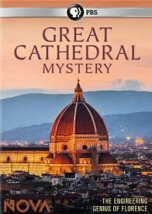
The dome that crowns Florence's great cathedral of Santa Maria del Fiore, the Duomo, is a masterpiece of Renaissance ingenuity and an enduring source of mystery. Still the largest masonry dome on earth, it is taller than the Statue of Liberty and weighs as much as an average cruise ship. Historians and engineers have long debated how its architect, Filippo Brunelleschi, kept the dome perfectly aligned and symmetrical as the sides rose and converged toward the center." More than four million bricks could collapse at any moment -- and we still don't understand how Brunelleschi prevented it. To test the latest theories, a team of U.S. bricklayers will help build an experimental "mini-Duomo" using period tools and techniques.
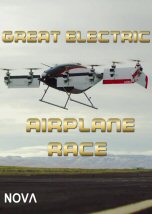
Can new emission-free electric planes replace our polluting airliners and revolutionize personal transportation in our cities? The film takes a ride in some quiet, energy-efficient, prototypes that are vying for success as electric flight takes off. The race is on to stop the climate emergency and we're seeing more and more people really paying attention to their carbon footprint. Aviation is a fast-growing offender, but is it too slow to respond. Could rapid progress in electric technology change the equation?
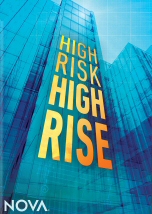
Can skyscrapers be made safer, more efficient, and livable in our rapidly growing cities? Skyscrapers are gleaming symbols of prestige, and an ingenious way to save space in dense urban areas. But as buildings rise ever higher, what are the risks of these architectural behemoths? Do we truly know how they will hold up in earthquakes, fires and wind? What have--or haven’t—we learned from past tragedies? But even as we devise ways to defend them against potential disasters, can we also make them more livable, interactive, and eco-friendly?
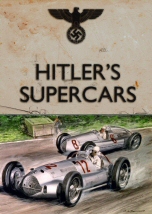
The film tells the story of the ill-fated Nazi Land Speed record attempts. This is a story of engineering excellence, Grand Prix racing, Nazi propaganda, celebrity, and an intense rivalry which would leave a speed record unbroken for 79 years and one of Nazi Germany's best racing drivers dead. During the rise of the Third Reich two German car manufacturers were ordered to build the most high performance vehicles the world had ever seen. What followed was a rivalry that would reap Grand Prix victories, international domination that was a propaganda coup, and provide world fame to its drivers who risked their lives smashing speed records that would stand for 79 years. All under the direct orders of the Fuhrer himself. Bugatti and Alfa Romeo dominated racing before 1934. But the years from 1934 to 1939 were six tumultuous years in which Grand Prix racing was dominated by the German Auto Union, the arranged marriage of Audi, Horch, Wanderer, and DKW, and Mercedes-Benz teams and provided a spectacle of speed, sound and fury never previously attained and never since matched. There are few periods of racing that have excited as much interest, event attendance and sophistication of equipment as the era of the Silver Cars. They were so far ahead of their time that many of their accomplishments were not duplicated until Mercedes went racing again in the early 1950s. There is also something about men who faced the challenges of staying in a cockpit of a highly sophisticated machine capable of 200 mph with no safety systems. They were giants and among them were Italian Tazio Nuvolari and two greatest German pilots of the thirties, Rudolf Caracciola of Mercedes and Auto Union's Bernd Rosemeyer who duelled with faster, more innovative and sleeker machines, developed in wind tunnels. This special documentary charts the rise of Nazi Germany's dominate 'Silver Arrow' Grand Prix and Speed Record cars of the 1930's. Leading motor racing and World War 2 experts James Holland, Richard Williams, Eberhard Reuss and Chris Routledge tell the story of the Nazi funded Auto Union and Mercedes Benz 'National Racing Cars'. Hitler's Supercars interweaves the rise of the Third Reich with the racing exploits it funded and what propaganda messages these racing cars where sending.








The film tells the story of four visionaries from around the world, whose thinking shapes and informs the concept of circularity: 102-year-old inventor Dr. James Lovelock, biomimicry biologist Janine Benyus, engineer and designer Arthur Huang, and financier John Fullerton. The extraordinary experiences of these very different people changed the way they think about humanity's future.
Through the deeply personal transformation of each visionary profiled, the film explores concrete solutions individuals and communities are using to move toward a more circular society, rethinking everything from our food, our cities, our financial system, even our fashion industry.