











Last Watched

"Marine"  Sort by

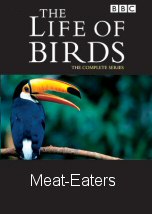
Meat-Eaters

   1998    Nature
This episode examines those birds whose sustenance comes from flesh and their methods of hunting. In New Zealand, Sir Attenborough observes Keas, parrots that do not eat meat exclusively, raiding a shearwater's burrow for a chick. However, it is the dedicated birds of prey, such as owls, buzzards, eagles, falcons and vultures, to which much of the programme is devoted. In order to spot and pursue their victims, senses of sight and hearing are very acute. Vultures are the exception, in that they eat what others have left, and once a carcass is found, so many birds descend on it that the carrion seems submerged beneath them. The Turkey Vulture is an anomaly within its group, as it also has a keen sense of smell. Eagles defend their territory vigorously, and a pair of sea eagles are shown engaging in an aerial battle. The Galápagos Hawk hunts Marine Iguanas, but can only do so when its quarry is vulnerable, during the breeding season. The African Harrier Hawk has adapted to extracting burrowing animals by virtue of an especially long, double-jointed pair of legs. By contrast, a shrike is not equipped with the requisite sharp beak and talons needed for butchery, and so dismembers its kill by impaling it on the thorns of acacias. The Lammergeier eats bones, and will drop them on to rocks from a great height in order to break them down to a digestible size. Also featured are the Eurasian Sparrowhawk, Goshawk and Peregrine Falcon.
Series: The Life of Birds
Mission Blue

       History
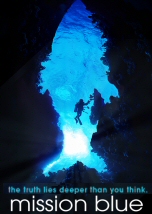
Legendary oceanographer and TED prize winner Dr. Sylvia Earle is on a mission to save our oceans. Mission Blue is part action-adventure, part expose of an Eco-disaster. More than 100 scientists, philanthropists and activists gather in the Galapagos Islands to help fulfill Dr. Earle's lifelong wish: build a global network of marine protected areas, like underwater national parks, to protect the natural systems that keep humans alive.
As the expedition ends, the Deep water Horizon oil well explodes. With oil gushing into the Gulf of Mexico, Sylvia and an environmental dream team race around the world trying to defend her 'Hope Spots'.

Navy of the Damned

       History
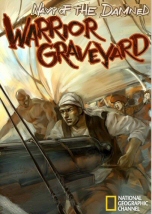
Recent archaeological sites in England offer a whole new perspective on the life and death of the seafarers and marines who built the British Empire in the 18th and 19th centuries. The bones of sailors reveal surprising and shocking facts. Apparently not only seasoned men but also half children did their service in the Royal Navy; according to the investigations, the youngest were no older than 13 years. A forensic archaeologist studies the injuries on bones discovered at the site of an battle and suggests how these people may have died.
Three-hundred-and-fifty skeletons, exhumed from Royal Navy graveyards from the age of Nelson's Navy, are throwing an extraordinary new light on how these sailors lived, fought, outwitted their enemy, and, from the oldest to youngest, suffered for victory. These men were the beating heart of the most victorious fleet in history and never have so many of these sailors' remains been available for forensic investigation.
Six remarkable stories stand out: the child sailor, the top man, the American gunner, the freed slave, the marine and the victim of the sailor's most dreaded disease: syphilis. Broken bones, amputations, injuries from blows with a saber or cutlass, sexually transmitted diseases, but also malnutrition - the list of causes of death is long. There is definitely no tale of seafaring romance. These fighters and sailors sailed the globe as cannon fodder, conquered an empire for the crown, and were themselves forgotten. No longer just bones in a box, the men of Nelson's Navy are back from the dead.
Series: Warrior Graveyard

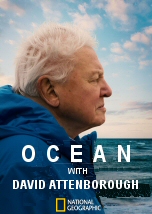
Ocean with David Attenborough

   2025    Nature    HD
Join David Attenborough on an extraordinary voyage into the hidden world beneath the waves. With unmatched storytelling and unparalleled access to remote ocean realms, he unveils a new era of marine discovery. Through breathtaking visuals and compelling narratives, the documentary exposes both the fragile beauty of ocean life and the grave challenges it faces. Yet, amid the threats, a powerful message of hope emerges — revealing nature's remarkable resilience and the inspiring efforts that could restore the oceans for future generations.

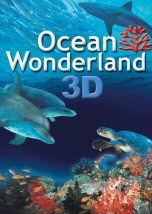
Ocean Wonderland 3D

   2003    Nature    3D    HD
The mission of the film is to underline the crucial ecological role of coral reefs play in maintaining the well being of our planet, and to point out and warn against the dangers that are destroying the world's coral reefs. Entirely filmed using digital technology, thanks to it, the film was shot almost entirely with natural light, thus showing the underwater world as it exactly is. This is the closest you can get to dive without being there. Shot on the Great Barrier Reef in Australia and in the Bahamas, it brings to you the amazing beauty of the many varieties of coral and the immense diversity of the marine life thriving there.

Oceans of the Solar System

   2016    Science
The oceans define the earth. They are crucial to life and we used to think that they were unique to our blue planet. But we were wrong. It has recently been discovered that there are oceans all over our solar system, and they are very similar to our own. And now scientists are going on an epic journey in search of new life in places that never seemed possible. Nasa is even planning to dive to the depths of a strange, distant ocean in a remarkable submarine. Discover that the hunt for oceans in space is marking the dawn of a new era in the search for alien life.