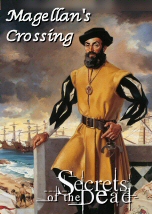
Ferdinand Magellan and Juan Sebastian Elcano set sail to gain control of the global spice trade, but end up becoming the first expedition to circumnavigate the earth. The yearslong voyage—along with the suffering, the violence and the loss of life and property—were all in pursuit of a shorter route to the so-called Spice Islands (now the Maluku Islands) and their much-coveted aromatics. The film puts in perspective the 16th century—the Age of Exploration, the Age of Discovery and the Age, problematically, of Colonialism. It also was an age of heroes. As the documentary insists, the journeys undertaken by the men whose names we learned in grade school and whose exploits straddled the 1400s and 1500s—including Ponce de Leon, Vasco da Gama, Lope de Aguirre and even Columbus—were about money, sometimes trade, sometimes plunder. But just as advances in medicine have often been propelled by war, knowledge about the world has been a byproduct of profit-seeking. Likewise, heroism.
Alex Gibney explores the charged issue of pedophilia in the Catholic Church, following a trail from the first known protest against clerical sexual abuse in the United States and all the way to the Vatican. The title is derived from the Latin phrase "mea maxima culpa". It is taken from the Confiteor that is part of the Roman Catholic Mass. It translates into English as "My most grievous fault" The film examines the abuse of power in the Catholic Church system through the story of four deaf men who set out to expose the priest who abused them during the mid-1960s. Each of the men brought forth the first known case of public protest against clerical sex abuse, which later lead to the sex scandal case known as the Lawrence Murphy case. Through their case the film follows a cover-up that winds its way from the row houses of Milwaukee, Wisconsin, through Ireland's churches, all the way to the highest office of the Vatican.
With the Doomsday Clock the closest it's ever been to midnight, Jane Corbin investigates the proliferation of nuclear weapons across the globe. She visits Los Alamos, home to the United States’ nuclear weapons development facility and the historic home of Oppenheimer’s Manhattan Project. In Scotland, she reveals the strategy behind Britain’s nuclear deterrent, and speaks to campaigners in Suffolk fighting against US weapons they fear will be based on UK soil. Jane also discovers how many of the global agreements and safeguards that have constrained the spread of nuclear weapons since the 1970s are breaking down. This is a story told by the scientists, investigators and diplomats who set the clock and have fought to ensure that the ultimate deterrent has not been used in over 70 years.
The power of visual storytelling is not a modern phenomenon, feature films today are using techniques developed way back in the distant past. For thousands of years, artists grappled with ways to bring their stories alive, to engage their audience. This is the story of how our ancient ancestors made the discoveries that have given films such a hold over our imaginations.
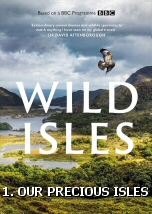
In the first episode, Sir David Attenborough reveals the unexpected wildlife riches of the British Isles, showcasing the dramatic and spectacular habitats that rival any across the globe. This journey uncovers the diversity of life in the UK's unique landscapes, from the intricate world of bumblebees to the swift lives of kingfishers. The episode captures extraordinary scenes of nature, including killer whales preying on seals, golden eagles in the Scottish mountains, the cunning tactics of woodland plants, and the perilous life of puffins evading gulls. It highlights Britain's geological diversity as a cornerstone of its natural wealth, contributing to an array of habitats and supporting a wide range of life. Britain's importance extends to being a haven for migratory birds, with our seas feeding 65% of the world's gannets and supporting the largest colony of northern gannets on Scotland's Bass Rock. The west coast of Scotland offers sanctuary to barnacle geese due to its abundant food and mild climate, though they remain vigilant against hunting sea eagles. Despite these natural treasures, Britain faces challenges as one of the most nature-depleted countries globally. Sir David Attenborough emphasizes the need to conserve and restore these wild isles for the enjoyment and benefit of future generations.
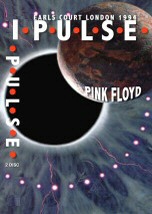
P.U.L.S.E is a Pink Floyd concert video taken from the 20 October 1994 concert at Earls Court, London. PULSE records the great psychedelic band Pink Floyd rocking out like only they can. Renowned for their hallucinatory special effects and lighting schemes, Pink Floyd goes all out at this spectacular (and very long) concert. Twenty-one of their classics are performed, including classic rock radio staples 'Dark Side of The Moon' and 'Wish You were Here". There was considerable delay in the release of the video edition of Pulse. The cause of the delays was reputed to be the continued modifications and additions to produce a high-quality release. The previous planned release date of 22 September 2005 for the two-disc DVD set was changed to 10 July 2006 for the UK and Europe, and 11 July 2006 everywhere else.








The film puts in perspective the 16th century—the Age of Exploration, the Age of Discovery and the Age, problematically, of Colonialism. It also was an age of heroes. As the documentary insists, the journeys undertaken by the men whose names we learned in grade school and whose exploits straddled the 1400s and 1500s—including Ponce de Leon, Vasco da Gama, Lope de Aguirre and even Columbus—were about money, sometimes trade, sometimes plunder. But just as advances in medicine have often been propelled by war, knowledge about the world has been a byproduct of profit-seeking. Likewise, heroism.