






Last Watched

"NES"  Sort by

Food Inc

   2009    Technology
Filmmaker Robert Kenner lifts the veil on our nation's food industry, exposing the highly mechanized underbelly that's been hidden from the American consumer with the consent of our government's regulatory agencies, USDA and FDA. Our nation's food supply is now controlled by a handful of corporations that often put profit ahead of consumer health, the livelihood of the American farmer, the safety of workers and our own environment. We have bigger-breasted chickens, the perfect pork chop, insecticide-resistant soybean seeds, even tomatoes that won't go bad, but we also have new strains of e coli--the harmful bacteria that cause illness for an estimated 73,000 Americans annually. We are riddled with widespread obesity, particularly among children, and an epidemic level of diabetes among adults Featuring interviews with such experts as Eric Schlosser (Fast Food Nation), Michael Pollan (The Omnivore's Dilemma) along with forward thinking social entrepreneurs like Stonyfield Farms' Gary Hirschberg and Polyface Farms' Joe Salatin, the film reveals surprising--and often shocking truths--about what we eat, how it's produced, who we have become as a nation and where we are going from here.

Forests

   2019    Nature    HD
The last episode examines the fragile interdependence that exists between forests' wide variety of residents, including bald eagles, hunting dogs and Siberian tigers.
Over half of all the world's trees, evergreen and deciduous, stand in great assemblies. For many of us, they are places of mystery and darkness. They are key to our climate, and home to countless unique species. The boreal forest contains 750 billion trees, and it stores over 40 percent of the world's carbon, making it a vital element in the fight against climate change. In the past, we have destroyed them without hesitation. Yet, forests do have an astonishing ability to recover. If we choose to give forests time and space, they could reclothe the earth with much of the rich and varied communities of animals and plants of which we have, so recently, robbed it. A future with more forests is key to the resilience of our planet.
Series: Our Planet

Forks Over Knives

       Medicine
The film examines the profound claim that most, if not all, of the degenerative diseases that afflict us can be controlled, or even reversed, by rejecting our present menu of animal-based and processed foods.
Despite the most advanced medical technology in the world, we are sicker than ever by nearly every measure. Cases of diabetes are exploding, especially amongst our younger population. About half of us are taking at least one prescription drug and major medical operations have become routine. Heart disease, cancer and stroke are the country's three leading causes of death, even though billions are spent each year to 'battle' these very conditions. Millions suffer from a host of other degenerative diseases. Could it be there's a single solution to all of these problems?

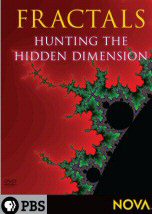
Fractals Hunting the Hidden Dimension

   2010    Science
The ultimate adventure in scientific inquiry, this fascinating program follows the exploits of a small group of pioneering mathematicians who discovered a whole area of study that is revolutionizing all branches of understanding in the world: fractal geometry. Fractals are most recognized as a series of circular shapes with a border surrounded by jagged "tail-like" objects. The program, aimed at the average viewer does a fine job of explaining the background of fractals, first by beginning with the story of Pixar co-founder, Loren Carpenter's work at Boeing, developing 3D terrain from scratch using fractals. From there the program starts at the beginning with an introduction to Benoit Mandelbrot and his revolutionary work. The explanations are full of solid factual information but never talk above the level of a viewer who has some understanding of basic mathematical principles. Once the concept is presented the program spends the rest of the time showing how prevalent the fractal is in life. For a program about a mathematical concept, "Fractals" is very engaging, showing how the process was applied to special effects as far back as the Genesis planet from "Star Trek II" all the way to the spectacular finale on Mustafar in "Star Wars: Episode III." I found myself astonished at how fractals were the source of the lava in constant motion and action during the Obi-Wan/Anakin fight. What is more amazing is when the program delves into practical applications such as cell phone antennas, and eventually the human body. For the average person who enjoys watching science related programs, even on a sporadic basis, "Fractals" will prove to be a very worthwhile experience. The program is well produced, integrating talking head interviews (including some with Mandelbrot himself) with standard "in the field" footage. The structure of the program is very logical and never finds itself jumping around without direction. In simplest terms, this is a program as elegant as the designs it focuses on.

Free for All

   2013    Art
Part 2 examines how the freewheeling modernism that had shocked audiences in the first two decades of the century came under state control. Initially, many practitioners thought the totalitarian regimes would be good for music and the arts. What followed in Germany was a ban on music written by Jews, African-Americans and communists, while in the Soviet Union there was a prohibition on music the workers were unable to hum. After the cataclysm of the 1940s, a new generation of composers - Boulez, Stockhausen, Xenakis, Nono, Ligeti - turned their back on what they saw as the discredited music of the past and tried to reinvent it from scratch. Or, at least, from serialism, which became as much of a straitjacket as totalitarianism's strictures had been. But from this period of avant-garde experimentation, which many listeners found baffling and terrifying, came some of the most influential and radical musical innovations of the century.
Series: The Sound and the Fury

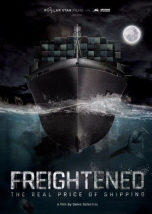
Freightened: The Real Price of Shipping

       Technology
90% of the goods we consume in the West are manufactured in far-off lands and brought to us by ship. The cargo shipping industry holds the key to our economy, our environment and the very model of our civilization; without it, it would be impossible to fulfill the ever-increasing demands of our societies. Yet the functioning and regulations of this business remain largely obscure to many, and its hidden costs affect us all. Due to their size, freight ships no longer fit in traditional city harbors; they have moved out of the public's eye, behind barriers and checkpoints.
The film answers questions such as: Who pulls the strings in this multi-billion dollar business? To what extent does the industry control our policymakers? How does it affect the environment above and below the water-line? And what's life like for modern seafarers? Taking us on a journey overseas and oceans, we reveal in an audacious investigation the many faces of world-wide freight shipping and sheds light on the consequences of an all-but-visible industry.