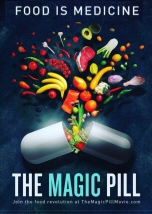
The Magic Pill follows doctors, patients, scientists, chefs, farmers and journalists from around the globe who are combating illness through a paradigm shift in eating. According to its followers, this simple change - embracing fat as our main fuel - is showing profound promise in improving the health of people, animals and the planet. The film is highly controversial and was criticized by some medical associations. The Paleo diet proposes that humans were genetically adapted to eating specifically those foods that were readily available to them in their local environments. Advocates of the diet claim many chronic diseases and degenerative conditions evident in modern Western populations have arisen because of a mismatch between Stone Age genes and modern lifestyles. The Paleo diet typically includes vegetables, fruits, nuts, roots, and meat and excludes foods such as dairy products, grains, sugar, legumes, processed vegetable oils, salt, alcohol or coffee.
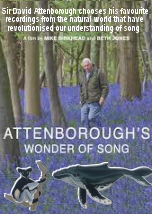
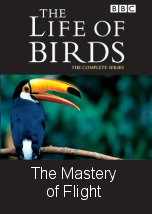
The second programme deals with the mechanics of flight. Getting into the air is by far the most exhausting of a bird's activities, and Sir Attenborough observes shearwaters in Japan that have taken to climbing trees to give them a good jumping-off point. The albatross is so large that it can only launch itself after a run-up to create a flow of air over its wings. A combination of aerodynamics and upward air currents (or thermals), together with the act of flapping or gliding is what keeps a bird aloft. Landing requires less energy but a greater degree of skill, particularly for a big bird, such as a swan. Weight is kept to a minimum by having a beak made of keratin instead of bone, a light frame, and a coat of feathers, which is maintained fastidiously. The peregrine falcon holds the record for being fastest in the air, diving at speeds of over 300 km/h. Conversely, the barn owl owes its predatory success to flying slowly, while the kestrel spots its quarry by hovering. However, the true specialists in this regard are the hummingbirds, whose wings beat at the rate of 25 times a second. The habits of migratory birds are explored. After stocking up with food during the brief summer of the north, such species will set off on huge journeys southwards. Some, such as snow geese, travel continuously, using both the stars and the sun for navigation. They are contrasted with hawks and vultures, which glide overland on warm air, and therefore have to stop overnight.
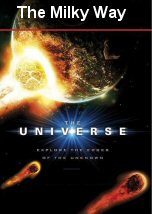
We used to think that Earth was at the centre of the universe, but now we know we're not even at the centre of our own galaxy. Countless wonders exist between where earth is situated and the massive black hole at the galactic centre of our galaxy. Within the Milky Way can be found the debris of old, dying stars fuelling the birth of new stars and at the galactic centre hypervelocity stars get catapulted clear beyond the Milky Way's outer rim at unimaginable speeds. Come along for a guided tour of 100,000 light-year-wide family of stars and stellar phenomena we call The Milky Way.
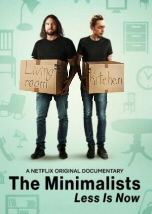
Longtime friends Joshua Fields Millburn and Ryan Nicodemus share how our lives can be better with less. The film's title was inspired by the popular maxim 'Less is more,' popularized by architect Ludwig Mies van der Rohe, who used this aphorism to describe his design aesthetic; his tactic was one of arranging the necessary components of a building to create an impression of extreme simplicity. The Minimalists have reworked this phrase to create a sense of urgency for today's consumer culture: now is the time for less.
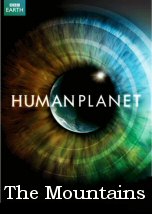
From lush cloud forests to bare summits that take your breath away, the higher you climb the tougher life gets on a mountain. Human Planet explores the extraordinary ways in which people survive at extreme altitudes where nature becomes utterly unforgiving. In the Altai Mountains in Western Mongolia the vast open spaces make hunting for animals almost impossible, so the locals have forged an astonishing partnership with golden eagles which can do the hunting for them. On the precipitous cliffs of the Simien Mountains of Ethiopia we join a young boy locked in a dramatic battle with fearsome gelada monkeys which are hell-bent on raiding his family's meagre grain harvest. In the Himalayan state of Nepal - the roof of the world - we witness a rarely seen ceremony: a sky burial. In a land where there is little wood to burn for cremation, and where burying the dead is virtually impossible, the dead are fed to vultures in the ultimate reverence of nature.
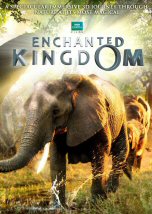
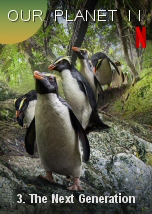
Some animals give their young the best start in life by making truly astonishing journeys. And it's not only where they go that's important but when. Left to fend for themselves until they find their footing, baby sea turtles, elephant seal pups, pumas and crabs bravely trek towards adolescence.










The Paleo diet proposes that humans were genetically adapted to eating specifically those foods that were readily available to them in their local environments. Advocates of the diet claim many chronic diseases and degenerative conditions evident in modern Western populations have arisen because of a mismatch between Stone Age genes and modern lifestyles. The Paleo diet typically includes vegetables, fruits, nuts, roots, and meat and excludes foods such as dairy products, grains, sugar, legumes, processed vegetable oils, salt, alcohol or coffee.