Michael Wood embarks on a great historical adventure, exploring the stories, people and landscapes that have helped create China's distinctive character and genius over four thousand years. Is the history of the world's newest superpower, from its ancient past to the present day. Starting in Wuxi, Michael joins the Qin family reunion, when 300 relatives gather to worship their ancestors on Tomb Sweeping Day. 'Like the nation, the family has been through so much,' one says. 'Now everyone wants to know - what are our roots?' Looking for the origins of the Chinese state, he visits the excavations at Erlitou and sees an exquisite turquoise dragon sceptre from 2000 BC. China's first writing is found on 'oracle bones' dug up from the Shang royal tombs at Anyang in the 1920s. At the Beijing Planetarium, Michael travels back in time as astronomers plot the planetary conjunction that the ancients believed foretold the overthrow of the Shang Dynasty. Next, the Age of Philosophers and Confucius, whose book Analects has had greater influence worldwide than even the Bible, according to some. In Xi'an, we hear how the First Emperor united China and created the authoritarian Qin state that gave us the word China. Finally, Michael returns to the temple fair in Henan for a dramatic night ceremony to give thanks to the ancestors. China, Michael concludes, is rising again, not just because of its economic strength, but because of the incredible solidarity of the Han Chinese view of their own civilisation, their sense of family and, of course, the presence of the ancestors.
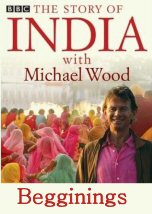
Through ancient manuscripts and oral tales Michael Wood charts the first human migrations out of Africa. He travels from the tropical backwaters of South India through lost ancient cities in Pakistan to the vibrant landscapes of the Ganges plain. In Turkmenistan dramatic archaeological discoveries cast new light on India’s past.
A compelling, dramatic and stylish cinematic journey into snowboarding's unique history and the wider cultural forces that shaped it. Featuring interviews and archival footage with Todd Richards, Gigi Rüf, Terje Haakonsen, Jake Burton, Tom Sims, Stale Sandbech and Craig Kelly.
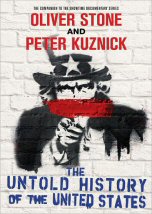
This series, narrated and written by Oliver Stone and co-author Peter Kuznick, will focus on human events that at the time went under reported, but crucially shaped America’s unique and complex history over the 20th and 21st century. The series is a re-examination of some of the under-reported and darkest parts of American modern history using little known documents and newly uncovered archival material. The series looks beyond official versions of events to the deeper causes and implications and explores how events from the past still have resonant themes for the present day." The fist episode examines World War II. It offers special attention to the Spanish Civil War, Roosevelt's desire to enter the war on the side of the allies, the strategic Japanese decisions that lead up to Pearl Harbor Attack, and the often overlooked role that the Soviet Union had in winning the war.
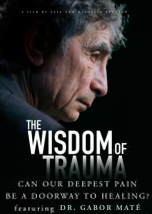
Trauma is the invisible force that shapes our lives. It shapes the way we live, the way we love and the way we make sense of the world. It is the root of our deepest wounds. Dr. Maté gives us a new vision: a trauma-informed society in which parents, teachers, physicians, policy-makers and legal personnel are not concerned with fixing behaviors, making diagnoses, suppressing symptoms and judging, but seek instead to understand the sources from which troubling behaviors and diseases spring in the wounded human soul. The interconnected epidemics of anxiety, chronic illness and substance abuse are, according to Dr Gabor Maté, normal. But not in the way you might think.
One in five Americans are diagnosed with mental illness in any given year. Suicide is the second most common cause of death in the US for youth aged 15-24, and kills over 700,000 people a year globally and 48,300 in the USA . Drug overdose kills 81,000 in the USA annually. The autoimmunity epidemic affects 24 million people in the USA. What is going on? “So much of what we call abnormality in this culture is actually normal responses to an abnormal culture. The abnormality does not reside in the pathology of individuals, but in the very culture that drives people into suffering and dysfunction.” — Gabor Maté
This film, which spans all three episodes of the series, is a riveting documentary that traces the incredible journey of Volodymyr Zelensky, from comedian to wartime president. Director Michael Waldman expertly weaves interviews, political milestones, and footage of Zelensky's rise to fame in the Ukrainian entertainment industry. From his portrayal of a fictional president in Servant of the People to becoming a real-life leader facing the full-scale Russian invasion, the documentary highlights Zelensky's determination, charisma, and humanity. The film captures the profound contrast between Zelensky and Russian president Vladimir Putin, portraying their intertwined destinies as a battle between light and darkness. With compelling interviews from Zelensky, his wife Olena, and colleagues, it reveals the personal and political struggles that shaped his leadership. This documentary is a must-see, offering a deep, cinematic portrait of a man thrust into the role of a global hero.




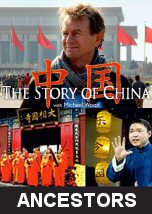




Starting in Wuxi, Michael joins the Qin family reunion, when 300 relatives gather to worship their ancestors on Tomb Sweeping Day. 'Like the nation, the family has been through so much,' one says. 'Now everyone wants to know - what are our roots?'
Looking for the origins of the Chinese state, he visits the excavations at Erlitou and sees an exquisite turquoise dragon sceptre from 2000 BC. China's first writing is found on 'oracle bones' dug up from the Shang royal tombs at Anyang in the 1920s. At the Beijing Planetarium, Michael travels back in time as astronomers plot the planetary conjunction that the ancients believed foretold the overthrow of the Shang Dynasty. Next, the Age of Philosophers and Confucius, whose book Analects has had greater influence worldwide than even the Bible, according to some. In Xi'an, we hear how the First Emperor united China and created the authoritarian Qin state that gave us the word China. Finally, Michael returns to the temple fair in Henan for a dramatic night ceremony to give thanks to the ancestors. China, Michael concludes, is rising again, not just because of its economic strength, but because of the incredible solidarity of the Han Chinese view of their own civilisation, their sense of family and, of course, the presence of the ancestors.