Last Watched

"Lion"  Sort by

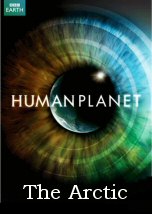
The Arctic

   2011    Culture
The Arctic is the harshest environment on Earth: little food grows, it's dark for months on end, and temperatures stay well below freezing for much of the year. Yet four million people manage to survive here. Human Planet tells remarkable stories of extraordinary people who make their homes in nature's deep freeze. In springtime, Amos and Karl-Frederik set out across the sea ice with their dogs to catch a real-life sea monster: a Greenland shark! Inuit mussel-gatherers venture underneath the sea ice at low tide for a perilous race against time as they gather their food. And the children of Churchill, Manitoba, set out on the most dangerous trick or treating Halloween in the world: they risk coming face-to-face with deadly polar bears on the streets of their town. Who'll get the tastiest snack?
Series: Human Planet
The Battle to Beat Malaria

   2024    Medicine
Of all the diseases that plague humankind, malaria has put up one of the longest, toughest fights. More than 200 million people fall ill and 600,000 die of it every year, making it among the world’s deadliest diseases. The vast majority of those fatalities are young children - an average of one child every minute. But medical science may now be at an exciting turning point.
Filmed with intimate access to key scientists on four continents, this documentary tells the inside story of the development of a new malaria vaccine that could change the very nature of the fight. It's hoped that the vaccine, dubbed R21/Matrix-M and developed by many of the same team behind the Oxford/AstraZeneca Covid-19 vaccine, will be the first to meet the World Health Organization’s target of 75 per cent efficacy.

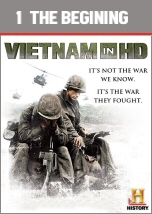
The Beginning

   2011    History
Vintage footage from the Vietnam war is presented along with narration from both war veterans and Hollywood voice talent. The documentary follows key events and their impact on both the war effort and the American public.
The Beginning: The first episode looks at the early months of the Vietnam war from the escalation following the Gulf of Tonkin incident to the grim fighting of the Battle of Ia Drang where a few hundred American soldiers are pinned down by three battalions of North Vietnamese infantry. Using superior air power and reinforcements, the Americans fight the North Vietnamese to a draw.
Series: Vietnam in HD

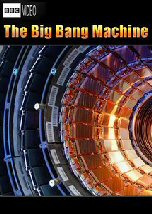
The Big Bang Machine

   2008    Science
Professor Brian Cox visits Geneva to take a look around Cern's Large Hadron Collider before this vast, 27km long machine is sealed-off and the experiment to create the simulation of a black hole begins. When it's up and running, it will be capable of creating the conditions that existed just a billionth of a second after the Big Bang. Brian joins the scientists who hope that the LHC will change our understanding of the early universe and solve some of its mysteries.

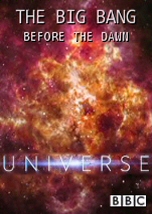
The Big Bang: Before the Dawn

   2021    Science
How did the universe come to be? Thanks to a series of discoveries, our most powerful space missions have unravelled 13.8 billion years of cosmic evolution and revealed the story of our universe from its birth all the way to the arrival of our nascent civilization. Our guide on this odyssey back to the dawn of time is light. Telescopes are time machines - by looking out into the distant universe, they open a window to the past. One telescope more than any other has helped us journey through the history of the universe: NASA’s Hubble Space Telescope. Remarkably, Hubble has even found one of the first galaxies ever to exist in the universe, which was born some 13.4 billion years ago. It's a discovery that hints at the beginnings of our own Milky Way. Vivid CGI brings this ancient galaxy to life, allowing us to witness for ourselves the first dawn. It was the beginning of a relationship between stars and planets that would, on a faraway world, lead to the origin of life - and ultimately to us.
Hubble’s incredible discoveries have allowed scientists to piece together much of our cosmic story, but it cannot take us back to the most important moment in history: the Big Bang. For decades, the moment the universe began was the subject of pure speculation, but by combining astronomy and cosmology, scientists have finally found a way to put their theories to the test and study the momentous events that took place during the Big Bang. They can do this because the European Space Agency’s Planck space telescope has seen the afterglow of the Big Bang itself – something we call the Cosmic Microwave Background. The unparalleled detail Planck gave us has helped confirm something remarkable: the Big Bang may not be the beginning. There was a time before the dawn – a place beyond anything we can comprehend. Professor Brian Cox transports us back to the fraction of a second before the Big Bang, when the seeds of our universe were planted.
Series: Universe
Leaving Neverland

Leaving Neverland

2019  Culture
The Rehearsal

The Rehearsal

2022  Culture
The Cell

The Cell

  Science
The Human Body

The Human Body

1998  Medicine
Reel Rock

Reel Rock

2014  Culture