Christopher Reeve was a world movie star, but in 1995 he suffered a near-fatal horseback riding accident that left him paralyzed from the neck down. He later became an activist for spinal cord injury treatment and the rights of people with disabilities. This film offers a poignant exploration of Christopher Reeve's extraordinary life, weaving together intimate interviews with his children, Matthew, Alexandra, and Will. It chronicles his journey from a difficult childhood and a strained relationship with his father to his meteoric rise as Superman, a role that made him a global icon. The narrative transitions seamlessly between his career highs—starring in acclaimed films, enduring public missteps, and returning to the stage—and the personal challenges that shaped him, including his complex relationships, the birth of his children, and his eventual romance with Dana Morosini, the love of his life. After the devastating horse-riding accident that left him paralyzed, Reeve's unwavering spirit redefined heroism. The film highlights his advocacy for spinal cord research, the creation of the Christopher Reeve Foundation, and the enduring impact he and Dana had on disability rights. Their story is one of resilience, love, and inspiration, with their children now carrying on their legacy. Through moments of triumph and heartbreak, this film celebrates a man who truly embodied the spirit of Superman, both on and off-screen.
A stellar explosion, the supernova is the sensational death of a star. It can shine as bright as 100 billion Suns and radiate as much energy as the Sun would emit over 10 billion years. Jets of high-energy light and matter are propelled into space and can cause massive Gamma Ray Bursts and emit intense X-ray radiation for thousands of years. Astronomers believe that this process creates the very building blocks of planets, people and plants. Meet the world's leading Supernova hunters, and take a look at recorded supernovas throughout history.
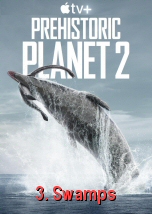
Pterosaur hatchlings take flight to leave their island sanctuary, but are targeted by several Shamosuchus. Several Austroraptor hunt garfish and contend for the best fishing spots. A male Beelzebufo attempts to attract a mate, but his endeavor is interrupted by a herd of Rapetosaurus. A male Pachycephalosaurus must put an upstart youngster in his place. Two Tyrannosaurus brothers hunt Edmontosaurus under the cover of darkness.
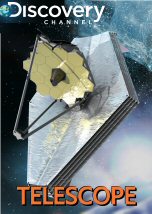
A dynamic journey behind the scenes of the next step in the evolution of telescopes: NASA's James Webb Space Telescope. A new generation has been inspired to design and build this massive instrument, which is 100 times more powerful than the Hubble Space Telescope and will be a veritable time machine, capable of looking back on the origins of our universe and identifying signatures of potential life on planets far outside our solar system". With unprecedented access to the people and technologies that power its creation, including astrophysicists, engineers at Northrop Grumman, and personnel from NASA'S Goddard Space Flight Center and the Space Telescope Science Institute, the operations center for Hubble and Webb, Telescope spotlights the high-stakes mission of building this massive new scientific instrument. The film is a comprehensive look at the dynamic history of 400 years of telescopes starting with Galileo in 1609. The Webb is the next great telescope in society's ongoing mission to see farther into the universe and answer fundamental questions that have haunted mankind from the beginning of time. Directed by Oscar nominated filmmaker Nathaniel Kahn
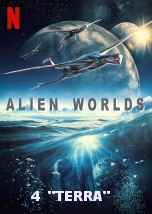
What sort of alien civilizations might exist in the vastness of space? Terra is the fictional world imagined in Episode 4, a planet nine billion years old, twice as old as Earth. Old enough that a truly advanced intelligence could evolve. It was once a fertile world, now it is barren. But life can still thrive here in artificial domes. Over time, they've evolved not to need their bodies. They exist only as neural tissue. They never age, they never die. They're monitored and maintained by robots. If alien civilizations are statistically so likely, why haven't astronomers found any sign of them? Where is everyone? Every time we look at an individual star, that's like dropping a bucket in the ocean. We're going to have to look at a lot of stars and to search through a lot of data until we find the clue that leads us to another civilization.
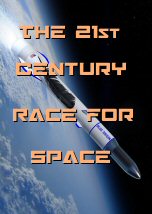
A new age of space exploration is dawning. But surprisingly, some of the boldest efforts at putting humans into space are now those of private companies started by a handful of maverick billionaire businessmen. In this film, Brian Cox gains exclusive access behind the scenes at Virgin Galactic, Blue Origin and Spaceport America, exploring what is really happening in privately financed space flight right now.




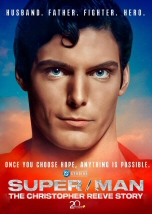



This film offers a poignant exploration of Christopher Reeve's extraordinary life, weaving together intimate interviews with his children, Matthew, Alexandra, and Will. It chronicles his journey from a difficult childhood and a strained relationship with his father to his meteoric rise as Superman, a role that made him a global icon. The narrative transitions seamlessly between his career highs—starring in acclaimed films, enduring public missteps, and returning to the stage—and the personal challenges that shaped him, including his complex relationships, the birth of his children, and his eventual romance with Dana Morosini, the love of his life.
After the devastating horse-riding accident that left him paralyzed, Reeve's unwavering spirit redefined heroism. The film highlights his advocacy for spinal cord research, the creation of the Christopher Reeve Foundation, and the enduring impact he and Dana had on disability rights. Their story is one of resilience, love, and inspiration, with their children now carrying on their legacy. Through moments of triumph and heartbreak, this film celebrates a man who truly embodied the spirit of Superman, both on and off-screen.