








Last Watched

"NES"  Sort by

Harmony of the Worlds

   1980    Science
Beginning with the separation of the fuzzy thinking and pious fraud of astrology from the careful observations of astronomy, Sagan follows the development of astronomical observation. Beginning with constellations and ceremonial calendars (such as those of the Anasazi), the story moves to the debate between Earth and Sun-centered models: Ptolemy and the geocentric worldview, Copernicus' theory, the data-gathering of Tycho Brahe, and the achievements of Johannes Kepler (Kepler's laws of planetary motion and the first science-fiction novel).
Series: Cosmos
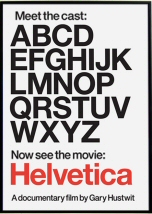

Helvetica

   2007    Art
Helvetica is a feature-length independent film about typography, graphic design and global visual culture. It looks at the proliferation of one typeface (which celebrated its 50th birthday in 2007) as part of a larger conversation about the way type affects our lives. The film is an exploration of urban spaces in major cities and the type that inhabits them, and a fluid discussion with renowned designers about their work, the creative process, and the choices and aesthetics behind their use of type.
The film encompasses the worlds of design, advertising, psychology, and communication, and invites us to take a second look at the thousands of words we see every day.
Interviewees in Helvetica include some of the most illustrious and innovative names in the design world, including Erik Spiekermann, Matthew Carter, Massimo Vignelli, Wim Crouwel, Hermann Zapf, Neville Brody, Stefan Sagmeister, Michael Bierut, David Carson, Paula Scher, Jonathan Hoefler, Tobias Frere-Jones, Experimental Jetset, Michael C. Place, Norm, Alfred Hoffmann, Mike Parker, Bruno Steinert, Otmar Hoefer, Leslie Savan, Rick Poynor, and Lars Müller.

Hermann Goering

       History
The second episode tells the story of the trial of Hermann Goering, Hitler's charismatic and ruthless second-in-command. On trial for his life at Nuremberg, the unrepentant Reich Marshal turned the tables on the Allies. So much so that Chief Prosecutor Justice Robert Jackson began to wish the Allies had followed Churchill's suggestion and shot the leading Nazis out of hand. This documentary drama traces the behind-the-scenes story of Goering's attempt to re-ignite Nazism from the courtroom.
Series: Nuremberg: Nazis on Trial

Hiding in Colour

   2021    Nature
David Attenborough reveals the extraordinary ways that some animals use colour to hide and disappear into the background. New science reveals how the Bengal tiger in central India uses its orange-black stripes to hide from its colour-blind prey. In Kenya’s Masai Mara, the zebra’s black-and-white pattern confuses predators with an extraordinary effect called motion dazzle. And on the island of Cuba, a small snail uses colourful stripes in a surprising way to hide from its enemies.
Other animals use colour to trick and to deceive. On Australia’s Great Barrier Reef, a blue-striped blenny uses colours to mimic other fish and launch a sudden attack. In the grasslands of Zambia, the chick of a pin-tailed whydah mimics the patterns of its nest mates to ensure that it is not detected as an imposter. And specialist cameras reveal how a tiny crab spider uses bright ultraviolet colours to lure in its victims.
Series: Attenborough Life in Colour

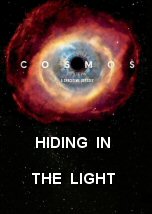
Hiding in the Light

   2014    Science
This episode explores the wave theory of light as studied by mankind, noting that light has played an important role in scientific progress, with such early experiments from over 2000 years ago involving the camera obscura by the Chinese philosopher Mozi. Tyson describes the work of the 11th century Arabic scientist Ibn al-Haytham, considered to be one of the first to postulate on the nature of light and optics leading to the concept of the telescope, as well as one of the first researchers to use the scientific method. Tyson proceeds to discuss the nature of light as discovered by mankind. Work by Isaac Newton using diffraction through prisms demonstrated that light was composed of the visible spectrum, while findings of William Herschel in the 19th century showed that light also consisted of infrared rays. Joseph von Fraunhofer would later come to discover that by magnifying the spectrum of visible light, gaps in the spectrum would be observed. These Fraunhofer lines would later be determined to be caused by the absorption of light by electrons in moving between atomic orbitals when it passed through atoms, with each atom having a characteristic signature due to the quantum nature of these orbitals. This since has led to the core of astronomical spectroscopy, allowing astronomers to make observations about the composition of stars, planets, and other stellar features through the spectral lines, as well as observing the motion and expansion of the universe, and the existence of dark matter.
Series: Cosmos: A Spacetime Odyssey

Hip Hop to House

   2021    Art
The 1980s was an era in which a fusillade of new genres emerged, and many are still with us today, such as hip-hop and house. Dylan Jones has mined the archives to select some of the most crucial tracks in the rise of these two genres.
From a young Kurtis Blow making his Top of the Pops debut to the sonic bombardment of Public Enemy and the sampling skills of Bomb the Bass, this episode showcases the evolution in rap and house music across the decade. There are rare archival interviews and stellar performances from Run-DMC, Salt 'N' Pepa, S'Express, Cookie Crew and Neneh Cherry, as well as iconic videos from Herbie Hancock, The Beastie Boys, M/A/R/R/S, Grandmaster Flash and the Furious Five, and many more.
Series: The 80s: Greatest Music Decade