



Last Watched

"China"  Sort by

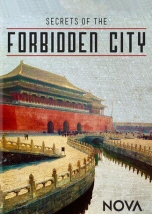
Secrets of the Forbidden City

   2021    Art
The architectural design of Beijing's ancient complex of palaces and temples enabled it to survive centuries of earthquakes. The Forbidden City is the world’s biggest and most extravagant palace complex ever built. For five centuries, it was the power center of imperial China and survived wars, revolution, fires, and earthquakes. How did the Ming Emperor’s workforce construct its sprawling array of nearly 1,000 buildings and dozens of temples in a little over a decade?
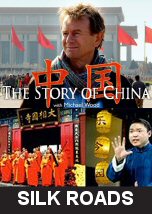
Silk Roads and China Ships

   2016    History
Michael Wood tells the tale of China's first great international age under the Tang Dynasty (618-907). From the picturesque old city of Luoyang, he travels along the Silk Road to the bazaars of central Asia and into India on the track of the Chinese monk who brought Buddhism back to China. This tale is still loved by the Chinese today and is brought to life by storytellers, films and shadow puppet plays. Then in the backstreets and markets of Xi'an, Michael meets descendants of the traders from central Asia and Persia who came into China on the Silk Road. He talks to Chinese Muslims in the Great Mosque and across town hears the amazing story of the first reception of Christianity in 635. Moving south, Michael sees the beginnings of China as an economic giant. On the Grand Canal, a lock built in 605 still handles 800 barges every day! The film tracks the rise of the silk industry and the world's favourite drink - tea. Michael looks too at the spread of Chinese script, language and culture across east Asia. 'China's influence on the East was as profound as Rome on the Latin West', he says, 'and still is today'. Finally, the film tells the intense drama of the fall of the Tang. Among the eyewitnesses were China's greatest poets. In a secondary school in a dusty village, where the Chinese Shakespeare - Du Fu - is buried in the grounds, the pupils take Michael through one famous poem about loss and longing as the dynasty falls. And in that ordinary classroom, there is a sense of the amazing drama and the deep-rooted continuities of Chinese culture.
Series: The Story of China

Thank You Dr. Fauci

   2024    Culture
Directed by award-winning filmmaker Jenner Furst, the film delves into the origins of COVID-19, exploring the possibility of a bio-arms race with China and what could be one of the largest cover-ups in modern history. Furst embarks on a quest for answers from Dr. Anthony Fauci, analyzing extensive documents and consulting with scientists, intelligence analysts, former government officials, and whistleblowers. This investigative journey aims to depoliticize a highly controversial topic, presenting an urgent scientific docu-thriller that has been described as "Oppenheimer meets Outbreak."
The documentary has garnered attention for its compelling narrative and in-depth investigation. Critics have noted its ability to present complex information in an engaging manner, leaving viewers both informed and intrigued. For those interested in the intricate details of the COVID-19 pandemic's origins and the controversies surrounding it, "Thank You, Dr. Fauci" provides a thought-provoking and meticulously researched perspective.

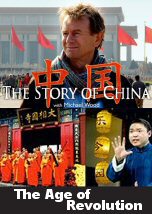
The Age of Revolution

   2016    History
Between 1850 and 1950, three cataclysmic revolutions shook China to the core, but out of them, today's China emerged. The film begins in Canton with the meeting of a US missionary and a Chinese student. Inspired by the Christian story and calling himself God's second son, Hong unleashed the bloodiest war of the 19th century, the Taiping Rebellion.
As imperial China weakened, foreign influence grew. Treaty ports expanded, bringing growth and wealth, trams, railways and western sensibilities. But this provoked another surge of violence, the Boxer Rebellion, an attack against the foreigners, which was crushed by those same foreigners, who extorted a huge indemnity - $60 billion in today's money.
Then in 1912, the empire fell, and many groups contested China's future. In World War I, China sent 100,000 men to the western front, only to be humiliated at Versailles when German colonies in China were handed to Japan. Between the two world wars, the disparity between rich and poor, city and countryside increased. We visit Hong Kong's Peninsular Hotel in the jazz age and then follow Mao on the Long March to Yan'an, the heartland of revolution.
World War II came to China two years earlier than it did in the west. Wood talks to a survivor of the Japanese massacre of Nanjing in 1937 and then charts the triumph of the communists, before ending the story with Mao's death and the boom time of the last 30 years. The series ends with the warmth of the Chinese family and, at Beijing's Altar of Heaven, a final haunting glimpse of eternal China.
Series: The Story of China

The First Christianity

   2011    History
Professor Diarmaid MacCulloch - one of the world's leading historians - reveals the origins of Christianity and explores what it means to be a Christian. In the first episode, he overturns the familiar story that it all began when the apostle Paul took Christianity from Jerusalem to Rome. Instead, he shows that the true origins of Christianity lie further east, and that at one point it was poised to triumph in Asia, maybe even in China. The headquarters of Christianity might well have been Baghdad not Rome, and if that had happened then Western Christianity would have been very different.
Series: A History of Christianity

The Frozen North

   2024    Nature    3D    HD
In the third episode you can see an extraordinary journey through the frigid realms of northern Asia. This captivating documentary unveils the remarkable strategies employed by wildlife to endure and flourish amidst relentless snow and ice. Witness the stealth and agility of Himalayan wolves as they pursue the swift chiru antelope across vast, frozen terrains. Observe the delicate courtship rituals of red-crowned cranes, mastering intricate mating dances in the snow-laden landscapes. Delve into the secluded habitats of the elusive Amur tigers, navigating the dense, frost-covered forests where Russia, China, and North Korea converge—a region also inhabited by the world's largest owls. Each scene offers a profound glimpse into nature's resilience and adaptability in some of the planet's most unforgiving environments.
Series: Asia