Why are ultra-processed foods so irresistible, and how they have come to dominate food culture? Dr Chris van Tulleken features interviews with former food industry insiders who talk openly about the way in which popular foods have been designed to be irresistible. Food companies go to extraordinary lengths to ensure their products connect with consumers - from using brain scans to assess the deliciousness of ice cream to carefully engineering the sound of a crunch. Ultra-processed foods are hyper-delicious and super-convenient, have long shelf lives and are extremely cheap. But a growing body of evidence is linking these products to our declining health.
Horizon explores the strange and wonderful world of illusions – and reveals the tricks they play on our senses and why they fool us. We show how easy it is to trick your sense of taste by changing the colours of food and drink, explain how what you see can change what you hear, and see just how unreliable our sense of colour can be. But all this trickery has a serious purpose. It’s helping scientists to create a new understanding of how our senses work – not as individual senses, but connected together. It holds the intriguing possibility that one sense could be mapped into another.
In the Land of the Cave Bear, Alice ventures to the parts of the northern hemisphere, hit hardest by the cold - Europe and Siberia. High in the mountains of Transylvania, a cave sealed for thousands of years reveals grisly evidence for a fight to the death between two staving giants, a cave bear and a cave lion. Yet Alice discovers that for woolly rhinos and woolly mammoths, the Ice Age created a bounty. The Mammoth Steppe, a vast tract of land which went half way round the world, provided food all year round, for those that liked the cold. It was these mammoths that Europe's most dangerous predators hunted for their survival.
In late Cretaceous Canada, in what will be known as Dinosaur Provincial Park, a Daspletosaurus stalks a Chasmosaurus in a forest, but loses the element of surprise and is forced to retreat. The Chasmosaurus comes across a younger Daspletosaurus, before being ambushed by a group of the tyrannosaurids. The episode then cuts to the high Arctic, where Edmontosaurus are hunted by a large species of Troodon. The theropods attack at night, separating a juvenile from the herd and severely wounding it, only to be driven away by an adult. In the morning, they return to eat the carcass of the juvenile, which died during the night. The episode returns to the Daspletosaurus, who chase and bring down the Chasmosaurus. The larger adults bully the youngsters off the carcass, forcing them to wait until they have finished. The episode then cuts to Madagascar, where a mother Majungasaurus (an Abelisaurid) and her two offspring chase a group of Rahonavis off a carcass. However, they are temporarily driven off themselves by a male Majungasaurus. But, after he steals some food from one of the young, the female attacks him, before she and her young cannibalise his body. The episode returns once again to North America, where the Daspletosaurus are waiting for the annual migration of Centrosaurus. They attack during a rainstorm, killing some of the ceratopsians. The Centrosaurus make it to a flooded river and begin to swim across, and although many make it to the other side, some are caught by giant crocodilians or are severely wounded by floating debris and thus drown, or drown for unseen reasons. In the morning, the carcasses attract scavengers, including the Daspletosaurus. A montage is then shown of Daspletosaurus and Majungasaurus, the narrator saying that together, the tyrannosaurids and abelisaurids were the last of the killer dinosaurs.
Honey has the greatest cachet in the marketplace, of all food items. A sweetener so natural, so exalted, that its value has held up for millennia. But honey is also perfect for savvy profiteers who are secretly cutting the world's honey with cheap substitutes. With demand for honey soaring just as bees are dying off in record numbers, hidden additives, hive thefts and other shady tactics are on the rise.
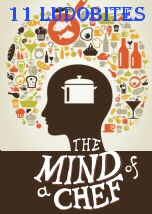
Chef Ludo Lefebvre began his US career cooking at Los Angeles restaurant Bastide, but after it closed for renovations he opted not to return and instead chose to do things his way. Borrowing a friend’s bakery space, which was closed in the evenings, Ludo created a unique dining experience in the form of small, reservations-only, “chef’s choice” dinners. These dinners became known as LudoBites, a pop-up deemed by Pulitzer Prize-winning food critic Jonathan Gold as "a transforming moment” for the LA dining scene.

























Food companies go to extraordinary lengths to ensure their products connect with consumers - from using brain scans to assess the deliciousness of ice cream to carefully engineering the sound of a crunch. Ultra-processed foods are hyper-delicious and super-convenient, have long shelf lives and are extremely cheap. But a growing body of evidence is linking these products to our declining health.