What if death didn't have to be the final goodbye? ‘Eternal You’ is a gripping documentary that delves into the emerging industry of startups using AI to create digital avatars of the deceased. By harnessing the digital footprints left behind, these companies offer grieving individuals a chance to interact with their lost loved ones, blurring the lines between life and afterlife. The film explores this groundbreaking technology and its impact on bereaved families, delving deep into our innate desire for immortality. But at what cost does this technological resurrection come? ‘Eternal You’ raises profound questions about the ethics of commodifying grief and the psychological consequences of defying traditional notions of mortality. Does interacting with a digital echo of a loved one aid the healing process, or does it make letting go even harder? As we stand on the cusp of unprecedented technological possibilities, this documentary challenges us to consider whether we truly want—and are ready for—this new reality.
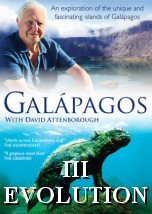
No two islands in the Galapagos are the same. The imperceptible drift of a continental plate keeps each island biologically isolated. David Attenborough explores this evolutionary crucible, encountering tortoises that weigh up to half a tonne, finches that use tools and lizards that communicate using press-ups; for Darwin, this was all evidence for his theory of evolution. We see the final footage of the world famous tortoise fondly known as Lonesome George, the last survivor of his species. David Attenborough was the last person to have ever filmed with him. Darwin’s famous visit had a downside – the arrival of man. David investigates the impact we’ve had in these islands, as our influence is a double-edged sword. We’ve disrupted the natural balance but he also believes Darwin would be thrilled with the advances we have made in science. We’re also now uncovering evidence that evolution is more rapid than Darwin could ever have imagined. Whatever wonders the Galapagos Islands hold today, they are only a hint of what awaits them in the future.
This episode examines the idea of scientific racism, an ideology invented during the 19th century that drew on now discredited practices such as phrenology and provided an ideological justification for racism and slavery. The episode shows how these theories ultimately led to eugenics and Nazi racial policies of the master race.
The film looks at one of the most critical questions facing the world today-that of food security-and demonstrates the desperate need for common sense, solid information, and calm logical deliberation. Using the often angry and emotional controversy over genetically-modified foods as its entry point, Food Evolution shows how easily fear and misinformation can overwhelm objective, evidence-based analysis. Food Evolution takes the position that science and scientists hold the key to solving the food crisis. But whose science? In the GMO debate, both sides claim science is on their side. Who's right? How do we figure this out? What does this mean for the larger issues of food security, sustainability, and environmental well-being? Food Evolution seeks to answer these critically important questions.
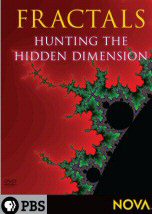
The ultimate adventure in scientific inquiry, this fascinating program follows the exploits of a small group of pioneering mathematicians who discovered a whole area of study that is revolutionizing all branches of understanding in the world: fractal geometry. Fractals are most recognized as a series of circular shapes with a border surrounded by jagged "tail-like" objects. The program, aimed at the average viewer does a fine job of explaining the background of fractals, first by beginning with the story of Pixar co-founder, Loren Carpenter's work at Boeing, developing 3D terrain from scratch using fractals. From there the program starts at the beginning with an introduction to Benoit Mandelbrot and his revolutionary work. The explanations are full of solid factual information but never talk above the level of a viewer who has some understanding of basic mathematical principles. Once the concept is presented the program spends the rest of the time showing how prevalent the fractal is in life. For a program about a mathematical concept, "Fractals" is very engaging, showing how the process was applied to special effects as far back as the Genesis planet from "Star Trek II" all the way to the spectacular finale on Mustafar in "Star Wars: Episode III." I found myself astonished at how fractals were the source of the lava in constant motion and action during the Obi-Wan/Anakin fight. What is more amazing is when the program delves into practical applications such as cell phone antennas, and eventually the human body. For the average person who enjoys watching science related programs, even on a sporadic basis, "Fractals" will prove to be a very worthwhile experience. The program is well produced, integrating talking head interviews (including some with Mandelbrot himself) with standard "in the field" footage. The structure of the program is very logical and never finds itself jumping around without direction. In simplest terms, this is a program as elegant as the designs it focuses on.
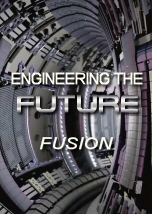
It is the greatest technological challenge ever undertaken by humankind. The quest to produce the ultimate energy solution, Fusion, a reliable source of clean power. What if we could create here on earth, our very own version of a star, a machine that makes power from nuclear fuel? But so immense are the challenges, the goal of a power-producing fusion reactor has so far remained elusive and out of reach... until now.













‘Eternal You’ raises profound questions about the ethics of commodifying grief and the psychological consequences of defying traditional notions of mortality. Does interacting with a digital echo of a loved one aid the healing process, or does it make letting go even harder? As we stand on the cusp of unprecedented technological possibilities, this documentary challenges us to consider whether we truly want—and are ready for—this new reality.