

Last Watched

"Science"  Sort by

Land of the Cave-Bear

       Science
In the Land of the Cave Bear, Alice ventures to the parts of the northern hemisphere, hit hardest by the cold - Europe and Siberia. High in the mountains of Transylvania, a cave sealed for thousands of years reveals grisly evidence for a fight to the death between two staving giants, a cave bear and a cave lion. Yet Alice discovers that for woolly rhinos and woolly mammoths, the Ice Age created a bounty. The Mammoth Steppe, a vast tract of land which went half way round the world, provided food all year round, for those that liked the cold. It was these mammoths that Europe's most dangerous predators hunted for their survival.
Series: Ice Age Giants
Last Killers

   2011    Science
In late Cretaceous Canada, in what will be known as Dinosaur Provincial Park, a Daspletosaurus stalks a Chasmosaurus in a forest, but loses the element of surprise and is forced to retreat. The Chasmosaurus comes across a younger Daspletosaurus, before being ambushed by a group of the tyrannosaurids. The episode then cuts to the high Arctic, where Edmontosaurus are hunted by a large species of Troodon. The theropods attack at night, separating a juvenile from the herd and severely wounding it, only to be driven away by an adult. In the morning, they return to eat the carcass of the juvenile, which died during the night. The episode returns to the Daspletosaurus, who chase and bring down the Chasmosaurus. The larger adults bully the youngsters off the carcass, forcing them to wait until they have finished. The episode then cuts to Madagascar, where a mother Majungasaurus (an Abelisaurid) and her two offspring chase a group of Rahonavis off a carcass. However, they are temporarily driven off themselves by a male Majungasaurus. But, after he steals some food from one of the young, the female attacks him, before she and her young cannibalise his body. The episode returns once again to North America, where the Daspletosaurus are waiting for the annual migration of Centrosaurus. They attack during a rainstorm, killing some of the ceratopsians. The Centrosaurus make it to a flooded river and begin to swim across, and although many make it to the other side, some are caught by giant crocodilians or are severely wounded by floating debris and thus drown, or drown for unseen reasons. In the morning, the carcasses attract scavengers, including the Daspletosaurus. A montage is then shown of Daspletosaurus and Majungasaurus, the narrator saying that together, the tyrannosaurids and abelisaurids were the last of the killer dinosaurs.
Series: Planet Dinosaur

Last Day of the Dinosaurs

       Science
Dinosaurs ruled the earth for 150 million years, then suddenly they were gone. Their disappearance is one of the planet’s greatest mysteries – unimaginable, until now. The film proposes a minute-by-minute chronology of the Chicxulub impact and its effect on the dinosaurs and other animals around the world. A blow-by-blow account of the cataclysm that ended the reign of the dinosaurs, and forever changed the course of life on Earth.

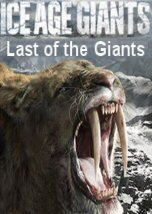
Last of the Giants

   2013    Science
Even after thousands of years of ice crushing the northern hemisphere and temperatures of 20 degrees lower than those of today, many of the great giants of the ice age still walked the earth. It was only when the world had warmed up again that mammoths, woolly rhinos, sabre-toothed cats, giant ground sloths and glyptodonts finally became extinct. Professor Alice Roberts sets off on her last voyage back to the Ice Age to discover why.
Series: Ice Age Giants

Leonardo Da Vinci

   2024    History
A documentary about this 15th-century polymath, exploring one of history's most curious and innovative minds though his paintings, drawings and writing. The first part takes a look at Leonardo's journey to becoming an artist and craftsman, while the bustling streets of Florence provide a rich backdrop. Viewers are also taken to Milan, where Leonardo embarked on a monumental project - painting the iconic fresco of the Last Supper. The second part looks at how Leonardo worked as a military engineer, designed fanciful flying machines, studied light and shadow, investigated gravity and more. Plus, examining the polymath's time in Florence, Milan, Rome and France, as he poured the sum of his scientific and artistic knowledge into a portrait that would become the most famous painting on earth.
Series: Leonardo Da Vinci

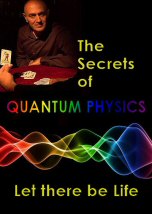
Let there be Life

   2014    Science
Professor of physics Jim Al-Khalili investigates the most accurate and yet perplexing scientific theory ever - quantum physics, the perplexing theory of sub-atomic particles. Turning his attention to the world of nature, can quantum mechanics explain the greatest mysteries in biology? The European robin navigates using one of the most bizarre effects in physics - quantum entanglement, a process which seems to defy common sense. Jim finds that even the most personal of human experiences - our sense of smell - is touched by ethereal quantum vibrations. According to new experiments it seems that our quantum noses are listening to smells. Jim discovers that the most famous law of quantum physics - the uncertainty principle - is obeyed by plants and trees as they capture sunlight during the vital process of photosynthesis. Jim wonders if the strange laws of the sub-atomic world, which allow objects to tunnel through impassable barriers in defiance of common sense, could effect the mechanism by which living species evolve?
Series: The Secrets of Quantum Physics
Leaving Neverland

Leaving Neverland

2019  Culture
Dangerous knowledge

Dangerous knowledge

2007  Science
Prehistoric America

Prehistoric America

2003  Nature
The Story of Maths

The Story of Maths

2008  Science
The Planets

The Planets

2000  Science
Meltdown: Three Mile Island

Meltdown: Three Mile Island

2022  Technology