Embark on a breathtaking journey through time as the cradle of civilization is brought to life like never before. With stunning visuals and immersive storytelling, this documentary follows Iraqi-born writer Jawad Bashara as he returns to his homeland after decades in exile, determined to preserve the rich cultural legacy of ancient Mesopotamia—now under threat from war and destruction. Guided by cutting-edge archaeology and heartfelt personal reflection, the film explores the wonders of Sumer, Babylon, and Assyria while asking a profound question: how can understanding our ancient past help shape a better future? A visually spectacular and emotionally powerful experience that connects history, identity, and resilience—this is more than a documentary; it’s a rediscovery of who we are.
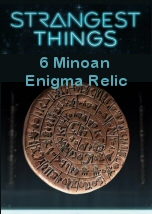
The Phaistos Disc is one of the greatest mysteries of the Bronze Age. A strange 3,000-year-old relic found in an ancient Minoan palace marked with enigmatic images that no one has ever managed to decode. But now, using cutting-edge technology, experts might finally reveal its secrets. How can this corroded scrap of metal change the history of a continent? And is this dead woman's face the most kissed in history?
Embark on a thrilling journey through time and five continents to the heart of creativity. Fusing social history, politics, science, nature, archaeology and religion, this international landmark series unravels a universal mystery - why the world around us looks like it does. Modern-day mysteries are answered by journeying back to the beginning of civilisation via some of the most amazing man-made creations in the world. In the first episode, one image dominates our contemporary world above all others: the human body. How Art Made the World travels from the modern world of advertising to the temples of classical Greece and the tombs of ancient Egypt to solve the mystery of why humans surround themselves with images of the body that are so unrealistic.
Recent archaeological sites in England offer a whole new perspective on the life and death of the seafarers and marines who built the British Empire in the 18th and 19th centuries. The bones of sailors reveal surprising and shocking facts. Apparently not only seasoned men but also half children did their service in the Royal Navy; according to the investigations, the youngest were no older than 13 years. A forensic archaeologist studies the injuries on bones discovered at the site of an battle and suggests how these people may have died. Three-hundred-and-fifty skeletons, exhumed from Royal Navy graveyards from the age of Nelson's Navy, are throwing an extraordinary new light on how these sailors lived, fought, outwitted their enemy, and, from the oldest to youngest, suffered for victory. These men were the beating heart of the most victorious fleet in history and never have so many of these sailors' remains been available for forensic investigation. Six remarkable stories stand out: the child sailor, the top man, the American gunner, the freed slave, the marine and the victim of the sailor's most dreaded disease: syphilis. Broken bones, amputations, injuries from blows with a saber or cutlass, sexually transmitted diseases, but also malnutrition - the list of causes of death is long. There is definitely no tale of seafaring romance. These fighters and sailors sailed the globe as cannon fodder, conquered an empire for the crown, and were themselves forgotten. No longer just bones in a box, the men of Nelson's Navy are back from the dead.
40,000 years ago the steppes of Eurasia were home to our closest human relative, the Neanderthals. Recent genetic and archaeological discoveries have proven that they were not the dim-witted cave dwellers we long thought they were. In fact, they were cultured, technologically savvy and more like us than we ever imagined! So why did they disappear? We accompany scientists on an exciting search for an answer to this question and come to a startling conclusion... A climate change due to a cataclysmic event.
Stonehenge is an icon of prehistoric British culture, an enigma that has seduced archaeologists and tourists for centuries. Why is it here? What is its significance? And which forces inspired its creators? Now a group of international archaeologists led by the University of Birmingham and the Ludwig Boltzman Institute in Vienna believe that a new state-of-the-art approach is the key to unlocking Stonehenge's secrets. For four years the team have surveyed and mapped every monument, both visible and invisible, across ten square kilometres of the sacred landscape to create the most complete digital picture of Stonehenge and the surrounding area over millennia. Known monuments have yielded more data than ever before, revealing hidden structures within, and new finds are revolutionising the very timeline of Stonehenge. The film takes the viewer on a prehistoric journey from 8000 BC to 2500 BC as the scientists uncover the very origins of Stonehenge, learning why this landscape is sacred, preserved and has been revered by following generations. Evidence of war and conflict, as well as the cultivation of ideas and industry, is explored to reveal complex communities with international trade links as far-reaching as Spain and central Europe.
















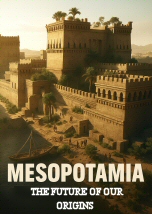









Guided by cutting-edge archaeology and heartfelt personal reflection, the film explores the wonders of Sumer, Babylon, and Assyria while asking a profound question: how can understanding our ancient past help shape a better future? A visually spectacular and emotionally powerful experience that connects history, identity, and resilience—this is more than a documentary; it’s a rediscovery of who we are.