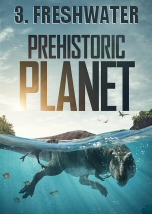
In the third episode, a Velociraptor hunts pterosaurs on a cliffside by a waterfall. A battle-scarred Tyrannosaurus nurses his wounds and encounters a newcomer. With its feathered body and duck bill, the eight-ton Deinocheirus wades through an Asian wetland in search of relief from pesky biting flies. A female Quetzalcoatlus builds and guards her nest. A mother Masiakasaurus and her family hunt crabs. Elasmosaurs enter an estuary in search of fish.
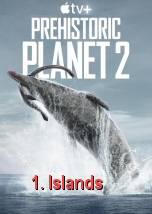
Travel back 66 million years to when majestic dinosaurs and extraordinary creatures roamed the lands, seas, and skies in the second season of this acclaimed series narrated by David Attenborough. After a tropical storm, two Zalmoxes find themselves in a rafting event. On a small island, a monumental display takes place as several Hatzegopteryx ambush a herd of Tethyshadros. A female Majungasaurus hunts a group of Simosuchus. A mother Adalatherium raises her offspring in a burrow, hoping to keep them safe from predators like Masiakasaurus and Madtsoia. A pack of Imperobator pursue a Morrosaurus onto a frozen lake. A male Hatzegopteryx attempts to attract a mate.
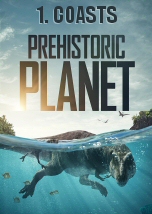
Experience with David Attenborough the wonders of a lost world like never before in this epic series. Travel back 66 million years to when majestic dinosaurs and extraordinary creatures roamed the lands, seas, and skies. In the first episode, a pregnant Tuarangisaurus is in distress and her young calf can sense it as she travels waters that are home to the ocean's deadliest predators.
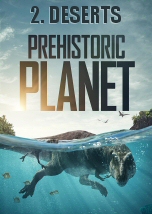
In the second episode, Dreadnoughtus males compete for the right to mate. Lizards are hunted by Velociraptor among a group of sleeping Tarbosaurus. A Mononykus forages for termites and investigates new food options after a brief rainstorm. Several types of dinosaurs congregate around a watering hole in Mongolia. Above the deserts of North Africa, aerial combat ensues as male Barbaridactylus pterosaurs fight for the attention of females below. A herd of Secernosaurus brave the harsh gypsum dunes in search of nourishment.
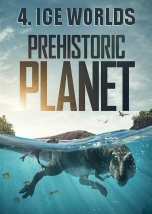
In the fourth episode, Dromaeosaurs stalk a hadrosaur herd as they cross a freezing river. Male Ornithomimus raid rival nests to bolster their own. Olorotitan raise their offspring on fertile volcanic fields but contend with biting mosquitoes. Troodontids hunt mammals flushed out by a forest fire. A juvenile Antarctopelta scours the forest for a new winter den. Within the snow-covered forest, a tense standoff develops between ancient rivals, Pachyrhinosaurus and Nanuqsaurus.
Five times, the Earth has faced apocalyptic events. Cataclysms that have swept away all life forms, or almost. Each time, a handful of species has survived, establishing a new world. What did these prehistoric worlds look like? What catastrophes led to their disappearance? How did our distant ancestors manage to survive the five mass extinctions that the Earth has suffered, finally giving rise to the world we know today? Combining CGI of ancient animal and plant life, VFX and filming, 'Prehistoric Worlds' looks back at the five mass extinctions of life on Earth that allowed the advent of the human race. On the brink of a sixth mass extinction that the scientific community considers imminent – this time caused by mankind – this film gives us an interesting and powerful look at Man's existence on the scale of the history of our planet.






















A female Quetzalcoatlus builds and guards her nest. A mother Masiakasaurus and her family hunt crabs. Elasmosaurs enter an estuary in search of fish.