




Last Watched

"Family"  Sort by

Fighting for their Lives

   2015    History
In the last episode, in the years after Steven and Brendan's very public trials, the various members of the Avery family struggle to mend their broken lives.
Series: Making a Murderer
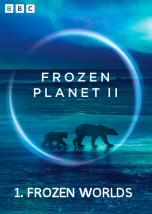
Frozen Planet II: Frozen Worlds

   2022    Nature    HD
Journeying from pole to pole, The series 'Frozen Planet II' reveals surprising worlds that exist across the planet and the remarkable animals that make them their home. In a fragile world of beauty and hostility, nature finds a way to survive and thrive. David Attenborough explores a planet on the brink of major change.
In the first episode, we begin our journey in the far south, in the most hostile place on earth, the frozen continent of Antarctica. After being raised on the ice in winter, emperor penguin chicks find themselves abandoned by their parents in spring. To survive, they must find their own way across the treacherous sea ice to the rich waters of the Southern Ocean.
The waters surrounding Antarctica may be the richest of all, but they are also home to an exceptionally sophisticated predator, the killer whale. To reach their favored prey, Weddell seals, a family of killer whales have learnt to generate their own waves, washing the seals off their ice floes. It’s a technique that has been passed down over generations and is coordinated by the family matriarch, who can be over 100 years old.
Leaving Antarctica and travelling north, we discover frozen habitats that are created by altitude. The greatest of these is the Himalaya, the tallest mountain range on earth, which contains so much ice and snow it is known as the third pole. In the shadow of the Himalaya lies a vast frozen grassy plain that is home to the fluffiest cat in the world, Pallas’s cat. It may have extremely dense fur, but if it’s to survive the Mongolian winter, it needs to catch lots of gerbils and voles. Easier said than done when you only have short legs and paws that are sensitive to the cold.
North of the Great Steppe lies the boreal forest, which encircles the continents of North America, Europe and Asia, and remains frozen for six months of the year. Prowling these forests in the far east of Russia is the Siberian tiger, the largest cat in the world. In winter, it is on the lookout for black bears hibernating in caves, a high-risk strategy that only a cat of this size would attempt.
Above the boreal forest, we cross into the Arctic Circle, where conditions become so extreme that trees can no longer grow. This is the tundra. Living here are relics of the last ice age, musk ox. In spring, their calves face a far greater danger than the cold, grizzly bears. Encounters can be brutal, but if just a few calves survive the gauntlet, the herd’s future is secure.
To the north of the tundra is the Arctic Ocean, the only ocean that can completely freeze over. Living here is one of the most peculiar animals on earth, the hooded seal. Males have extraordinary inflatable noses, producing a bright red balloon out of their left nostrils. One male hopes this will make him irresistible.
All of the frozen habitats share one thing in common: the threat posed by today’s climate change. Travelling to the island of Greenland, home to the largest body of ice in the northern hemisphere, we witness how global warming is melting its ice cap at faster rates than ever before, with profound consequences for global sea levels. Lastly, we visit the Arctic’s most iconic resident, the polar bear, as a mother bear struggles to provide for her cubs in a world of shrinking sea ice.
Series: Frozen Planet II

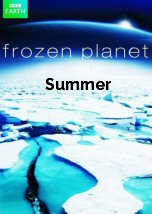
Frozen Planet: Summer

   2011    Nature
It is high summer in the Polar Regions, and the sun never sets. Vast hordes of summer visitors cram a lifetime of drama into one long, magical day; they must feed, fight and rear their young in this brief window of plenty. Summer is a tough time for the polar bear family, as their ice world melts away and the cubs take their first swimming lesson. Some bears save energy by dozing on icy sun beds, while others go egg-collecting in an Arctic tern colony, braving bombardment by sharp beaks. There are even bigger battles on the tundra; a herd of musk oxen gallop to the rescue as a calf is caught in a life and death struggle with a pair of Arctic wolves. But summer also brings surprises, as a huge colony of 400,000 king penguins cope with an unlikely problem - heat. The adults go surfing, while the woolly-coated chicks take a cooling mud bath. Nearby, a bull fur seal is prepared to fight to the death with a rival. Fur flies as the little pups struggle desperately to keep out of the way of the duelling giants. Further south, a minke whale is hunted amongst the ice floes by a family of killer whales. The dramatic chase lasts over 2 hours and has never been filmed before. The killers harry the minke whale, taking it in turns to wear it down. Eventually it succumbs to the relentless battering. Finally, comical adelie penguins waddle back to their half a million strong colony like clockwork toys. The fluffy chicks need constant feeding and protection as piratical skuas patrol the skies. When an unguarded chick is snatched, a dramatic "dogfight" ensues.
Series: Frozen Planet

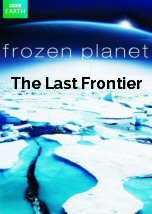
Frozen Planet: The Last Frontier

   2011    Culture
The documentary series reveals the extraordinary riches and wonders of the Polar Regions that have kept people visiting them for thousands of years. Today, their survival relies on a combination of ancient wisdom and cutting-edge science. Most Arctic people live in Siberia, either in cities like Norilsk - the coldest city on earth - or out on the tundra, where tribes like the Dogan survive by herding reindeer, using them to drag their homes behind them. On the coast, traditional people still hunt walrus from open boats - it is dangerous work, but one big walrus will feed a family for weeks. Settlers are drawn to the Arctic by its abundant minerals; the Danish Armed Forces maintain their claim to Greenland's mineral wealth with an epic dog sled patrol, covering 2,000 miles through the winter. Above, the spectacular northern lights can disrupt power supplies so scientists monitor it constantly, firing rockets into it to release a cloud of glowing smoke 100 kilometres high. In contrast, Antarctica is so remote and cold that it was only a century ago that the first people explored the continent. Captain Scott's hut still stands as a memorial to these men. Science is now the only significant human activity allowed; robot submarines are sent deep beneath the ice in search of new life-forms, which may also be found in a labyrinth of ice caves high up on an active volcano. Above, colossal balloons are launched into the purest air on earth to detect cosmic rays. At the South Pole there is a research base designed to withstand the world's most extreme winters. Cut off from the outside world for six months, the base is totally self-sufficient, even boasting a greenhouse.
Series: Frozen Planet

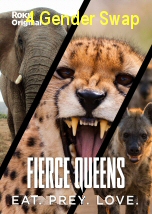
Gender Swap

   2020    Nature
One extraordinary family of fish has achieved the ultimate form of gender equality. When it comes to breeding, seahorses do it like no other animal on the planet. Their fierce females refuse to be left holding the baby. So it's the males that carry their brood. In this episode we explore the world of mating seahorses which are the only animals in the world that have a major gender role reversal.
Series: Fierce Queens

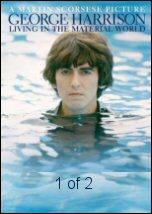
George Harrison Living in the Material World 1 of 2

   2011    History
George Harrison first became known to the world as 'The Quiet Beatle', but there was far more to his life than simply being a part of The Beatles. This film explores the life and career of this seminal musician, philanthropist, film producer and amateur race car driver who grew to make his own mark on the world. Through his music, archival footage and the memories of friends and family, Harrison's deep spirituality and humanity are explored in his singular life as he took on artistic challenges and important causes as only he could. Directed by Martin Scorsese.
Series: George Harrison Living in the Material World
Rome

Rome

  History
Universe

Universe

2021  Science
Ancient Rome

Ancient Rome

2006  History
Untold

Untold

2021  Culture