The series showcases what happened in 1993 in Waco, Texas when cult leader David Koresh faced off against the federal government in a siege of 51 days. In the first episode, gunfire erupts when federal agents arrive at the Branch Davidian compound with a search warrant. Hostage negotiators later attempt to get the children out of the compound. David Koresh was a member and later a leader of the Branch Davidians, a religious sect and offshoot of the Davidian Seventh-day Adventists, a movement based at the Mount Carmel Center outside Waco, Texas. His apocalyptic Biblical teachings attracted various followers. He became subject to allegations about polygamy and child sexual abuse by former Branch Davidian associates, although investigation by authorities found no conclusive evidence. Further allegations related to the Branch Davidians' stockpiling of weapons led the FBI to launch a raid on the group's Mount Carmel compound in February 1993.
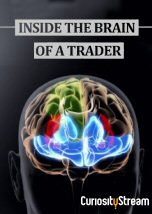
After several rogue traders stories made the headlines these last years, revealing the human factor behind the global economy, neuroscientists have started to scrutinize traders' brain and stress management. What stimulates and motivates them? How can their brain cope with such a high level of stress and competition? This film investigates further into Neuroeconomics, showing how traders are being governed by unconscious psychological and biological processes which can trigger borderline behaviours and have disastrous financial consequences on the financial markets.
Dr Michael Mosley and Professor Alice Roberts investigate if male and female brains really are wired differently. New research suggests that the connections in men and women's brains follow different patterns, patterns which may explain typical forms of male and female behaviour. But are these patterns innate, or are they shaped by the world around us?" Using a team of human lab rats and a troop of barbary monkeys, Michael and Alice test the science and challenge old stereotypes. They ask whether this new scientific research will benefit both men and women - or whether it could drive the sexes even further apart.
In 1949, after decades of making wooden furniture and toys, Ole Kirk Christiansen's small factory in Billund, Denmark, moved to plastic and created the 'Automatic Binding Bricks', which would later be known as LEGO. When the company patented the tube system in 1958, LEGO became the dominant toy line worldwide throughout the 1960s and 1970s. When other competitors capitalized on the expiration of the company's patents in the 1980s, LEGO faced stiff competition until they reported their first loss in 1998. Poor business decisions with film licenses and the failure of the Jack Stone and Galidor lines brought LEGO to near-bankruptcy until Jørgen Vig Knudstorp took over the company and, by bringing it back to its roots, rejuvenated LEGO's profits. By the time The Lego Movie hit theaters in 2014, LEGO became the largest toy franchise in the world.
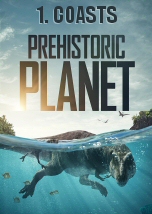
Travelling forward in time to 30,000 years ago, it's the middle of an ice age. The landscape is dominated by mighty mammoths, living side-by-side with woolly rhinos, giant deer and two separate species of human. The programme follows the fate of a herd of mammoths in their annual struggle against the harsh ice-age conditions. Every summer they spend on the grassy plains of what will one day become the bottom of the North Sea, but every winter they are forced to head for the less exposed valleys further south. It is a journey fraught with danger: mammoths can get trapped in frozen bogs, and the herd must run the gauntlet of hunters like cave lions and the deadly Neanderthals.
We love nature and all its glorious diversity. Some creatures we admire for their deadly beauty, others because they are cute, but for some it's hard to figure out exactly why we like them so much, perhaps it's a quirk. How do you decide nature's weirdest animal? Is it the sloth that hangs upside down and moves so slowly that moss grows in its fur? Is it a sea pen that sits rooted to the seabed in endless darkness and emitting its own glow? Could it be carnivorous snails that leave the ocean to digest dead creatures on the beach, finches that drink blood, or the tarantula that keeps a frog as it's pet. But with nature's endless variety, which is the weirdest? We can't decide. Can you?


























David Koresh was a member and later a leader of the Branch Davidians, a religious sect and offshoot of the Davidian Seventh-day Adventists, a movement based at the Mount Carmel Center outside Waco, Texas. His apocalyptic Biblical teachings attracted various followers. He became subject to allegations about polygamy and child sexual abuse by former Branch Davidian associates, although investigation by authorities found no conclusive evidence. Further allegations related to the Branch Davidians' stockpiling of weapons led the FBI to launch a raid on the group's Mount Carmel compound in February 1993.