Five times, the Earth has faced apocalyptic events. Cataclysms that have swept away all life forms, or almost. Each time, a handful of species has survived, establishing a new world. What did these prehistoric worlds look like? What catastrophes led to their disappearance? How did our distant ancestors manage to survive the five mass extinctions that the Earth has suffered, finally giving rise to the world we know today? Combining CGI of ancient animal and plant life, VFX and filming, 'Prehistoric Worlds' looks back at the five mass extinctions of life on Earth that allowed the advent of the human race. On the brink of a sixth mass extinction that the scientific community considers imminent – this time caused by mankind – this film gives us an interesting and powerful look at Man's existence on the scale of the history of our planet.
In the 1960s and 1970s a generation of Mexican Americans, frustrated by persistent discrimination and poverty, find a new way forward, through social action and the building of a new "Chicano" identity. The movement is ignited when farm workers in the fields of California, led by Cesar Chavez and Dolores Huerta, march on Sacramento for equal pay and humane working conditions. Through plays, poetry and film, Luis Valdez and activist Corky Gonzalez create a new appreciation of the long history of Mexicans in the South West and the Mestizo roots of Mexican Americans. In Los Angeles, Sal Castro, a schoolteacher, leads the largest high school student walkout in American history, demanding that Chicano students be given the same educational opportunities as Anglos. In Texas, activists such as Jose Angel Gutierrez, create a new political party and change the rules of the electoral game. By the end of the 1970s Chicanos activism and identity have transformed what it means to be an American. Chicano and Latino studies are incorporated into school curriculum; Latinos are included in the political process.
Now, the most famous woman to graduate college finds her voice, but when she tries to use it, a toxic culture that perpetuates misogyny will do anything to shut her up. Brooke Shields talked about her life and career. There was a time when she was a household name, a cultural phenomenon. Shields didn’t need much of an introduction. Most often, her starring role in the 1980s film 'Blue Lagoon' or her Calvin Klein ads are enough.
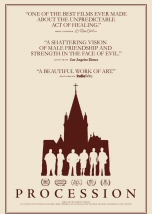
Six midwestern men all survivors of childhood sexual assault at the hands of Catholic priests and clergy come together to direct a drama therapy-inspired experiment designed to collectively work through their trauma. As part of a radically collaborative filmmaking process, they create fictional scenes based on memories, dreams and experiences, meant to explore the church rituals, culture and hierarchies that enabled silence around their abuse. In the face of a failed legal system, we watch these men reclaim the spaces that allowed their assault, revealing the possibility for catharsis and redemption through a new-found fraternity.
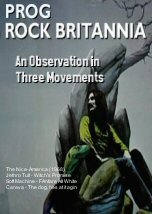
Documentary about progressive music and the generation of bands that were involved, from the international success stories of Yes, Genesis, ELP, King Crimson and Jethro Tull to the trials and tribulations of lesser-known bands such as Caravan and Egg. The film is structured in three parts, charting the birth, rise and decline of a movement famed for complex musical structures, weird time signatures, technical virtuosity and strange, and quintessentially English, literary influences. It looks at the psychedelic pop scene that gave birth to progressive rock in the late 1960s, the golden age of progressive music in the early 1970s, complete with drum solos and gatefold record sleeves, and the over-ambition, commercialisation and eventual fall from grace of this rarefied musical experiment at the hands of punk in 1977. Contributors include Robert Wyatt, Mike Oldfield, Pete Sinfield, Rick Wakeman, Phil Collins, Arthur Brown, Carl Palmer and Ian Anderson.
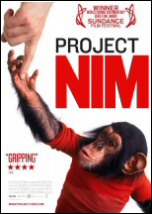
The film tells the tale of Nim Chimpsky, a chimpanzee who was the subject of a landmark experiment to see if an ape could learn to communicate with language if raised and nurtured like a human child. This study was the brainchild of Dr. Herbert Terrace, a Columbia University behavioral psychologist who hoped to teach Nim enough language that he could eventually express what he was thinking and feeling. This would refute Noam Chomsky's thesis that language is inherent only in humans, hence his moniker, a direct pun on the famous linguists' name. The doc was a smash when it played at Sundance with this entirely different incredible but true story











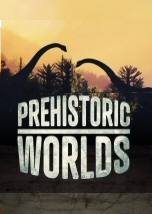






Combining CGI of ancient animal and plant life, VFX and filming, 'Prehistoric Worlds' looks back at the five mass extinctions of life on Earth that allowed the advent of the human race. On the brink of a sixth mass extinction that the scientific community considers imminent – this time caused by mankind – this film gives us an interesting and powerful look at Man's existence on the scale of the history of our planet.