Stonehenge was shaped over centuries, but to what purpose? Was it a temple to the sun, or the moon, an astronomical calendar, or a shrine to dead ancestors? Now Stonehenge may be about to give up some of its secrets. For the first time in nearly half a century a new archaeological dig the sacred stone circle. And the men who are leading the excavation are well aware of the significance of this moment. The film exposes an investigation into a radical theory that Stonehenge, far from being a place of burial as is commonly assumed, was in fact a place of healing. The investigation takes in forensic testing of bones excavated over the past decades and hard-won permission for the first dig in 50 years at the Henge, watched live online by millions of viewers around the world. Does the theory of the healing stones bear up to modern-day forensic science?
It sounds like a Hollywood blockbuster: a deadly asteroid is on a collision course with Earth. But in reality, it's only a matter of time before a giant space rock threatens to wipe out civilization. An asteroid took out the dinosaurs sixty-five million years ago. Are we next? This episode analyzes the threat and explores the many ways--from a nuclear bomb to ingenious new technology--that experts are proposing to stop Armageddon
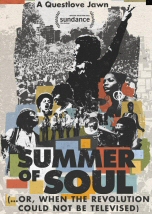
This documentary is part music film, part historical record created around an epic event that celebrated Black history, culture, and fashion. Over the course of six weeks in the summer of 1969, just 100 miles south of Woodstock, The Harlem Cultural Festival was filmed in Mount Morris Park (now Marcus Garvey Park). The footage was never seen and largely forgotten--until now. 'Summer of Soul' shines a light on the importance of history to our spiritual well-being and stands as a testament to the healing power of music during times of unrest, both past and present. The feature includes concert performances by Stevie Wonder, Nina Simone, Sly and the Family Stone, Gladys Knight and the Pips, Mahalia Jackson, B.B. King, The 5th Dimension, and more.
Our super friends in the animal world possess so many hidden superpowers. In the third episode we meet heat-seeking dogs, GPS-outfitted cats, and a sporty goldfish with squad goals. When we think we know them inside out, dogs surprise us with something new. what sensory superpower have dogs been hiding all this time? They have a thermal sensor in the tip of his nose. In the wild, a dog could use his thermal nose to spot the heat of a prey animal, allowing him to hunt even if his other senses were impaired. It also explains that uncanny knack for stealing a warm seat.
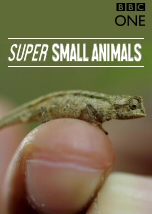
From a primate that’s no bigger than a mouse, to a chameleon that can fit on your fingertip, the natural world is full of fantastically small animals. Biologist Patrick Aryee explores the fascinating secrets behind these miniature marvels and shows that they’re not the underdogs you might think they are. Super Small Animals follows him as he meets the leading experts on these pint sized superstars, and finds out what makes them some of the most successful on the planet. First up, he reveals the huge benefits that being small can bring. There’s the little lemur whose diminutive frame helps it to exploit a unique gap in the eco-system, the tiny hummingbird that uses its size to out-maneuver the competition, and the world’s smallest seahorse that never has to leave home. He also explores why small animals are proportionally the strongest in the world, and introduces a peanut-sized beetle that can pull over a thousand times its own weight. Next he explores the challenges that animals face when they shrink in size, and the ingenious ways they overcome them. We find out how the smallest armadillo in the world manages to control its temperature in the searing desert sun, and the how the world’s smallest fish can survive in nothing more than a puddle, because it never really grows up. Patrick meets a secretive hippo that lives in the dense jungle, and looks like it’s been shrunk in the wash, and some of the world’s smallest snakes that give birth to enormous babies. He also meets a scientist that studies how really tiny spiders have a surprising trick that enables them to travel an incredible 40 miles per day, using almost no energy. Then there are the animals that refuse to be pigeon holed as small, and manage to punch way above their weight. He puts some astonishing invertebrates to the test, to see how they work together to become much bigger than the sum of their parts and meets a pint-sized predator that takes on some of the largest and most dangerous creatures on the planet, getting hands on to discover how its build helps it to be brave. Finally he uncovers the incredible lengths that deep sea anglerfish go to in order to be big and small at the same time, and has an endearing encounter with a tiny carnivore that manages to be small in just one direction. Whether their size helps them to hunt, hide or survive, all these remarkable animals prove that good things really do come in small packages.
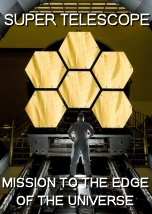
As NASA releases the first images from the James Webb Space Telescope, this film tells the inside story of the telescope's construction and the astronomers taking its first picture of distant stars and galaxies. Will it be the deepest image of our universe ever taken? The successor to Hubble, and 100 times more powerful, the James Webb is the most technically advanced telescope ever built. It will look further back in time than Hubble to an era around 200 million years after the Big Bang, when the first stars and galaxies appeared. Webb's primary mission is to capture the faint light from these objects on the edge of our visible universe so that scientists can learn how they formed, but its instruments are so sensitive it could also be the first telescope to detect signs of life on a distant planet. The James Webb Telescope is an £8 billion gamble on the skills of its engineering team. It’s the first telescope designed to unfold in space – a complicated two-week operation in which 178 release devices must all work - 107 of them on the telescope's sun shield alone. If just one fails, the expensive telescope could become a giant piece of space junk. From its conception in the late 1980s, the construction of Webb has posed a huge technical challenge. The team must build a mirror six times larger than Hubble’s and construct a vast sun shield the size of a tennis court, fold them up so they fit into an Ariane 5 rocket, then find a way to unfold them in space. This film tells the inside story of the James Webb Space Telescope in the words of the engineers who built it and the astronomers who will use it.








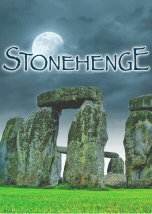






The film exposes an investigation into a radical theory that Stonehenge, far from being a place of burial as is commonly assumed, was in fact a place of healing. The investigation takes in forensic testing of bones excavated over the past decades and hard-won permission for the first dig in 50 years at the Henge, watched live online by millions of viewers around the world. Does the theory of the healing stones bear up to modern-day forensic science?