


Last Watched

"Life "  Sort by

The Age of Aging

   2015    Medicine
In recent years, close study of the aging process has opened up new ways that could help us all live healthier for longer. Can we move beyond treating individual diseases, and instead treat the aging process itself? But would a longer life necessarily be a better life? A loose-knit group of researchers believe the real breakthrough is extending our health span - the period of life spent free of disease". Hear from Laura Deming, who dropped out of M.I.T. at the age of 14 and committed herself to finding and funding projects that can expand the human health span, and Dr. Brian Kennedy, whose work in the basic biology of aging has been crucial to the development of countless other researchers' work.
The Arctic

   2011    Culture
The Arctic is the harshest environment on Earth: little food grows, it's dark for months on end, and temperatures stay well below freezing for much of the year. Yet four million people manage to survive here. Human Planet tells remarkable stories of extraordinary people who make their homes in nature's deep freeze. In springtime, Amos and Karl-Frederik set out across the sea ice with their dogs to catch a real-life sea monster: a Greenland shark! Inuit mussel-gatherers venture underneath the sea ice at low tide for a perilous race against time as they gather their food. And the children of Churchill, Manitoba, set out on the most dangerous trick or treating Halloween in the world: they risk coming face-to-face with deadly polar bears on the streets of their town. Who'll get the tastiest snack?
Series: Human Planet

The Arctic Ocean

   2009    Nature
With much of it covered in ice all year round and with no daylight from October to March, the Arctic Ocean is one of the world's most remarkable oceans. Its home to a multitude of unique life forms, all highly adapted to cope with the extreme and seasonal conditions. The impacts of climate change are more strongly felt here than anywhere else in the world.
Series: Oceans

The Arid Heart

   2024    Nature    3D    HD
In the sixth episode, you’ll journey through Asia’s vast deserts and steppes, where life thrives against all odds. Meet the elusive Gobi bear, one of the rarest mammals on Earth, scent-marking ancient trees in its territory. In the densely populated Thar Desert, thousands of demoiselle cranes migrate from Siberia to be greeted with offerings of grain by the local Jain community. Discover how wild horses and gazelles endure harsh conditions and outsmart predators. This chapter reveals the remarkable resilience and adaptability of wildlife in one of the planet’s most unforgiving environments.
Series: Asia

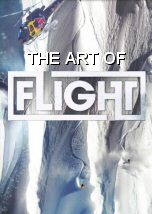
The Art of Flight

   2011    Culture
Snowboarding as you've never seen it, unless you are one of the handful of daredevils willing to risk life and limb for the glory revealed here. Jaw dropping footage with a pulse-pounding soundtrack, shot in some of the most rugged, remote and beautiful snow country on the planet. "The Art of Flight" gives iconic snowboarder Travis Rice and friends the opportunity to redefine what is possible in the mountains. Experience the highs, as new tricks are landed and new zones opened, alongside the lows, where avalanches, accidents, and wrong-turns strike. Directed by Curt Morgan ad converted by Venture 3D, one of Hollywood's leading 3D conversion companies, the feature combines meaningful storytelling and sport progressing action with some of the most captivating 3D visuals to date. The film was shot using state of the art equipment and technologies, much of which was custom designed for this project. The film transcends snowboarding with an inspirational message about adventure and exploration.

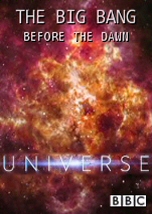
The Big Bang: Before the Dawn

   2021    Science
How did the universe come to be? Thanks to a series of discoveries, our most powerful space missions have unravelled 13.8 billion years of cosmic evolution and revealed the story of our universe from its birth all the way to the arrival of our nascent civilization. Our guide on this odyssey back to the dawn of time is light. Telescopes are time machines - by looking out into the distant universe, they open a window to the past. One telescope more than any other has helped us journey through the history of the universe: NASA’s Hubble Space Telescope. Remarkably, Hubble has even found one of the first galaxies ever to exist in the universe, which was born some 13.4 billion years ago. It's a discovery that hints at the beginnings of our own Milky Way. Vivid CGI brings this ancient galaxy to life, allowing us to witness for ourselves the first dawn. It was the beginning of a relationship between stars and planets that would, on a faraway world, lead to the origin of life - and ultimately to us.
Hubble’s incredible discoveries have allowed scientists to piece together much of our cosmic story, but it cannot take us back to the most important moment in history: the Big Bang. For decades, the moment the universe began was the subject of pure speculation, but by combining astronomy and cosmology, scientists have finally found a way to put their theories to the test and study the momentous events that took place during the Big Bang. They can do this because the European Space Agency’s Planck space telescope has seen the afterglow of the Big Bang itself – something we call the Cosmic Microwave Background. The unparalleled detail Planck gave us has helped confirm something remarkable: the Big Bang may not be the beginning. There was a time before the dawn – a place beyond anything we can comprehend. Professor Brian Cox transports us back to the fraction of a second before the Big Bang, when the seeds of our universe were planted.
Series: Universe
Galapagos

Galapagos

2006  Nature
The Hunt

The Hunt

2015  Nature
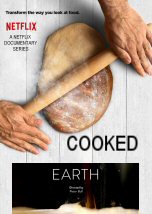
Cooked

Cooked

2016  Culture
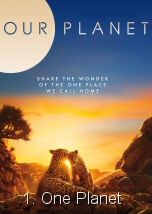
Our Planet

Our Planet

2019  Nature
Planet Earth

Planet Earth

2007  Nature
Modern Masters

Modern Masters

2024  Art
Long Way Up

Long Way Up

2020  Culture