







Last Watched

"Science"  Sort by

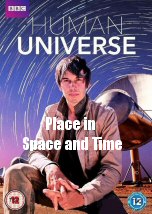
Place in Space and Time

   2014    Science
On a trip to the fortified Moroccan village of Ait-Ben-Haddou in the Atlas Mountains, Professor Brian Cox reveals how by watching the stars' motion across the night sky, it is quite natural for man to think he is at the centre of everything. That view was held for many ages, but innate human curiosity has eventually led to an understanding of mankind's true place in space and time, and an appreciation that Earth is not a focal point but a mere particle of rock in a possibly infinite expanse of space, 13.8 billion years from the beginning of the universe.
Series: Human Universe
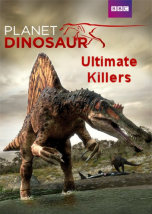

Planet Dinosaur Ultimate Killers

   2012    Science    3D    HD
This is one of the most ambitious animated programmes ever attempted for broadcast TV, recreating every detail of these extraordinary animals in an entirely digital production that stretches the boundaries of broadcast 3D with a scale and ambition normally reserved for Hollywood feature films. Planet Dinosaur 3D is a thrilling and immersive journey into a lost world. Pulling together cutting edge research from around the world this programme uses the latest, stunning fossil evidence to chart the rise and fall of the 'Ultimate Killers'; from the iconic Spinosaurus, the largest predator ever to walk the Earth, to Microraptor and the feathered, flying dinosaurs from China. At last, thanks to the advances in technology, and for the first time ever, these monsters can be experienced in all their full, magnificent wonder.
Series: Planet Dinosaur

Playful Creatures

   2015    Nature
Spy in the Huddle use innovative techniques to reveal the incredible secrets of your pets' behaviour in ways never seen before. As astonishing photography explores the wild side of our playful pets, find out why hamsters love to run in a wheel, how dogs pick up the rules of the pack and how kittens learn to be solitary hunters. Featuring incredible views of plunge-diving dogs, babysitting cats, acrobatic hamsters and a playful cat outwitted by his prey" - you'll never look at your favourite companions in quite the same way again. The latest science also reveals why budgies talk, how a cat scales a vertical wall with the help of a special claw, why hamsters stuff their faces with more food than they can eat and the real meaning behind a rabbit's hop. Our pets are also given a chance to explore their wild side as we join the free-roaming pet dogs of Cusco Peru, pet rabbits living in a natural warren and the wild-living inhabitants of Cat Island, Japan. A range of innovative techniques such as moving X-rays, thermal imagery, minicam-carrying dogs and revelatory slow-motion photography shows why our pets play and how their true wild nature is just a whisker away.
Series: Pets: Wild at Heart

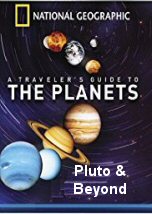
Pluto and Beyond

   2011    Science
Pluto is one of the Smaller than our own Moon, Pluto has never had a single visitor from Earth - until now. We keep saying, 'This is it, this is humanity's trip to Pluto. For the first time in human history, Pluto is about to be revealed. We can expect surprises, it's almost guaranteed. Until then, we can only guess what Pluto looks like. And recently, astronomers decided not to call it a planet any more. Once thought to be an isolated oddity, Pluto now marks the beginning of a whole new frontier. it's as if the explorers had climbed up to the top of the Rockies and were looking over and could see the lands of California on the other side. There has never been a better time to venture where no human has gone before. To follow in the footsteps of our robot pioneers and explore beyond the planets of our Solar System.
Series: A Traveler Guide to the Planets

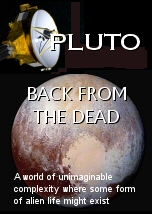
Pluto: Back From the Dead

   2020    Science
The incredible story of how Pluto has been propelled from an unremarkable ball of ice on the edge of the solar system to a world of unimaginable complexity - where some form of alien life might exist.
New discoveries from the edge of the solar system are transforming what is known about Pluto, thanks to the New Horizons space probe that took the first-ever close up images of the planet. Pluto was once thought to be geologically dead, but the pictures revealed it to be an active world of stunning complexity, with mountains carved from ice, a nitrogen glacier that appeared to be moving and a recently active volcano, with data sent back lead some scientists to speculate that there may even be life on Pluto today.
Series: Space Deepest Secrets

Precision the Measure of All Things

   2013    Science
Professor Marcus du Sautoy explores why we are driven to measure and quantify the world around us and why we have reduced the universe to just a handful of fundamental units of measurement. He tells the story of the metre and the second - how an astonishing journey across revolutionary France gave birth to the metre, and how scientists today are continuing to redefine the measurement of time and length, with extraordinary results.
Rome

Rome

  History
Latino Americans

Latino Americans

2013  History
Cooked

Cooked

2016  Culture
First Life

First Life

2010  Science