

Last Watched

"Ant "  Sort by

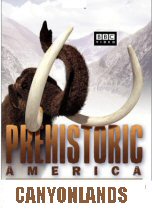
Canyonlands

   2003    Nature
Journey through the long-vanished corners of prehistoric North America, beginning when man first entered the vast, unspoiled continent some 14,000 years ago, in this appealing BBC documentary. Witness ancient beasts, mammoths, mastodons, giant bears, and sabre-toothed cats, and see the legacies each has passed to their modern successors. Computer animation and digital effects bring to life mammoths, saber-toothed cats, giant ground sloths, short-faced bears, glyptodonts, and a plethora of smaller animals in a lush Ice Age mosaic.
Series: Prehistoric America
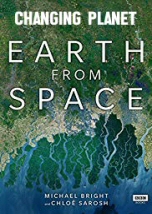
Changing Planet

   2019    Nature    HD
At a time when the Earth’s surface is changing faster than ever in human history, watch cities grow, forest disappear and glaciers melt.
In the ever-growing grey of cities one man is feeding thousands of parakeets; in Sumatra a female orang-utan and her daughter face life in a forest under threat; while in Tanzania local people use satellites to replant a forest, securing the future for a family of chimpanzees. This is our home as we’ve never seen it before.
Series: Earth from Space

Changing the Script

   2020    History
The written word is so important in everyday life that there can be few more radical acts than forcing an entire nation to learn a new script. Yet that is what happened in Turkey in 1928 when Mustafa Kemal decreed that the Arabic script would be replaced by the letters of the Latin alphabet. Communication with computers using human language is usually made with Latin letters. This is how most Chinese people interact with their computers and smart phones, using a Latin-based phonetic script called Pinyin. As a result, even highly educated Chinese are losing the ability to write using Chinese characters. Could what is happening in China be the future of writing everywhere?
Series: The Secret History of Writing

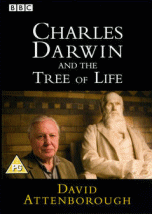
Charles Darwin and the Tree of Life

   2009    Science
David Attenborough asks three key questions: how and why did Darwin come up with his theory of evolution? Why do we think he was right? And why is it more important now than ever before? David starts his journey in Darwin's home at Down House in Kent, where Darwin worried and puzzled over the origins of life. David goes back to his roots in Leicestershire, where he hunted for fossils as a child, and where another schoolboy unearthed a significant find in the 1950s. And he revisits Cambridge University, where both he and Darwin studied, and where many years later the DNA double helix was discovered, providing the foundations for genetics. At the end of his journey in the Natural History Museum in London, David concludes that Darwin's great insight revolutionised the way in which we see the world. We now understand why there are so many different species, and why they are distributed in the way they are. But above all, Darwin has shown us that we are not set apart from the natural world, and do not have dominion over it. We are subject to its laws and processes, as are all other animals on earth to which, indeed, we are related.

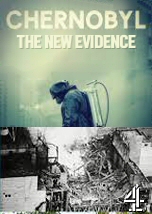
Chernobyl: The New Evidence

   2022    Culture
A catastrophe still reverberating today with Chernobyl on the front line of war. Formerly secret KGB files reveal the astonishing truth about the 1986 explosion of the Chernobyl nuclear reactor in Ukraine, with leading experts and eyewitness accounts.
Newly declassified evidence from KGB archives reveals that the KGB had concerns about the safety of the Chernobyl nuclear plant even as it was being built. The film includes first-hand accounts from survivors, including Oleksiy Ananenko, who braved radioactive waters to prevent a second explosion, and Maryna Sivets, whose unborn child's life was put at risk.

Childbirth: All or Nothing

   2015    Medicine
What's your idea of the perfect birth? Do you want every medical intervention known to science or do you want to go it alone, without the help of a doctor or midwife? And what about after birth? Perhaps you'll hang on to your baby's placenta and carry it around with your newborn until it dries and drops off naturally? Or maybe you'll decide to eat it by whizzing it up into a smoothie? This film follows four pregnant women all making very different choices around their births, all determined to do it their way." 37-year-old Jo plans to deliver her baby completely alone on board her barge, without the assistance of any medical professional. By contrast, 34-year-old Anna is opting to sidestep the pains of labour and book in for a c-section at the Portland Hospital in London. Anna wants all the medication available and she doesn't want to feel a thing. There are plenty of unusual plans for after the birth too. In Devon, 33-year-old Lisa plans to lotus birth - she'll leave her baby's umbilical cord attached to its placenta and she'll keep it fresh by dusting it with salt, rose petals and lavender oil. 35-year-old Kati from Manchester is going to whizz her afterbirth into a smoothie and consume it over a number of days. She hopes it will help her stave off post-natal baby blues and bounce back as quickly as possible. Fending off bewildered looks and concerns from friends, family and medical professionals, each woman is going against convention to have the birth she wants. There are free and frank discussions between mums and daughters and decisions to go against medical advice. So does breaking with the norm and sticking to your guns pay off? And what really is the perfect birth?
The Hunt

The Hunt

2015  Nature
Leaving Neverland

Leaving Neverland

2019  Culture
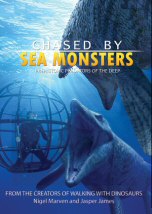
Chased by Sea Monsters

Chased by Sea Monsters

2003  Science
Planet Earth III

Planet Earth III

2023  Nature
Life in the Undergrowth

Life in the Undergrowth

2005  Nature
Space Race

Space Race

2005  Technology