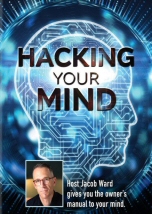
Jacob Ward travels the globe to investigate Decision Science. We imagine our conscious minds make most decisions but in reality we go through much of our lives on 'Autopilot'. And marketers and social media companies rely on it. The first part offers you the owner’s manual for this autopilot. The second part, 'Weapons of Influence', explores how politicians, social media companies and corporate marketers use big data to hack decision-making system. The third part, 'Us vs. Them', shows how this autopilot biases fuel the nation's divisions and how to overcome them. The last part, 'The Wings of Angels', explores why hacking for good is an important scientific discovery; how people can hack their own minds to improve their lives and change the world for the better.
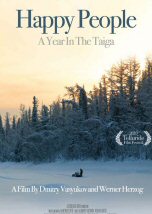
In the center of the story is the life of the indigenous people of the village Bakhtia at the river Yenisei in the Siberian Taiga. The camera follows the protagonists in the village over a period of a year. The natives, whose daily routines have barely changed over the last centuries, keep living their lives according to their own cultural traditions. Werner Herzog and Russian co-director Dmitry Vasyukov takes viewers on yet another unforgettable journey into remote and extreme natural landscapes. The acclaimed filmmaker presents this visually stunning documentary about indigenous people living in the heart of the Siberian Taiga. Deep in the wilderness, far away from civilization, 300 people inhabit the small village of Bakhtia at the river Yenisei. There are only two ways to reach this outpost: by helicopter or boat. There's no telephone, running water or medical aid. Follow the Siberian trappers through all four seasons of the year to tell the story of a culture virtually untouched by modernity.
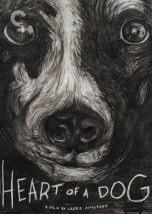
Laurie Anderson embarks on a cinematic journey through love, death and language. Cantering on Anderson's beloved rat terrier Lolabelle, who died in 2011, the film is a personal essay that weaves together childhood memories, video diaries, philosophical musings on data collection, surveillance culture and the Buddhist conception of the afterlife, and heartfelt tributes to the artists, writers, musicians and thinkers who inspire her. Fusing her own witty, inquisitive narration with original violin compositions, hand-drawn animation, 8mm home movies and artwork culled from exhibitions past and present, Anderson creates a hypnotic, collage-like visual language out of the raw materials of her life and art, examining how stories are constructed and told - and how we use them to make sense of our lives.
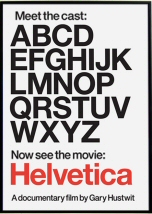
Helvetica is a feature-length independent film about typography, graphic design and global visual culture. It looks at the proliferation of one typeface (which celebrated its 50th birthday in 2007) as part of a larger conversation about the way type affects our lives. The film is an exploration of urban spaces in major cities and the type that inhabits them, and a fluid discussion with renowned designers about their work, the creative process, and the choices and aesthetics behind their use of type. The film encompasses the worlds of design, advertising, psychology, and communication, and invites us to take a second look at the thousands of words we see every day. Interviewees in Helvetica include some of the most illustrious and innovative names in the design world, including Erik Spiekermann, Matthew Carter, Massimo Vignelli, Wim Crouwel, Hermann Zapf, Neville Brody, Stefan Sagmeister, Michael Bierut, David Carson, Paula Scher, Jonathan Hoefler, Tobias Frere-Jones, Experimental Jetset, Michael C. Place, Norm, Alfred Hoffmann, Mike Parker, Bruno Steinert, Otmar Hoefer, Leslie Savan, Rick Poynor, and Lars Müller.
Dr Aleks Krotoski concludes her investigation of how the World Wide Web is transforming almost every aspect of our lives. Joined by Facebook founder Mark Zuckerberg, Bill Gates, Al Gore and the neuroscientist Susan Greenfield, Aleks examines the popularity of social networks such as Facebook and asks how they are changing our relationships. And, in a ground-breaking test at University College London, Aleks investigates how the Web may be distracting and overloading our brains.
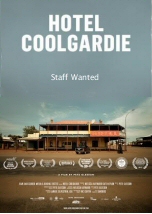
On a dusty highway between Australia's most isolated city and its largest gold pit lies Coolgardie - where the arrival every three months of a new pair of foreign backpackers to work the only bar in town is a keenly anticipated event. Fresh off the plane and lured by the promise of an authentic outback experience, Finnish travellers Lina and Steph find themselves en route to a dot on the map - to pour beers, replenish depleted travel funds, and live amongst the locals. But their working holiday quickly deteriorates into a baptism of fire. Harangued by their new boss, relentlessly pursued by booze-addled patrons, and prey to the madness and malaise of an environment as claustrophobic as it is isolated - the girls soon realise that to meet expectations out here, they'll need to do more than just serve drinks.





The first part offers you the owner’s manual for this autopilot. The second part, 'Weapons of Influence', explores how politicians, social media companies and corporate marketers use big data to hack decision-making system. The third part, 'Us vs. Them', shows how this autopilot biases fuel the nation's divisions and how to overcome them. The last part, 'The Wings of Angels', explores why hacking for good is an important scientific discovery; how people can hack their own minds to improve their lives and change the world for the better.