Journey through the awe-inspiring Nordic wilderness in a documentary that brings together all three episodes in a single feature-length video, unveiling the untamed beauty and surprising contrasts of northern Europe. From the icy remoteness of the Svalbard archipelago to the snowy vastness of Lapland and the tense frontier with Russia, the story unfolds across a dramatic landscape shaped by nature and history. Explore the fjords of Norway and the volcanic extremes of Iceland, before heading south to Sweden and Denmark, where behind the smiles and prosperity lie unexpected and shocking truths. This series offers not just breathtaking views, but deep insight into what makes these societies both fascinating and fragile.
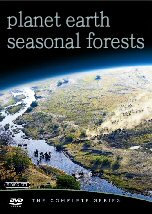
The Taiga forest, on the edge of the Arctic, is a silent world of stunted conifers. The trees may be small but filming from the air reveals its true scale. A third of all trees on Earth grow here and during the short summer they produce enough oxygen to change the atmosphere. In California General Sherman, a giant sequoia, is the largest living thing on the planet, ten times the size of a blue whale. The oldest organisms alive are bristlecone pines. At more than 4,000 years old they pre-date the pyramids. But the baobab forests of Madagascar are perhaps the strangest of all.
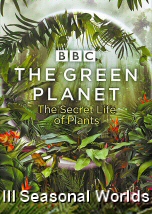
Will explore the strategy, deception and feats of engineering plants use to thrive in the changing weather of different seasons. In the face of conditions ranging from ice and snow to raging fires, survival is often a question of perfect timing - particularly when contending with intense competition and surprising predators. In this episode, David Attenborough travels to Finland to show one of the most extreme examples of seasonal plant life in the Arctic Circle. He also travels to California to see how climate change is affecting giant sequoias. These ancient trees like all other seasonal plants depend on the predictability of the seasons and our current changing climate threatens their survival.
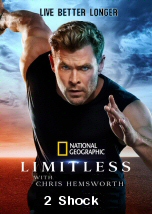
To maximize longevity, you might think it’s best to play it safe and stay cozy. But some scientists believe we should do the opposite, as exposure to extreme temperatures can trigger our bodies’ own defenses against the killer diseases of old age. Chris heads for the freezing Arctic with his brothers Liam and Luke to take on the ultimate cold therapy.
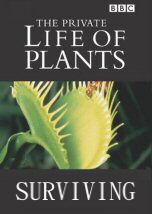
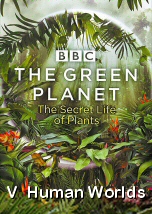
the final episode deals with plants that live in hostile environments. Attenborough visits Ellesmere Island, north of the Arctic Circle, to demonstrate that even in a place that is unconducive to life, it can be found. Algae and lichens grow in or on rock, and during summer, when the ice melts, flowers are much more apparent. However, they must remain close to the ground to stay out of the chilling wind. In the Tasmanian mountains, plants conserve heat by growing into 'cushions' that act as solar panels, with as many as a million individual shoots grouped together as one. Others, such as the lobelia in Mount Kenya, have a 'fur coat' of dense hairs on their leaves. The saguaro cactus in the Sonoran Desert flourishes because of its ability to retain vast amounts of water, which can't be lost through leaves because it has none. Many desert dwellers benefit from an accelerated life cycle, blooming rapidly within weeks after rainfall. Conversely, Mount Roraima is one of the wettest places on Earth. It is a huge sandstone plateau with high waterfalls and nutrients are continuously washed away, so plants have to adapt their diet if they are to survive. A bladderwort is shown invading a bromeliad. Inhabitants of lakes have other problems to contend with: those that dominate the surface will proliferate, and the Amazon water lily provides an apt illustration. Attenborough ends the series with an entreaty for the conservation of plant species.
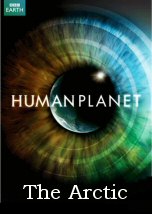
The Arctic is the harshest environment on Earth: little food grows, it's dark for months on end, and temperatures stay well below freezing for much of the year. Yet four million people manage to survive here. Human Planet tells remarkable stories of extraordinary people who make their homes in nature's deep freeze. In springtime, Amos and Karl-Frederik set out across the sea ice with their dogs to catch a real-life sea monster: a Greenland shark! Inuit mussel-gatherers venture underneath the sea ice at low tide for a perilous race against time as they gather their food. And the children of Churchill, Manitoba, set out on the most dangerous trick or treating Halloween in the world: they risk coming face-to-face with deadly polar bears on the streets of their town. Who'll get the tastiest snack?











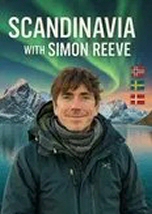



This series offers not just breathtaking views, but deep insight into what makes these societies both fascinating and fragile.