








Last Watched

"Japan"  Sort by

The Day they Dropped the Bomb

   2015    History
August 6th 1945 marked the start of a terrifying new episode in human history. This documentary marks the 70th anniversary of the day when the world's first atomic bomb was dropped on the Japanese city of Hiroshima by a Boeing B-29 USAF Superfortress bomber, nicknamed Enola Gay after the pilot's mother". Up to 80,000 people - 30 per cent of the population - were killed by the blast and resulting firestorm and over 70,000 were injured. This documentary gives a minute-by-minute account of what happened on that fateful day, through the testimony of people who were there and rarely-seen archive footage from the time. Made on location in Hiroshima and the USA, it features unique interviews with eyewitnesses who have seldom, if ever, spoken about the experience. Several of them are no longer alive, they include the last surviving member of the crew of the Enola Gay - navigator Dutch Van Kirk who died in July 2014.
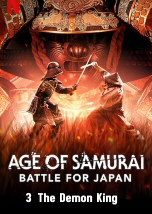
The Demon King

   2021    History
Fueled by a ruthless and maniacal ambition to conquer Central Japan, Nobunaga has destroyed many enemies who have underestimated him. His vicious military campaigns to weaken the powerful Buddhist institutions have turned large swathes of the population against him. As Nobunaga's cruelty intensifies, some generals begin to question his command, leading to a betrayal that alters the political landscape forever.
Series: Age of Samurai: Battle for Japan

The Mastery of Flight

   1998    Nature
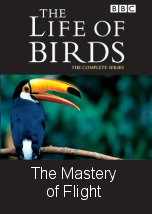
The second programme deals with the mechanics of flight. Getting into the air is by far the most exhausting of a bird's activities, and Sir Attenborough observes shearwaters in Japan that have taken to climbing trees to give them a good jumping-off point. The albatross is so large that it can only launch itself after a run-up to create a flow of air over its wings. A combination of aerodynamics and upward air currents (or thermals), together with the act of flapping or gliding is what keeps a bird aloft. Landing requires less energy but a greater degree of skill, particularly for a big bird, such as a swan. Weight is kept to a minimum by having a beak made of keratin instead of bone, a light frame, and a coat of feathers, which is maintained fastidiously. The peregrine falcon holds the record for being fastest in the air, diving at speeds of over 300 km/h. Conversely, the barn owl owes its predatory success to flying slowly, while the kestrel spots its quarry by hovering. However, the true specialists in this regard are the hummingbirds, whose wings beat at the rate of 25 times a second. The habits of migratory birds are explored. After stocking up with food during the brief summer of the north, such species will set off on huge journeys southwards. Some, such as snow geese, travel continuously, using both the stars and the sun for navigation. They are contrasted with hawks and vultures, which glide overland on warm air, and therefore have to stop overnight.
Series: The Life of Birds

The Reason I Jump

   2020    Culture
An immersive cinematic experience of nonspeaking autistic people across the world, The Reason I Jump is based on a book written by Naoki Higashida when he was just 13. The film follows a young Japanese boy on a journey through an epic landscape. As a maelstrom of thoughts, feelings, impulses, and memories affects his every action, he gradually discovers what his autism means to him, how his perception of the world differs from others’, and why he acts the way he does—the reason he jumps.

The Reluctant Traveler Ep 5-8

   2023    Culture    HD
In the last four episodes, Eugene Levy’s journey turns into a celebration of contrast and courage. In the Maldives, he tries to find his sea legs at a luxurious private island resort that promises anything, anytime, anywhere. In South Africa, he experiences a powerful encounter with an elephant that changes the way he sees connection and empathy. In Portugal, he delights in rich Iberian cuisine, uncovering the soul of local traditions. Finally, in Tokyo, he steps into the ring as a sumo referee, embracing the balance between discipline, culture, and humor in a city bursting with life.
Series: The Reluctant Traveler

The Rise and Rise of Bitcoin

   2014    Technology
Bitcoin is a peer-to-peer monetary system in which all transaction records are public. Participants can use its open-source software to transfer virtual currency to one another as easily as they might send an email. Bitcoin opens an uncharted world of new possibilities to explore. We'll follow the stories of entrepreneurs and startups that are helping shape the new financial frontier. We'll look at the competitive mining market and the various subcultures within the Bitcoin community." You'll encounter a variety of characters and opinions as we examine the social and political impact of an open-source digital currency. Will the rise of Bitcoin bring a monetary paradigm shift that will forever change the world? Supposedly invented by a mysterious Japanese man named Satoshi Nakamoto (whose current whereabouts are unknown). Because it is designed to have an absolute ceiling of 21 million Bitcoins in circulation (not anticipated until 2040), and the system has no central depository or administrative authority, it has great appeal to libertarians and others who seek alternatives to a perceived corrupt, manipulative banking infrastructure and excessive government regulations. Its low processing fees compared with those of mainstream credit-card companies also hold considerable allure for merchants.