From space, Earth is a kaleidoscope. Turquoise plankton blooms trigger a feeding frenzy, China turns yellow with rapeseed flowers, and mysterious green lights appear in the ocean. Satellites give us a new perspective on its greatest and most beautiful spectacles allowing us to make new discoveries We can watch landscapes change through the seasons and marvel in the scale of their transformations. Satellite cameras capture a kaleidoscope of extraordinary colours surprising and constantly changing, created by natural phenomena, by animals and by people. These colours are revealing new insight into the health of our fragile planet, transforming our understanding of our colourful home.
In this episode, Helen seeks out the colours that turned planet Earth multicoloured. To investigate the essence of sunlight Helen travels to California to visit the largest solar telescope in the world. She discovers how the most vivid blue is formed from sulfur atoms deep within the Earth's crust and why the presence of red ochre is a key sign of life. In gold, she discovers why this most precious of metals shouldn't even exist on the surface of the planet and in white, Helen travels to one of the hottest places on Earth to explore the role salt and water played in shaping planet Earth.
We think of comets as beautiful glowing balls of light streaking across our skies with their long sweeping tails, yet comets are so much more than just a cosmic firework display. Comets have a uniquely important place in modern science. As time machines from the early universe, they could hold the key to unlock the secrets of the cosmos. Comets could even be the origin of life itself. We follow the incredible odyssey of a comet as it sails through the solar system, watching it's every move as it evolves from a dormant chunk of ice and rock into a tumbling, violently active nucleus engulfed in a gaseous haze. What we learn is a revelation; comets are even more mysterious and fascinating than we had ever imagined.
David Attenborough embarks on an extraordinary journey to unravel one of nature s most gripping stories the evolution of flying animals. The power of flight is one of the greatest miracles of nature. Over one hundred billion creatures soar through the air today - from nectar-drinking hummingbirds, to armoured airborne beetles; from bats hunting in the black of night, to bizarre winged lizards. The film travels back in time to unravel the astonishing 300-million-year story of how these animals first appeared, and then evolved into the huge variety of aeronauts that fill our skies today. Only now, using the latest scientific analysis, can he reveal the hidden mechanics behind their gravity-defying skills. Ground-breaking 3D cameras, high speed filming and stunning CGI bring the viewer closer than ever to this astounding aerial world.
A constellation is a group of stars that are connected together to form a figure or picture. Explore some of the 88 official constellations and learn about some of the highlights of each.
Forget the Big Bang. The real moment of creation was the Cosmic Dawn - the moment of first light. It's the moment the first stars were born, the moment that lit up the Universe, and made the first structure and the first ingredients of life. This is the scientific version of the story of Genesis. The Big Bang gets all the credit for creating our universe. But in fact, the universe it gave was dark and boring. There were no stars, no galaxies, just a vast, black fog of gas - the cosmic dark ages". But, after a hundred million years of nothing, came a dramatic moment of transformation - the Cosmic Dawn. Astronomers are now trying to witness this cosmic dawn. For the first time they have the tools to explore the very first stars of the universe and to tell the scientific story of our creation.







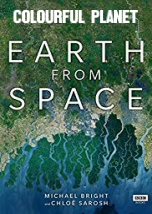




Satellite cameras capture a kaleidoscope of extraordinary colours surprising and constantly changing, created by natural phenomena, by animals and by people. These colours are revealing new insight into the health of our fragile planet, transforming our understanding of our colourful home.