




Last Watched

"Wind"  Sort by

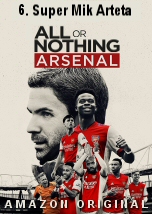
Super Mik Arteta

   2022    Culture
After Aubameyang departure and a quiet transfer window, Mikel Arteta is feeling the pressure from fans and critics alike. At home, his wife and family reflect on his tough job. On the pitch, the team seek to keep the dream of a European competition alive. Defender Ben White fights for the respect of the fans and another tough game against Liverpool threatens to derail the team's momentum.
Series: All or Nothing: Arsenal
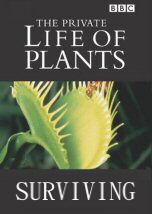
Surviving

   1995    Nature
the final episode deals with plants that live in hostile environments. Attenborough visits Ellesmere Island, north of the Arctic Circle, to demonstrate that even in a place that is unconducive to life, it can be found. Algae and lichens grow in or on rock, and during summer, when the ice melts, flowers are much more apparent. However, they must remain close to the ground to stay out of the chilling wind. In the Tasmanian mountains, plants conserve heat by growing into 'cushions' that act as solar panels, with as many as a million individual shoots grouped together as one. Others, such as the lobelia in Mount Kenya, have a 'fur coat' of dense hairs on their leaves. The saguaro cactus in the Sonoran Desert flourishes because of its ability to retain vast amounts of water, which can't be lost through leaves because it has none. Many desert dwellers benefit from an accelerated life cycle, blooming rapidly within weeks after rainfall. Conversely, Mount Roraima is one of the wettest places on Earth. It is a huge sandstone plateau with high waterfalls and nutrients are continuously washed away, so plants have to adapt their diet if they are to survive. A bladderwort is shown invading a bromeliad. Inhabitants of lakes have other problems to contend with: those that dominate the surface will proliferate, and the Amazon water lily provides an apt illustration. Attenborough ends the series with an entreaty for the conservation of plant species.
Series: The Private Life of Plants

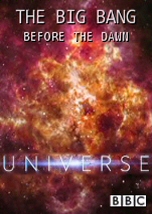
The Big Bang: Before the Dawn

   2021    Science
How did the universe come to be? Thanks to a series of discoveries, our most powerful space missions have unravelled 13.8 billion years of cosmic evolution and revealed the story of our universe from its birth all the way to the arrival of our nascent civilization. Our guide on this odyssey back to the dawn of time is light. Telescopes are time machines - by looking out into the distant universe, they open a window to the past. One telescope more than any other has helped us journey through the history of the universe: NASA’s Hubble Space Telescope. Remarkably, Hubble has even found one of the first galaxies ever to exist in the universe, which was born some 13.4 billion years ago. It's a discovery that hints at the beginnings of our own Milky Way. Vivid CGI brings this ancient galaxy to life, allowing us to witness for ourselves the first dawn. It was the beginning of a relationship between stars and planets that would, on a faraway world, lead to the origin of life - and ultimately to us.
Hubble’s incredible discoveries have allowed scientists to piece together much of our cosmic story, but it cannot take us back to the most important moment in history: the Big Bang. For decades, the moment the universe began was the subject of pure speculation, but by combining astronomy and cosmology, scientists have finally found a way to put their theories to the test and study the momentous events that took place during the Big Bang. They can do this because the European Space Agency’s Planck space telescope has seen the afterglow of the Big Bang itself – something we call the Cosmic Microwave Background. The unparalleled detail Planck gave us has helped confirm something remarkable: the Big Bang may not be the beginning. There was a time before the dawn – a place beyond anything we can comprehend. Professor Brian Cox transports us back to the fraction of a second before the Big Bang, when the seeds of our universe were planted.
Series: Universe

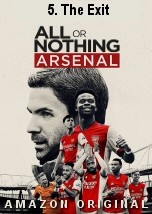
The Exit

   2022    Culture
The start of a new year brings the January transfer window and Mikel Arteta the chance to rebuild his squad. Arsenal continue their quest for silverware, competing in the FA and Carabao Cup, as well as still fighting for top 4. Meanwhile, questions over Aubameyang's future continue dominating the media and the club must come to a decision about what to do with their former captain.
Series: All or Nothing: Arsenal
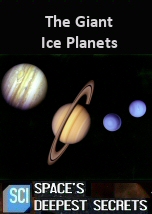
The Giant Ice Planets

   2021    Science
Uranus and Neptune, two of the largest, farthest and strangest planets in our solar system. These two planets break all the rules. Of all the big planets, Uranus and Neptune remain the biggest enigmas. Today, astronomers are finally unlocking why these supersized snowballs are so weird. Can an ancient mega-collision reveal what knocked Uranus onto its side? Can a missing twin world unlock why one of Neptune's moons orbits the wrong way? And what is the energy that drives the fastest winds in the solar system?
Series: Space Deepest Secrets Series 8

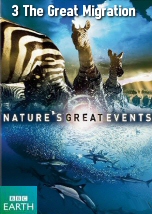
The Great Migration

   2009    Nature
Each year more than one million wildebeest and zebra invade the Serengeti grasslands, making it a paradise for the predators that live there. But what happens when the herds move off again? We follow the moving story of one lion family's struggle to survive until the return of the great migration. Nature's Great Events tells the story of the epic trek of herds that follow the rains to fresh pastures, and the tale of the predators they leave behind.
The crew captures the desperate plight of a single pride of lions, revealing a different side to the Serengeti. Rather than being a predators' paradise, it is a land in constant change, with wildebeest following the rains and leaving the lions to tough it out. The Ntudu pride has seven cubs, and is already suffering as the wildebeest leave to find fresh pastures. The four pride females struggle to find enough food for their hungry offspring. As weeks turn to months, the pride members become more emaciated and frailer, and the number of cubs dwindles to just two. As the herds begin to return, the plains reveal one final secret. For the first time since 1967 the Serengeti's only active volcano, Ol Doinyo Lengai, begins to billow ash and smoke. Filmed from the air, the team captures the exciting action. Fertilised by the volcanic ash over millions of years, these short grass plains are among the most productive grasslands in the world. After months of hardship, the pride's tragic story, through sickness, drought and fire, is over as the herds return, providing plentiful food.
Series: Nature Great Events
Invisible Worlds

Invisible Worlds

2010  Science
The Putin Interviews

The Putin Interviews

2017  Culture
D-Day

D-Day

2013  History
In the Age of AI

In the Age of AI

2019  Technology
Seven Ages of Rock

Seven Ages of Rock

2007  Art
The Human Body

The Human Body

1998  Medicine