The setting alternates between prehistory and modern day times in which scientists study the fossilized remains of the creatures in the film. In 2009, a group of paleontologists discover a rare fossil in Kansas. The fossil was previously exposed by a summer rain, and it appears to be a marine reptile, tracing back over 70 million years. It was a female Dolichorhynchops and will be the inspiration for telling the story of Dolly, who travels the Kansas Inland Sea, 80 million years ago during the late Cretaceous period with her family. The film brings to life some of the most bizarre, ferocious and fascinating creatures to ever inhabit the ocean, incluing Tylosaurus, Xiphactinus, Cretoxyrhina, and Ammonite. It combines animation with recreations in a 3D prehistoric adventure. A journey to the bottom of the ancient oceans dramatizes awe-inspiring creatures.
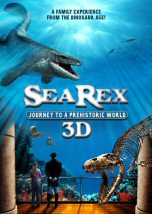
Experience a wondrous adventure from the dinosaur age. Join Julie, an imaginative young woman, as she travels from a modern-day aquarium to the Triassic, Jurassic and Cretaceous periods. Explore an amazing underwater universe inhabited by larger-than-life creatures including the powerful Liopleurodon, long-necked Elasmosaurus and gigantic Shonisaurus which were ruling the seas before dinosaurs conquered the earth. Thanks to state-of-the-art ultra-photorealistic imagery in 3D or 2D, see science come alive in a unique and entertaining manner. Immerse yourself in a lost age, 200 million years back in time, and get ready for a face-to-face encounter with the T-Rex of the seas. Directed by Ronan Chapalain and Pascal Vuong.
Are we alone? SETI--the Search for Extraterrestrial Intelligence--is a privately funded project using radio telescopes and optical telescopes to scan the stars for signals.
Within the earth, right beneath our feet, are strange and sometimes deadly secrets. Earthquakes, tsunamis, and volcanic eruptions are just some of the phenomena that are driven by hidden forces deep inside our planet. With the latest sensors and surface scans, a virtual X-Ray of the earth can be generated for study. In the first episode, we will explore how a vast fault 80 miles off the Pacific Northwest coast. With pressure building for over 300 years, a slip would result in a megaquake and tsunami that will devastate the region threatening 15 million people.
20 years ago, two astronomers made a remarkable discovery, one which would change the way we view the universe for ever. A planet outside our solar system, orbiting a distant star - an exoplanet. Since then, we have found worlds where it rains diamonds, ones that boil at 3,000 degrees centigrade
and even a world with four suns in its sky. But the big question is -
will we ever find another Earth? As we close in on the discovery of the 2,000th planet outside our solar system, or exoplanet, we investigates the techniques that are revealing so much about these alien worlds. The documentary asks if we are really any closer to finding another world like our own - a second Earth.
Our world, our solar system, our universe, none of it would exist without a ghostly particle called the neutrino. They are our early warning system whenever there's trouble in the universe. Neutrinos trigger star-killing explosions, supernovas. Neutrinos can answer so many questions, from why do we exist to how was the universe created. Neutrinos can be the very reason that we exist at all. The more we understand these elusive particles, the more we can gain insight into how the universe works.












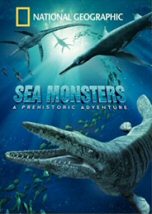









The film brings to life some of the most bizarre, ferocious and fascinating creatures to ever inhabit the ocean, incluing Tylosaurus, Xiphactinus, Cretoxyrhina, and Ammonite. It combines animation with recreations in a 3D prehistoric adventure. A journey to the bottom of the ancient oceans dramatizes awe-inspiring creatures.