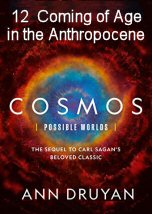
At 11 o'clock on New Year's Eve of the Cosmic Calendar, Homo erectus stood up for the first time, freeing its hands and earning the species its name. They began to move around, to explore, daring to risk everything to get to unknown places. Our Neanderthal relatives lived much as we did and did many of the things we consider to be 'human.' More restless than their cousins the Neanderthals and Denisovans, our Homo sapiens ancestors crossed seas and unforgiving landscapes, changing the land, ocean and atmosphere, leading to mass extinction. The scientific community gave our age a new name, 'Anthropocene.' Since the first civilizations we've wondered if there's something about human nature that contains the seeds of our destruction. Syukuro Manabe was born in rural Japan and took an intense interest in Earth's average global temperature. In the 1960's, he would assemble the evidence he needed to predict the increase of Earth's temperature due to greenhouse gases until it becomes an uninhabitable and toxic environment, leading to our extinction. 'This doesn't have to be,' says Neil deGrasse Tyson, 'it's not too late. There's another hallway, another future we can still have; we'll find a way.'
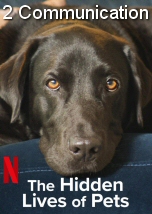
What If we could talk to animals? For as long as we've shared our lives with pets, we've been seeking better ways to communicate with them. In Washington state, Alexis Devine and her sheepadoodle Bunny think they've found a way of making communication a reality. Alexis went further than most, with a set of communication buttons, each programmed with a pre-recorded word to help humans and animals speak the same language. She has 90 buttons with which to express herself and even seems to combine them into simple sentences. Bunny is paving the way in pet communication. The undisputed masters of verbal communication are our pet parrots. They have mastered the art of vocal expression. Some parrots have even learned to fool devices designed to recognize human voices.
In a world where technology outpaces understanding, a mother and her child become the center of a global controversy. As secret experiments unravel and media frenzy escalates, hidden truths about AI, surveillance, and identity emerge. This gripping documentary explores the boundary between love and control, science and ethics, in a story that feels stranger than fiction. With exclusive access to never-before-seen footage and testimony, it invites you to question everything you thought you knew about motherhood—and the future.
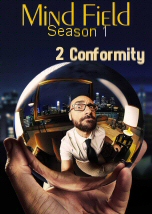
Human society is incredibly complex, and the duelling forces pushing us to conform and also to express our individuality are both necessary. Other people can influence us in good ways and in not-so-good ways. Michael Stevens takes a look into the human urge to conform and just how strong it is against our own beliefs and sense of selves.
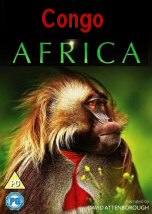
The very heart of Africa is covered in dense tropical rainforest. The animals that live here find the most ingenious ways to carve out their space in a claustrophobic landscape. Danger lurks in every shadow, but some animals thrive here, from honey-stealing chimps to birds with a lineage as old as the dinosaurs, thundering elephants and kick-boxing frogs. Here in the Congo, no matter how tough the competition, you must stand up and fight for yourself and your patch.
Filmed over the course of 4 years, the viewers will have a gripping access-all- areas account of McGregor's personal and professional journey from claiming benefits and living in his mum's spare room with his girlfriend to claiming multiple championship belts and 9-figure pay packets. Featuring exclusive interviews, unprecedented access and fight footage, this is the ultimate behind-the- scenes look at a sporting icon and his meteoric rise.



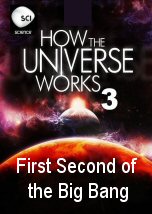



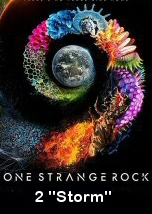






Since the first civilizations we've wondered if there's something about human nature that contains the seeds of our destruction. Syukuro Manabe was born in rural Japan and took an intense interest in Earth's average global temperature. In the 1960's, he would assemble the evidence he needed to predict the increase of Earth's temperature due to greenhouse gases until it becomes an uninhabitable and toxic environment, leading to our extinction. 'This doesn't have to be,' says Neil deGrasse Tyson, 'it's not too late. There's another hallway, another future we can still have; we'll find a way.'