









Last Watched

"Life "  Sort by

The life of Buddha

   2003    History
Life of the Buddha is a major new landmark documentary following Buddha on his journey from the lap of luxury to the verge of starvation and final enlightenment. Shot on location in Nepal and India, Life of the Buddha uses dramatic computer-generated images and recent archaeological discoveries to piece together this remarkable story.
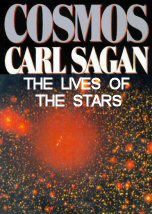
The Lives of the Stars

   1980    Science
The simple act of making an apple pie is extrapolated into the atoms and subatomic particles (electrons, protons, and neutrons) necessary. Many of the ingredients necessary are formed of chemical elements formed in the life and deaths of stars (such as our own Sun), resulting in massive red giants and supernovae or collapsing into white dwarfs, neutron stars, pulsars, and even black holes. These produce all sorts of phenomena, such as radioactivity, cosmic rays, and even the curving of spacetime by gravity. Cosmos Update mentions the supernova SN 1987A and neutrino astronomy.
Series: Cosmos

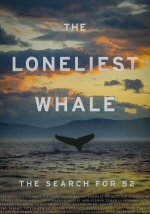
The Loneliest Whale

   2021    Nature
The film is a cinematic quest to find the '52 Hertz Whale,' which scientists believe has spent its entire life in solitude, calling out at a frequency that is different from any other whale. As we search for this elusive creature, we will explore the phenomenon of human reaction to its plight, while revealing its connection to the growing epidemic of loneliness in our interconnected world.

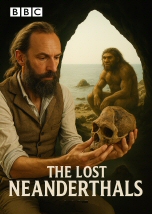
The Lost Neanderthals

   2025    History    HD
In the heart of southern France, the Mandrin Cave has drawn archaeologists for over three decades, its soils preserving an extraordinary archive of human life stretching back tens of thousands of years. Within its layers lie traces of fire, tools, and bones that tell the story of survival in a harsh prehistoric world. In 2015, the remarkable discovery of a Neanderthal individual—nicknamed Thorin—revealed that these ancient humans once lived side by side with the first Homo sapiens to arrive in the region.
Following an international team of scientists, the investigation uncovers fragile relics of the Palaeolithic era that are rewriting our understanding of how two human species encountered one another. With every excavation, new details emerge about resilience, adaptation, and coexistence, offering a powerful re-examination of what it meant to be human 50,000 years ago. This is not only the story of the Neanderthals’ fate, but also of the deep roots of our own identity.

The Lost Worlds of Planet Earth

   2014    Science
This episode explores the palaeogeography of Earth over millions of years, and its impact on the development of life on the planet. Tyson starts by explaining that the lignin-rich trees evolved in the Carboniferous era about 300 million ago, then explains on the nature of plate tectonics that would shape the landmasses of the world and the asteroid impact that initiated the Cretaceous–Paleogene extinction event, leaving small mammals as the dominate species on earth. Earth's landmasses are expected to change in the future and postulates what may be the next great extinction event.
Series: Cosmos: A Spacetime Odyssey

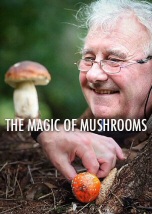
The Magic of Mushrooms

   2014    Science
Professor Richard Fortey delves into the fascinating and normally-hidden kingdom of fungi. From their spectacular birth, through their secretive underground life to their final explosive death, Richard reveals a remarkable world that few of us understand or even realise exists - yet all life on Earth depends on it. In a specially-built mushroom lab, with the help of mycologist Dr Patrick Hickey and some state-of-the-art technology, Richard brings to life the secret world of mushrooms as never seen before and reveals the spectacular abilities of fungi to break down waste and sustain new plant life, keeping our planet alive. Beyond the lab, Richard travels across Britain and beyond to show us the biggest, fastest and most deadly organisms on the planet - all of them fungi. He reveals their almost magical powers that have world-changing potential - opening up new frontiers in science, medicine and technology.