Mathematician Dr Hannah Fry explores the mystery of maths. It underpins so much of our modern world that it's hard to imagine life without its technological advances, but where exactly does maths come from? Is it invented like a language or is it something discovered and part of the fabric of the universe? It's a question that some of the most eminent mathematical minds have been wrestling with. To investigate this question, Hannah goes head first down the fastest zip wire in the world to learn more about Newton's law of gravity, she paraglides to understand where the theory of maths and its practice application collide, and she travels to infinity and beyond to discover that some infinities are bigger than others. In this episode, Hannah goes back to the time of the ancient Greeks to find out why they were so fascinated by the connection between beautiful music and maths. The patterns our ancestors found in music are all around us, from the way a sunflower stores its seeds to the number of petals in a flower. Even the shapes of some of the smallest structures in nature, such as viruses, seem to follow the rules of maths. All strong evidence for maths being discovered. But there are those who claim maths is all in our heads and something we invented. To find out if this is true, Hannah has her brain scanned. It turns out there is a place in all our brains where we do maths, but that doesn't prove its invented. Experiments with infants, who have never had a maths lesson in their lives, suggests we all come hardwired to do maths. Far from being a creation of the human mind, this is evidence for maths being something we discover. Then along comes the invention of zero to help make counting more convenient and the creation of imaginary numbers, and the balance is tilted in the direction of maths being something we invented. The question of whether maths is invented or discovered just got a whole lot more difficult to answer
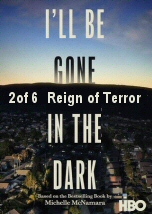
In 1979, law enforcement is thrilled when the East Area Rapist attacks abruptly stop in Northern California. But in reality, the East Area Rapist had only moved 400 miles south, to commit a number of gruesome murders in the Santa Barbara area, where he would become known as the Original Night Stalker. Michelle McNamara ultimately came up with the name 'Golden State Killer' cause he terrorized up and down the state. Michelle starts to write a true crime book that would transcend the genre because the way she humanized all of the victims.
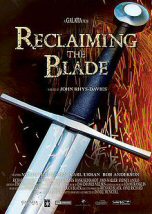
Filmmaker Daniel McNicoll explores the emerging movement to reclaim the ancient medieval and renaissance martial arts in this documentary narrated by Welsh actor John Rhys-Davies, and produced on corroboration with Lord of the Rings director Peter Jackson. The Medieval and Renaissance blade was a remarkable weapon crafted with the utmost attention to detail. Though the history of the sword remains largely shrouded in mystery for younger moviegoers, their presence on the big screen can still be felt in the Star Wars saga, as well as films like Chronicles of Narnia and The Pirates of the Caribbean. Join host Davies as he traces the history of this remarkable weapon throughout the ages, in the process giving us a better understanding of the sword's unique role in both history, and films.
Michelle McNamara reflects on the 1984 murder of her childhood neighbour Kathy Lombardo, which she credits with planting the seed for her lifelong fascination with unsolved crimes. Michelle really wanted this child and wished to get her murderer caught. The story of the victims has to be told.
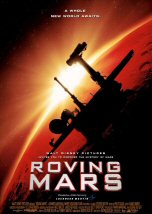
Join the Mars rovers Spirit and Opportunity for an awe-inspiring journey to the surface of the mysterious red planet. Through the eyes of these two intrepid, death-defying rovers, and with NASA scientists and engineers at your side, you’ll see Mars in a way no one ever has before. You’ll feel what it is like to stand on the startling surface of the planet that’s intrigued mankind for eons. And you’ll uncover its ultimate mystery: Is there life on Mars? Roving Mars – it’s the ride of a lifetime.
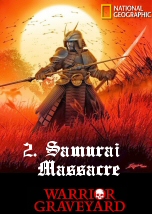
The unearthing of a gruesome grave filled with thousands of skeletons at the beach of Kamakura in Japan could be about to unlock the true extent of the merciless violence and mystery surrounding the true origins of one of the most feared and revered warriors of all time: the Samurai. In the Middle Ages, Kamakura was the capital of Japan. The 'Shogun', a kind of aristocratic military dictator, ruled here. This shogunate ended in 1333 with the Battle of Kamakura. A drastic event in Japanese history, because this resulted in not only political, but also social, philosophical and technical innovations. The remains of the samurai warriors who fell near Kamakura now provide scientists with detailed insights into the time of the Kamakura shogunate and the bloody conflict between the shogun and the emperor. The chilling burial ground dates back to 1333. Kamakura was one of the most heavily fortified regions of Japan. When the Emperor became angered by the growing powers of the ruling Hojo family, he sought to retake control of the region, setting the stage for a war that would change the shape of the nation. Among over 4000 sets of remains, six have a unique story to tell: the husband and wife involved in a sword fight to the death; the warrior monk; a peasant boy soldier; and members of the ruling Hojo family, captured and decapitated, with their heads displayed as trophies of victory. These remains reveal the secrets of the Samurai, their ferocious fighting skills and their merciless killing techniques.




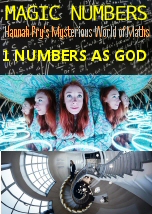


In this episode, Hannah goes back to the time of the ancient Greeks to find out why they were so fascinated by the connection between beautiful music and maths. The patterns our ancestors found in music are all around us, from the way a sunflower stores its seeds to the number of petals in a flower. Even the shapes of some of the smallest structures in nature, such as viruses, seem to follow the rules of maths. All strong evidence for maths being discovered. But there are those who claim maths is all in our heads and something we invented. To find out if this is true, Hannah has her brain scanned. It turns out there is a place in all our brains where we do maths, but that doesn't prove its invented.
Experiments with infants, who have never had a maths lesson in their lives, suggests we all come hardwired to do maths. Far from being a creation of the human mind, this is evidence for maths being something we discover. Then along comes the invention of zero to help make counting more convenient and the creation of imaginary numbers, and the balance is tilted in the direction of maths being something we invented. The question of whether maths is invented or discovered just got a whole lot more difficult to answer