A powerful movement is exploiting our fears, persuading some to believe the vaccine was designed to control or even kill us. Who are the people behind the international anti-Covid-vaccine movement and why are they doing it? In the anti-vax movement - where is the money? The money comes from a small but very well-heeled network of donors and philanthropists who fund anybody reinforcing their opinions. The film is a journey inside the astonishing world of the anti-vaxxers.
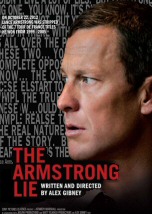
Academy Award-winning director Alex Gibney (Taxi to the Dark Side) masterfully explores the fall of the disgraced cycling champion following the 2009 Tour de France, making use of his extraordinary access to attain rare interviews with former teammates, alleged doping mastermind Dr. Michele Ferrari, and Armstrong himself. What was Lance Armstrong thinking? For years, after seizing international fame as the cancer survivor who won seven Tour de France titles, he fiercely denied accusations that he used performance-enhancing drugs. He used his power to aggressively litigate journalists and publicly humiliate former friends who claimed otherwise. His deceit finally cracked in January 2013, when he admitted guilt to Oprah Winfrey in a television interview that critics decried for only scratching the surface. Academy Award-winning director Alex Gibney approaches Armstrong with unique and extraordinary access. In 2009, Gibney was commissioned to make a film about Armstrong's return to the Tour de France, four years after the racing champion had declared retirement. That race would later stir up devastating evidence in the case against Armstrong. But Gibney came away from the experience unable to reconcile the discrepancy between doping allegations and Armstrong's emphatic denials. Then, post-Oprah, Gibney went back to Armstrong for new interviews to extract a more detailed account of his double life. In The Armstrong Lie, Gibney masterfully explores the complexities of the case, interweaving the dramatic action of the 2009 Tour de France, when Armstrong found himself unexpectedly competing against his own teammate Alberto Contador. Gibney attains rare interviews with Armstrong's former teammates and alleged doping mastermind Dr. Michele Ferrari. The film also raises troubling questions about the process of doping regulation. Recently, when asked to give advice to documentary filmmakers, Gibney responded with a motto exemplified by this film: "Embrace contradictions."
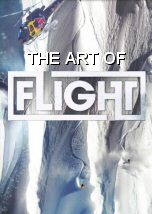
Snowboarding as you've never seen it, unless you are one of the handful of daredevils willing to risk life and limb for the glory revealed here. Jaw dropping footage with a pulse-pounding soundtrack, shot in some of the most rugged, remote and beautiful snow country on the planet. "The Art of Flight" gives iconic snowboarder Travis Rice and friends the opportunity to redefine what is possible in the mountains. Experience the highs, as new tricks are landed and new zones opened, alongside the lows, where avalanches, accidents, and wrong-turns strike. Directed by Curt Morgan ad converted by Venture 3D, one of Hollywood's leading 3D conversion companies, the feature combines meaningful storytelling and sport progressing action with some of the most captivating 3D visuals to date. The film was shot using state of the art equipment and technologies, much of which was custom designed for this project. The film transcends snowboarding with an inspirational message about adventure and exploration.
Of all the diseases that plague humankind, malaria has put up one of the longest, toughest fights. More than 200 million people fall ill and 600,000 die of it every year, making it among the world’s deadliest diseases. The vast majority of those fatalities are young children - an average of one child every minute. But medical science may now be at an exciting turning point. Filmed with intimate access to key scientists on four continents, this documentary tells the inside story of the development of a new malaria vaccine that could change the very nature of the fight. It's hoped that the vaccine, dubbed R21/Matrix-M and developed by many of the same team behind the Oxford/AstraZeneca Covid-19 vaccine, will be the first to meet the World Health Organization’s target of 75 per cent efficacy.
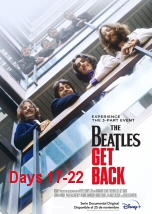
The Beatles continue recording as the deadline for completing the project, caused by Ringo Starr's filming schedule for The Magic Christian, approaches. McCartney continues to hope that the band will perform live for an audience and Lennon meets American businessman Allen Klein for the first time. On the penultimate day, the Beatles perform an unannounced concert on the roof of the Apple Corps building, attracting crowds of passers-by as well as the attention of the Metropolitan Police.
This widely praised by critics film was created with cooperation from Paul McCartney, Ringo Starr and the widows of John Lennon and George Harrison. Filmmaker Peter Jackson delves into invaluable footage archives to make a film that shows the truth about the Beatles recording together the album Let it Be, which had the working title of Get Back. The production employed film restoration techniques developed for Jackson's previous works on sixty hours of film footage and 150 hours of audio, spending four years in editing the series. The final cut covers 21 days in the studio with the Beatles and climaxes with the full 42-minute rooftop concert. In part I, the Beatles begin rehearsing at Twickenham Studios for what is at first meant to be a television special about the recording of their next album leading up to a live show at a location to be determined. During the sessions, Paul McCartney and George Harrison play some songs that would later appear on their respective solo albums. After seven days of rehearsals, Harrison abruptly leaves the group.
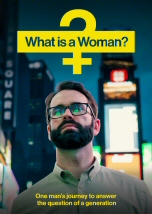



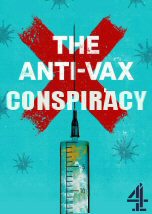





The film is a journey inside the astonishing world of the anti-vaxxers.