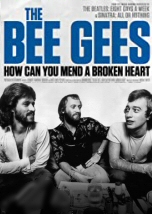
This documentary chronicles the triumphs and hurdles of brothers Barry, Maurice and Robin Gibb, otherwise known as the Bee Gees. The iconic trio, who found early fame in the 1960s, went on to write over 1,000 songs, including twenty #1 hits throughout their storied career. The film follows the Bee Gee’s meteoric rise as they rode the highs of fame and fortune, negotiated the vagaries of the ever-shifting music business and navigated the complexities of working so intimately alongside family. The story takes us from their childhood in 1950s Australia to the artistic crucible of 1960s London and to the sundrenched coast of Miami, Florida. The band created a distinct sound with their three-part harmonizing, their melodic voices forming a new kind of instrument.
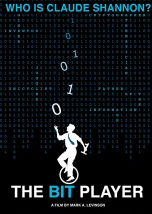
The film tells the story of an overlooked genius: Claude Shannon. In a blockbuster paper in 1948, Claude Shannon introduced the notion of a 'bit' and laid the foundation for the information age. His ideas ripple through nearly every aspect of modern life, influencing such diverse fields as communication, computing, cryptography, neuroscience, artificial intelligence, cosmology, linguistics, and genetics. But when interviewed in the 1980s, Shannon was more interested in showing off the gadgets he'd constructed -- juggling robots, a Rubik's Cube solving machine, a wearable computer to win at roulette, a unicycle without pedals, a flame-throwing trumpet -- than rehashing the past. Mixing contemporary interviews, archival film, animation and dialogue drawn from interviews conducted with Shannon himself, The Bit Player tells the story of an overlooked genius who revolutionized the world, but never lost his childlike curiosity.
The film reveals the secret story behind one of the greatest intellectual feats of World War II, a feat that gave birth to the digital age. In 1943 Bill Tutte, a 24-year-old maths student and a GPO engineer called Tommy Flowers combined to hack into Hitler's personal super code machine - not Enigma but an even tougher system, which he called his 'secrets writer'. Their break turned the Battle of Kursk, powered the D-day landings and orchestrated the end of the conflict in Europe. But it was also to be used during the Cold War - which meant both men's achievements were hushed up and never officially recognised.
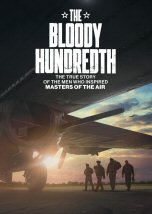
The film recounts the story of the 100th Bomb Group during World War II and follows bomber crews on dangerous missions to destroy targets inside German-occupied Europe. The Documentary honors the heroes of the Group and portrays the intensity of war, the dangers that the airmen face, and the friendships and relationships that develop. This unit from the Eighth Air Force B-17 Flying Fortress suffered tremendous losses in combat, with 177 aircraft missing in action, flying its last mission on 20 April 1945. Meet the airmen who inspired the tv series 'Masters of the Air' as they share the harrowing and transformative events of the 100th Bomb Group. The interviews with the real-life heroes are revealing, and the wealth of newsreel footage compiled in the documentary is utilized with a sharp eye for detail.
This featured documentary offers a breathtaking glimpse into the rigorous and exhilarating world of this Navy's elite flight demonstration team. Follow the newest class of pilots through their intense training regimen, capturing their journey as they prepare for a season of heart-stopping aerial performances. The film provides an inside look at the meticulous preparation and the extraordinary skill required to execute their maneuvers, giving viewers a front-row seat to their precision and passion. The narrative dives into the personal stories of these pilots, including the strain on their personal lives and the immense pride they feel in being part of this elite squadron. With stunning aerial footage shot from the cockpits and exteriors of the jets in HD, "The Blue Angels" immerses the audience in the thrilling experience of flying at breakneck speeds and performing intricate maneuvers, showcasing why this team has captivated audiences for generations.
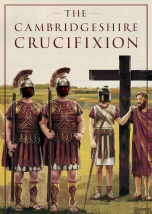
The documentary tells the story of the extremely rare discovery of evidence of Roman crucifixion, unearthed in a routine archaeological dig in the Cambridgeshire Fens. When human remains were found alongside a variety of Roman artifacts, none of the team at Albion Archaeology saw anything out of the ordinary. But once the bones were washed back at HQ, something highly unusual was uncovered: a nail through the heel bone of one of the individuals. Could this be evidence of a Roman crucifixion? When they did some research, they found that only one confirmed example had ever been unearthed before, discovered in the 1960s in Jerusalem. To find out more, they called in renowned osteoarchaeologist Dr Corinne Duhig to investigate. With exclusive access to Corinne’s investigation and the remains themselves, The Cambridgeshire Crucifixion sets out to find out who this person was, how they lived and why they were put to death in this notoriously gruesome way. We perform a CT scan, DNA and isotope analysis of the remains, and use them to create a cutting-edge virtual autopsy of the skeleton, conducted by Corinne and one of her former students, biologist Prof Ben Garrod. A supporting cast of expert contributors help to analyse the artefacts found at the Fenstanton site and reveal a compelling picture of life in Roman Britain in the 1st century CE. The film culminates in a world first: a full forensic facial reconstruction of a victim of Roman crucifixion, conducted by world-leading expert Joe Mullins.

















The film follows the Bee Gee’s meteoric rise as they rode the highs of fame and fortune, negotiated the vagaries of the ever-shifting music business and navigated the complexities of working so intimately alongside family. The story takes us from their childhood in 1950s Australia to the artistic crucible of 1960s London and to the sundrenched coast of Miami, Florida. The band created a distinct sound with their three-part harmonizing, their melodic voices forming a new kind of instrument.