Directed by award-winning filmmaker Jenner Furst, the film delves into the origins of COVID-19, exploring the possibility of a bio-arms race with China and what could be one of the largest cover-ups in modern history. Furst embarks on a quest for answers from Dr. Anthony Fauci, analyzing extensive documents and consulting with scientists, intelligence analysts, former government officials, and whistleblowers. This investigative journey aims to depoliticize a highly controversial topic, presenting an urgent scientific docu-thriller that has been described as "Oppenheimer meets Outbreak." The documentary has garnered attention for its compelling narrative and in-depth investigation. Critics have noted its ability to present complex information in an engaging manner, leaving viewers both informed and intrigued. For those interested in the intricate details of the COVID-19 pandemic's origins and the controversies surrounding it, "Thank You, Dr. Fauci" provides a thought-provoking and meticulously researched perspective.
Dylan Jones is in the driving seat for this authoritative four-part look back. No stone remains unturned, as he revisits the New Romantics, rap, modern dance music, hip-hop, indie jingle, synth-pop, house music and club culture. He makes the case that the 1980s was the most radical, innovative and creative decade in the history of pop because, unlike other decades, unleashed a myriad of new musical genres in just 10 years. In the first part, Dylan Jones explores how in this decade the world-conquering genres of rap, hip-hop and modern dance music were launched, while guitar-driven indie flourished in a constellation of scenes spread out across the world. And a technological revolution was changing how music was made, filling the charts with a starburst of innovative records. Meanwhile, the launch of MTV turned pop into a visual medium, allowing artists as varied as U2 and Eurythmics to take charge of how they presented themselves. Featuring interviews with Nile Rodgers, Bananarama, Primal Scream's Bobby Gillespie, Mark Ronson, Trevor Horn and Soul II Soul's Jazzie B.
The filmmakers challenge former Indonesian death-squad leaders to reenact their mass-killings in whichever cinematic genres they wish, including classic Hollywood crime scenarios and lavish musical numbers. Anwar Congo and his friends have been dancing their way through musical numbers, twisting arms in film noir gangster scenes, and galloping across prairies as yodeling cowboys. Their foray into filmmaking is being celebrated in the media and debated on television, even though Anwar Congo and his friends are mass murderers. Medan, Indonesia. When the government of Indonesia was overthrown by the military in 1965, Anwar and his friends were promoted from small-time gangsters who sold movie theatre tickets on the black market to death squad leaders. They helped the army kill more than one million alleged communists, ethnic Chinese, and intellectuals in less than a year. As the executioner for the most notorious death squad in his city, Anwar himself killed hundreds of people with his own hands. The Act of Killing is about killers who have won, and the sort of society they have built. Unlike ageing Nazis or Rwandan génocidaires, Anwar and his friends have not been forced by history to admit they participated in crimes against humanity. Instead, they have written their own triumphant history, becoming role models for millions of young paramilitaries. The Act of Killing is a journey into the memories and imaginations of the perpetrators, offering insight into the minds of mass killers. And The Act of Killing is a nightmarish vision of a frighteningly banal culture of impunity in which killers can joke about crimes against humanity on television chat shows, and celebrate moral disaster with the ease and grace of a soft shoe dance number.
Inside one of America’s deadliest prison systems, a group of incarcerated men defy fear and isolation to reveal the truth hidden behind concrete walls. Through smuggled footage, letters, and interviews, they expose a network of corruption, abuse, and systemic neglect that has claimed countless lives. Their courage turns confinement into resistance, transforming their voices into weapons against silence. As investigations deepen, the film uncovers how the state’s drive for profit fuels overcrowding, forced labor, and violence — conditions that thrive in secrecy. What begins as a story of survival becomes a powerful quest for justice, giving a face and a voice to those the system tried to erase.
Marc-André Leclerc climbs alone, far from the limelight. On remote alpine faces, the free-spirited 23-year-old Canadian makes some of the boldest solo ascents in history. Yet, he draws scant attention. With no cameras, no rope, and no margin for error, Leclerc's approach is the essence of solo adventure. Nomadic and publicity shy, he doesn't own a phone or car, and is reluctant to let a film crew in on his pure vision of climbing. Filmmaker Peter Mortimer sets out to make a film about Leclerc but struggles to keep up with his elusive subject. Then, Leclerc embarks on a historic adventure in Patagonia that will redefine what is possible in solo climbing.
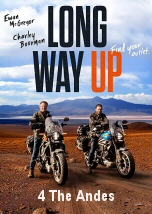
The fourth episode starts off with the two riding through Santa Cruz, Argentina. The plan is to cross over into Chile and then going up into the Andes. Ewan and Charley head through Argentina’s red rock landscape while a member of their team copes with altitude sickness. The duo are well and truly underway and the first signs of all are well is how well the Harleys hold up in challenging conditions. The roads alternate between unforgiving and pleasant and these e-bikes push through effortlessly. As they ride through Chilean Andes, the audience is shown a picturesque view of the beauty of the countryside, an experience which Boorman calls 'magical.'














The documentary has garnered attention for its compelling narrative and in-depth investigation. Critics have noted its ability to present complex information in an engaging manner, leaving viewers both informed and intrigued. For those interested in the intricate details of the COVID-19 pandemic's origins and the controversies surrounding it, "Thank You, Dr. Fauci" provides a thought-provoking and meticulously researched perspective.