


Last Watched

"Science"  Sort by

The Crimes

   2007    History
Soldiers and officers continually came into conflict with their consciences. How much freedom did individuals have? Were they executing Hitler's criminal plans, or was it the Wehrmacht's war? There were crimes against humanity, against civilians, prisoners of war, and there was the Holocaust itself. The Trent Park records discovered and analysed by historian Sönke Neitzel, author of Tapping Hitler's Generals, show that the 84 German generals who were interned at Trent Park were aware of the severity of the war crimes they had been involved in and that some discussed them almost compulsively. They included the Commissar Order, to kill any Soviet commissar, and Rathenau's order to kill the Jews, including children.
Series: The Wehrmacht
The Day the Dinosaurs Died

   2017    Science
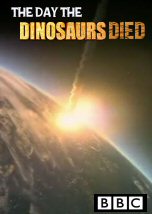
Experts suspect that the dinosaurs were wiped out after a city-sized asteroid smashed into the Gulf of Mexico causing a huge crater. But until now, they haven't had any proof. In a world first, evolutionary biologist Ben Garrod joins a multi-million pound drilling expedition into the exact spot the asteroid hit to get hard evidence of the link. The team overcomes huge obstacles as it attempts to drill 1,500 metres beneath sea level to pull up rock from the Chicxulub crater. Meanwhile, paleopathologist Professor Alice Roberts travels the globe meeting top scientists and gaining exclusive access to a mass fossil graveyard in New Jersey - believed to date from the same time the asteroid hit. Alice also treks by horseback across the remote plains of Patagonia, to see if the effects of the asteroid impact could have wiped out dinosaurs across the world - almost immediately.

The Deep

   2017    Naturaleza    HD
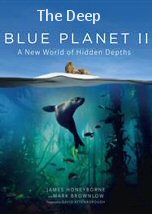
The deep is perhaps the most hostile environment on earth, at least to us - a world of crushing pressure, brutal cold and utter darkness. We have barely begun to explore it, and yet it is the largest living space on the planet. Scientists already think that there is more life in the deep than anywhere else on earth. This episode takes us on an epic journey into the unknown, a realm that feels almost like science fiction. We discover alien worlds, bizarre creatures and extraordinary new behaviours never seen before. We encounter savage hordes of Humboldt squid hunting lanternfish in the depths and coral gardens flourishing in absolute darkness, with more species of coral to be found in the deep than on shallow tropical reefs. Narrated by David Attenborough.
Series: Blue Planet II

The DNA Switch

   2019    Medicine    HD
Destiny is beyond our control, our fate already set, perhaps from the onset of disease or being born with a special ability. You may think our lives are determined by the genes we're born with, but that is not the case. In the non-coding 98% of our DNA, we have countless switches to promote or suppress the physiological reactions of our bodies. Interestingly, we can change the states of these switches through our own efforts and even can affect the DNA conditions of our offspring before their birth.
Explore the hottest area of bioscience, genomics with stunning live image, quality CGI, the forefront research, and real human stories.
Series: Dynamic Genomes Series

The Edge of Forever

   1980    Science
Beginning with the origins of the universe in the Big Bang, Sagan describes the formation of different types of galaxies and anomalies such as galactic collisions and quasars. The episodes moves further into ideas about the structure of the Universe, such as different dimensions (in the imaginary Flatland and four-dimensional hypercubes), an infinite vs. a finite universe, and the idea of an oscillating Universe (similar to that in Hindu cosmology). The search into other ideas such as dark matter and the multiverse is shown, using tools such as the Very Large Array in New Mexico. Cosmos Update shows new information about the odd, irregular surfaces of galaxies and the Milky Way perhaps being a barred spiral galaxy
Series: Cosmos

The Electric Boy

   2014    Science
This episode provides an overview of the nature of electromagnetism, as discovered through the work of Michael Faraday. Tyson explains how the idea of another force of nature, similar to gravitational forces, had been postulated by Isaac Newton before. Tyson continues on Faraday, coming from poor beginnings, would end up becoming interested in studying electricity after reading books and seeing lectures by Humphry Davy at the Royal Institution. Davy would hire Faraday after seeing extensive notes he had taken to act as his secretary and lab assistant. After Davy and chemist William Hyde Wollaston unsuccessfully tried to build on Hans Christian Ørsted's discovery of the electromagnetic phenomena to harness the ability to create motion from electricity, Faraday was able to create his own device to create the first electric motor by applying electricity aligned along a magnet. Davy, bitter over Faraday's breakthrough, put Faraday on the task of improving the quality of high-quality optical glass, preventing Faraday from continuing his research. Faraday, undeterred, continued to work in the Royal Institution, and created the Christmas Lectures designed to teach science to children. Following Davy's death, Faraday returned to full time efforts studying electromagnetism, creating the first electrical generator by inserting a magnet in a coil of wires. Tyson continues to note that despite losing some of his mental capacity, Faraday concluded that electricity and magnetism were connected by unseen fields, and postulated that light may also be tied to these forces. Using a sample of the optical glass that Davy had him make, Faraday discovered that an applied magnetic field could affect the polarization of light passing through the glass sample (a dielectric material), leading to what is called the Faraday effect and connecting these three forces. Faraday postulated that these fields existed across the planet, which would later by called Earth's magnetic field generated by the rotating molten iron inner core, as well as the phenomena that caused the planets to rotate around the sun. Faraday's work was initially rejected by the scientific community due to his lack of mathematical support, but James Clerk Maxwell would later come to rework Faraday's theories into the Maxwell's equations that validated Faraday's theories. Their combined efforts created the basis of science that drives the principles of modern communications today.
Series: Cosmos: A Spacetime Odyssey
The Life of Mammals

The Life of Mammals

2002  Nature
Top Gear

Top Gear

2012  Technology
The Last Dance

The Last Dance

2020  Culture
Prehistoric America

Prehistoric America

2003  Nature
The Story of Science

The Story of Science

2010  History
Unknown

Unknown

2023  Science