A powerful movement is exploiting our fears, persuading some to believe the vaccine was designed to control or even kill us. Who are the people behind the international anti-Covid-vaccine movement and why are they doing it? In the anti-vax movement - where is the money? The money comes from a small but very well-heeled network of donors and philanthropists who fund anybody reinforcing their opinions. The film is a journey inside the astonishing world of the anti-vaxxers.
Snowboarding as you've never seen it, unless you are one of the handful of daredevils willing to risk life and limb for the glory revealed here. Jaw dropping footage with a pulse-pounding soundtrack, shot in some of the most rugged, remote and beautiful snow country on the planet. "The Art of Flight" gives iconic snowboarder Travis Rice and friends the opportunity to redefine what is possible in the mountains. Experience the highs, as new tricks are landed and new zones opened, alongside the lows, where avalanches, accidents, and wrong-turns strike. Directed by Curt Morgan ad converted by Venture 3D, one of Hollywood's leading 3D conversion companies, the feature combines meaningful storytelling and sport progressing action with some of the most captivating 3D visuals to date. The film was shot using state of the art equipment and technologies, much of which was custom designed for this project. The film transcends snowboarding with an inspirational message about adventure and exploration.
Humans are so clever they’ve built their own habitat, designed to keep wild nature out. Yet as we discover the urban environment is totally dependant on the natural world. Over the three years of filming for Human Planet, the teams have spent time with over seventy different communities in countries across the planet. Despite seeing many different ways of living, there are some aspects of family life that remain the same whether you live in a tree house in West Papua, or a brick house in Bolton. These similarities became very clear when the urban team went to film on a rubbish dump in Kenya. Here on the Kibarani dump on the outskirts of Mombasa, Ali, Ashe and their family live and survive amongst the rubbish, and even here, just like anywhere on the planet, everything stops for a nice cup of tea!
This episode provides an overview of the nature of electromagnetism, as discovered through the work of Michael Faraday. Tyson explains how the idea of another force of nature, similar to gravitational forces, had been postulated by Isaac Newton before. Tyson continues on Faraday, coming from poor beginnings, would end up becoming interested in studying electricity after reading books and seeing lectures by Humphry Davy at the Royal Institution. Davy would hire Faraday after seeing extensive notes he had taken to act as his secretary and lab assistant. After Davy and chemist William Hyde Wollaston unsuccessfully tried to build on Hans Christian Ørsted's discovery of the electromagnetic phenomena to harness the ability to create motion from electricity, Faraday was able to create his own device to create the first electric motor by applying electricity aligned along a magnet. Davy, bitter over Faraday's breakthrough, put Faraday on the task of improving the quality of high-quality optical glass, preventing Faraday from continuing his research. Faraday, undeterred, continued to work in the Royal Institution, and created the Christmas Lectures designed to teach science to children. Following Davy's death, Faraday returned to full time efforts studying electromagnetism, creating the first electrical generator by inserting a magnet in a coil of wires.
Tyson continues to note that despite losing some of his mental capacity, Faraday concluded that electricity and magnetism were connected by unseen fields, and postulated that light may also be tied to these forces. Using a sample of the optical glass that Davy had him make, Faraday discovered that an applied magnetic field could affect the polarization of light passing through the glass sample (a dielectric material), leading to what is called the Faraday effect and connecting these three forces. Faraday postulated that these fields existed across the planet, which would later by called Earth's magnetic field generated by the rotating molten iron inner core, as well as the phenomena that caused the planets to rotate around the sun. Faraday's work was initially rejected by the scientific community due to his lack of mathematical support, but James Clerk Maxwell would later come to rework Faraday's theories into the Maxwell's equations that validated Faraday's theories. Their combined efforts created the basis of science that drives the principles of modern communications today.
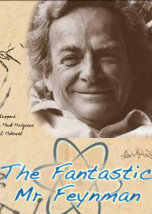
Richard Feynman is one of the most iconic, influential and inspiring scientists of the 20th century. He helped design the atomic bomb, solved the mystery of the Challenger Shuttle catastrophe and won a Nobel Prize. 25 years after his death - in his own words and those of his friends and family - this is the story of the most captivating communicator in the history of science.
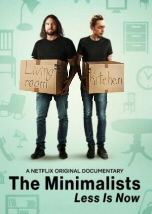
Longtime friends Joshua Fields Millburn and Ryan Nicodemus share how our lives can be better with less. The film's title was inspired by the popular maxim 'Less is more,' popularized by architect Ludwig Mies van der Rohe, who used this aphorism to describe his design aesthetic; his tactic was one of arranging the necessary components of a building to create an impression of extreme simplicity. The Minimalists have reworked this phrase to create a sense of urgency for today's consumer culture: now is the time for less.
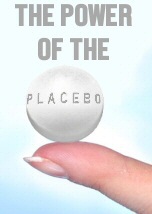





The film is a journey inside the astonishing world of the anti-vaxxers.