When Homo sapiens, which means 'wise ones,' discovered and controlled fire hundreds of thousands of years ago, everything changed. Fire allowed us to cook food and heat dwellings, and it served as a focal point for storytelling and sharing cultural identity among community members. We don't yet have established parameters for what it means to be 'distinctly human,' It would seem the only thing that separates us from other animals, Neil deGrasse Tyson ponders, is our neurotic need to feel 'special'. Against the backdrop of the Halls of Extinction, Tyson insists that there must be a clear distinction between ourselves and animals that justifies our eating them, wearing them and even bringing an end to their species. From the birth of the devil in ancient Persia to a searing story of saintliness among macaque monkeys, this episode is an exploration of human potential for change. It concludes with the story of how one of history's greatest monsters was transformed into one of its shining lights.
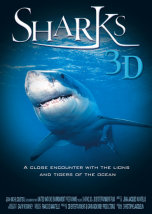
Jean-Michel Cousteau invites you to embark on a breathtaking underwater voyage to discover the ultimate predator: the shark. Experience an astonishing up-close encounter in 3D with the Lions and Tigers of the Ocean. Come face-to-face with a multitude of shark species, including the Great White, Hammerhead, and Whale Shark. Witness them as they really are: not wicked man-eating creatures, but wild, fascinating and endangered animals that have been in existence a million years before dinosaurs roamed the Earth. Join a team of ocean explorers on a round-the-globe expedition documenting the life of the ultimate predator.
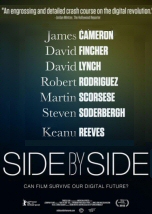
Join Keanu Reeves on a tour of the past and the future of filmmaking. Since the invention of cinema, the standard format for recording moving images has been film. Over the past two decades, a new form of digital filmmaking has emerged, creating a groundbreaking evolution in the medium. The film investigates the history, process and workflow of both digital and photochemical film creation. We will explore it via in-depth interviews with directors, cinematographers, colorists, scientists, engineers and artists such as James Cameron, David Fincher, David Lynch, Martin Scorsese, Steven Soderbergh, and many more
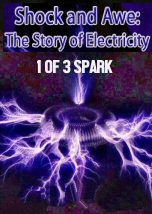
Professor Jim Al-Khalili tells the electrifying story of our quest to master nature's most mysterious force - electricity. Until fairly recently, electricity was seen as a magical power, but it is now the lifeblood of the modern world and underpins every aspect of our technological advancements.Without electricity, we would be lost. This series tells of dazzling leaps of imagination and extraordinary experiments - a story of maverick geniuses who used electricity to light our cities, to communicate across the seas and through the air, to create modern industry and to give us the digital revolution. Episode one tells the story of the very first 'natural philosophers' who started to unlock the mysteries of electricity. They studied its curious link to life, built strange and powerful instruments to create it and even tamed lightning itself. It was these men who truly laid the foundations of the modern world. Electricity was without doubt a fantastical wonder. This is the story about what happened when the first real concerted effort was made to understand electricity; how we learned to create and store it, before finally creating something that enabled us to make it at will - the battery.
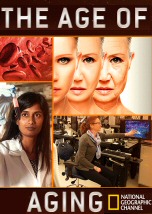
In recent years, close study of the aging process has opened up new ways that could help us all live healthier for longer. Can we move beyond treating individual diseases, and instead treat the aging process itself? But would a longer life necessarily be a better life? A loose-knit group of researchers believe the real breakthrough is extending our health span - the period of life spent free of disease". Hear from Laura Deming, who dropped out of M.I.T. at the age of 14 and committed herself to finding and funding projects that can expand the human health span, and Dr. Brian Kennedy, whose work in the basic biology of aging has been crucial to the development of countless other researchers' work.
The Arctic is the harshest environment on Earth: little food grows, it's dark for months on end, and temperatures stay well below freezing for much of the year. Yet four million people manage to survive here. Human Planet tells remarkable stories of extraordinary people who make their homes in nature's deep freeze. In springtime, Amos and Karl-Frederik set out across the sea ice with their dogs to catch a real-life sea monster: a Greenland shark! Inuit mussel-gatherers venture underneath the sea ice at low tide for a perilous race against time as they gather their food. And the children of Churchill, Manitoba, set out on the most dangerous trick or treating Halloween in the world: they risk coming face-to-face with deadly polar bears on the streets of their town. Who'll get the tastiest snack?







From the birth of the devil in ancient Persia to a searing story of saintliness among macaque monkeys, this episode is an exploration of human potential for change. It concludes with the story of how one of history's greatest monsters was transformed into one of its shining lights.