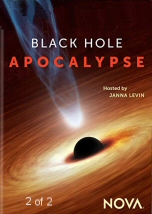
Of all the objects in the cosmos, planets, stars, galaxies, none are as strange, mysterious, or powerful as black holes. Black holes are the most mind-blowing things in the universe. They can swallow a star completely intact. Black holes have these powerful jets that just spew matter out. First discovered on paper, on the back of an envelope, some squiggles of the pen. The bizarre solution to a seemingly unsolvable equation, a mathematical enigma. Einstein himself could not accept black holes as real. People didn't even believe for many years that they existed. Nature doesn't work that way. Yet slowly, as scientists investigate black holes by observing the effect they have on their surroundings, evidence begins to mount.
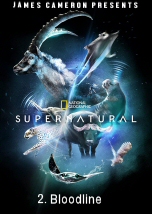
Continuing your bloodline is life's ultimate mission. In this unpredictable world, animals will do whatever it takes to keep their families safe. When family sticks together, communicating, collaborating and combining as one, everyone has the very best chance of survival. It takes every superpower possible to protect and provide for the family and secure the future for a new generation of amazing animals.
The Blue Marble is an image of Earth taken on 1972, from a distance of about 18,000 miles from the planet's surface. It was taken by the crew of the Apollo 17 spacecraft on its way to the Moon. Before it was photographed from space, our perspective of Earth was fragmented and disconnected. Recent discoveries have revealed a dynamic and rapidly changing planet, above the crust and below.
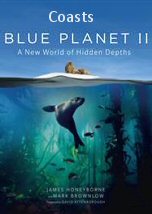
On the coast, two worlds collide. Coasts are the most dynamic and challenging habitats in the ocean - that brings great rewards but also great danger. The extraordinary animals that live here must find ingenious ways to cope with two very different worlds. This episode is a rollercoaster ride of heart-stopping action and epic drama, peopled with characters from the beautiful to the bizarre. We meet fish that live on dry land and puffins that must travel 60 miles or more for a single meal, and witness a life-and-death struggle in a technicolour rock pool. In a secluded cove in the Galapagos, sea lions feast on 60kg tuna. It should be impossible - tuna are usually far too fast for sea lions to catch. But here the sea lions club together to herd their prey inshore. Once trapped in the shallows, these huge fish are easy pickings. As the tide recedes in Brazil, lightfoot crabs leap from rock to rock, desperately avoiding the water - their lives depend on it. Moray eels launch themselves from rock pools, jaw gaping. Then octopuses, too. Both crawl across dry rock to set their ambush. Elsewhere, the ever-changing tides create rock pools. But these temporary worlds are a battleground. Predatory starfish turn a magical garden into the stuff of nightmares.
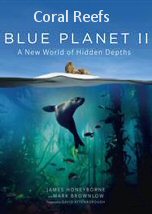
Corals build themselves homes of limestone in the warm, clear, shallow seas of the tropics. Their reefs occupy less than one tenth of one per cent of the ocean floor, yet they are home to a quarter of all known marine species. The broad-club cuttlefish has found its place by using a hypnotic display that apparently mesmerizes its prey, causing it to let down its defences. On the Great Barrier Reef a remarkable grouper uses sign language, dubbed the headstand signal, to reach out to an entirely different creature, a reef octopus, to flush small fish out of their hiding holes and into the groupers waiting mouth.
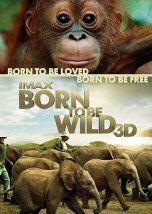
Born to be Wild is an inspiring story of love, dedication and the remarkable bond between humans and animals. This film documents orphaned orangutans and elephants and the extraordinary people who rescue and raise them - saving endangered species one life at a time. Stunningly captured in IMAX 3D and Narrated by Academy-Award winner Morgan Freeman, 'Born to be Wild' is a heart-warming adventure transporting moviegoers into the lush rainforests of Borneo with world-renowned primatologist Dr. Birut‚ Mary Galdikas, and across the rugged Kenyan savannah with celebrated elephant authority Dame Daphne M. Sheldrick, as they and their teams rescue, rehabilitate and return these incredible animals back to the wild.










First discovered on paper, on the back of an envelope, some squiggles of the pen. The bizarre solution to a seemingly unsolvable equation, a mathematical enigma. Einstein himself could not accept black holes as real. People didn't even believe for many years that they existed. Nature doesn't work that way. Yet slowly, as scientists investigate black holes by observing the effect they have on their surroundings, evidence begins to mount.