












Last Watched

"Palaeontology"  Sort by

Lost World

   2011    Science
Planet Dinosaur is sure to please budding paleontologists and older dinosaur fans alike. Narrated by John Hurt, more than 50 different prehistoric species featured in this series and they and their environments were created entirely as computer-generated images. The first episode is 95 million years ago, Late Cretaceous in North Africa. We will see Ouranosaurus, Spinosaurus, Onchopristis (a giant sawfish), Rugops, Carcharodontosaurus, Sarcosuchus, pterosaur.
Series: Planet Dinosaur
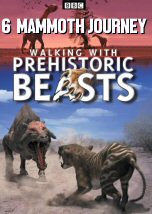
Mammoth Journey

       Science
Travelling forward in time to 30,000 years ago, it's the middle of an ice age. The landscape is dominated by mighty mammoths, living side-by-side with woolly rhinos, giant deer and two separate species of human. The programme follows the fate of a herd of mammoths in their annual struggle against the harsh ice-age conditions. Every summer they spend on the grassy plains of what will one day become the bottom of the North Sea, but every winter they are forced to head for the less exposed valleys further south. It is a journey fraught with danger: mammoths can get trapped in frozen bogs, and the herd must run the gauntlet of hunters like cave lions and the deadly Neanderthals.
Series: Walking with Prehistoric Beast

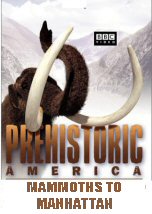
Mammoths To Manhattan

   2003    Nature
Journey through the long-vanished corners of prehistoric North America, beginning when man first entered the vast, unspoiled continent some 14,000 years ago, in this appealing BBC documentary. Witness ancient beasts, mammoths, mastodons, giant bears, and sabre-toothed cats, and see the legacies each has passed to their modern successors. Computer animation and digital effects bring to life mammoths, saber-toothed cats, giant ground sloths, short-faced bears, glyptodonts, and a plethora of smaller animals in a lush Ice Age mosaic. Discoveries from sites across America are the basis for the reconstructions.
Series: Prehistoric America

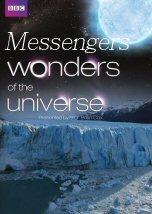
Messengers

   2011    Science
Professor Brian Cox travels from the fossils of the Burgess Shale to the sands of the oldest desert in the world to show how light holds the key to our understanding of the whole universe, including our own deepest origins. To understand how light holds the key to the story of the universe; you first have to understand its peculiar properties. Brian considers how the properties of light that lend colour to desert sands and the spectrum of a rainbow can lead to profound insights into the history and evolution of our universe. Finally, with some of the world's most fascinating fossils in hand, Brian considers how but for an apparently obscure moment in the early evolutionary history of life, all the secrets of light may have remained hidden. Because although the universe is bathed in light that carries extraordinary amounts of information about where we come from, it would have remained invisible without a crucial evolutionary development that allowed us to see. Only because of that development can we now observe, capture and contemplate the incredible wonders of the universe that we inhabit.
Series: Wonders of the Universe

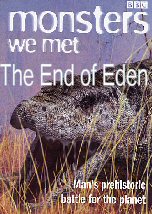
Monster we met: The End of Eden

   2006    Science
New Zealand - 850 years ago New Zealand was the last major land mass to be discovered and colonised by humans. A mere 850 years ago, Polynesian seafarers arrived in a land with no terrestrial mammals. New Zealand was a land of birds, and its avian rulers were giants: huge herbivorous moas were hunted by Haast's eagle - the largest eagle the world has ever seen. But within the space of only 100-400 years, the eagle, all the moas and over 20 other species of birds were gone. Had mankind become the monster?

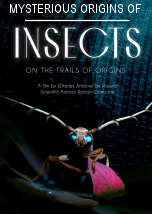
Mysterious Origins of Insects

   2024    Science    HD
The film explores the eye-opening realm of these creatures to better understand how they evolved. Travelling from the rain forests of French Guiana to the Arctic Ocean, scientists use traditional and cutting edge techniques to examine both modern insects and the fossil record in their search for a single common insect ancestor. Insects are vital to life on our planet, yet almost 40% of known species are in danger of extinction.
Insects are the most diverse group of organisms on Earth. The true number of species is unknown, but some estimates suggest that only a fraction have been identified. They have successfully adapted to every ecosystem on our planet. But insects still harbour many mysteries. Where do they come from? When did they first appear on Earth? How and why have they diversified and multiplied so successfully? At a time when certain insect species are in danger of extinction and there is greater interest in their role within ecosystems, this is the fascinating story of their origins.
Tiger

Tiger

2020  History
Chef's Table

Chef's Table

2017  Art
Zeitgeist

Zeitgeist

2007  Culture
Sonic Highways

Sonic Highways

2014  Art
Myths and Heroes

Myths and Heroes

2005  History
Eden: Untamed Planet

Eden: Untamed Planet

2021  Nature
The Crusades

The Crusades

2012  History