Recent archaeological sites in England offer a whole new perspective on the life and death of the seafarers and marines who built the British Empire in the 18th and 19th centuries. The bones of sailors reveal surprising and shocking facts. Apparently not only seasoned men but also half children did their service in the Royal Navy; according to the investigations, the youngest were no older than 13 years. A forensic archaeologist studies the injuries on bones discovered at the site of an battle and suggests how these people may have died. Three-hundred-and-fifty skeletons, exhumed from Royal Navy graveyards from the age of Nelson's Navy, are throwing an extraordinary new light on how these sailors lived, fought, outwitted their enemy, and, from the oldest to youngest, suffered for victory. These men were the beating heart of the most victorious fleet in history and never have so many of these sailors' remains been available for forensic investigation. Six remarkable stories stand out: the child sailor, the top man, the American gunner, the freed slave, the marine and the victim of the sailor's most dreaded disease: syphilis. Broken bones, amputations, injuries from blows with a saber or cutlass, sexually transmitted diseases, but also malnutrition - the list of causes of death is long. There is definitely no tale of seafaring romance. These fighters and sailors sailed the globe as cannon fodder, conquered an empire for the crown, and were themselves forgotten. No longer just bones in a box, the men of Nelson's Navy are back from the dead.
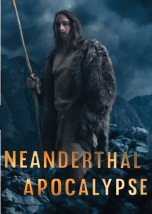
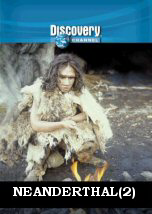
40,000 years ago the steppes of Eurasia were home to our closest human relative, the Neanderthals. Recent genetic and archaeological discoveries have proven that they were not the dim-witted cave dwellers we long thought they were. In fact, they were cultured, technologically savvy and more like us than we ever imagined! So why did they disappear? We accompany scientists on an exciting search for an answer to this question and come to a startling conclusion... A climate change due to a cataclysmic event.
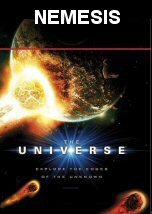
The theory of Némesis, a star that orbits the Sun and causes catastrophic events is explored. Nemesis is a hypothetical red dwarf or brown dwarf, originally postulated in 1984 to be orbiting the Sun at a distance of about 95,000 AU (1.5 light-years) somewhat beyond the Oort cloud, to explain a perceived cycle of mass extinctions in the geological record, which seem to occur more often at intervals of 26 million years.
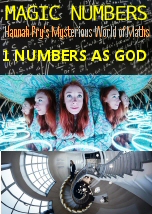
Mathematician Dr Hannah Fry explores the mystery of maths. It underpins so much of our modern world that it's hard to imagine life without its technological advances, but where exactly does maths come from? Is it invented like a language or is it something discovered and part of the fabric of the universe? It's a question that some of the most eminent mathematical minds have been wrestling with. To investigate this question, Hannah goes head first down the fastest zip wire in the world to learn more about Newton's law of gravity, she paraglides to understand where the theory of maths and its practice application collide, and she travels to infinity and beyond to discover that some infinities are bigger than others. In this episode, Hannah goes back to the time of the ancient Greeks to find out why they were so fascinated by the connection between beautiful music and maths. The patterns our ancestors found in music are all around us, from the way a sunflower stores its seeds to the number of petals in a flower. Even the shapes of some of the smallest structures in nature, such as viruses, seem to follow the rules of maths. All strong evidence for maths being discovered. But there are those who claim maths is all in our heads and something we invented. To find out if this is true, Hannah has her brain scanned. It turns out there is a place in all our brains where we do maths, but that doesn't prove its invented. Experiments with infants, who have never had a maths lesson in their lives, suggests we all come hardwired to do maths. Far from being a creation of the human mind, this is evidence for maths being something we discover. Then along comes the invention of zero to help make counting more convenient and the creation of imaginary numbers, and the balance is tilted in the direction of maths being something we invented. The question of whether maths is invented or discovered just got a whole lot more difficult to answer
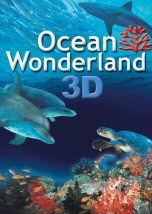
The mission of the film is to underline the crucial ecological role of coral reefs play in maintaining the well being of our planet, and to point out and warn against the dangers that are destroying the world's coral reefs. Entirely filmed using digital technology, thanks to it, the film was shot almost entirely with natural light, thus showing the underwater world as it exactly is. This is the closest you can get to dive without being there. Shot on the Great Barrier Reef in Australia and in the Bahamas, it brings to you the amazing beauty of the many varieties of coral and the immense diversity of the marine life thriving there.
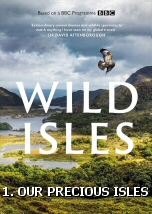
In the first episode, Sir David Attenborough reveals the unexpected wildlife riches of the British Isles, showcasing the dramatic and spectacular habitats that rival any across the globe. This journey uncovers the diversity of life in the UK's unique landscapes, from the intricate world of bumblebees to the swift lives of kingfishers. The episode captures extraordinary scenes of nature, including killer whales preying on seals, golden eagles in the Scottish mountains, the cunning tactics of woodland plants, and the perilous life of puffins evading gulls. It highlights Britain's geological diversity as a cornerstone of its natural wealth, contributing to an array of habitats and supporting a wide range of life. Britain's importance extends to being a haven for migratory birds, with our seas feeding 65% of the world's gannets and supporting the largest colony of northern gannets on Scotland's Bass Rock. The west coast of Scotland offers sanctuary to barnacle geese due to its abundant food and mild climate, though they remain vigilant against hunting sea eagles. Despite these natural treasures, Britain faces challenges as one of the most nature-depleted countries globally. Sir David Attenborough emphasizes the need to conserve and restore these wild isles for the enjoyment and benefit of future generations.







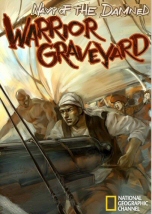




Three-hundred-and-fifty skeletons, exhumed from Royal Navy graveyards from the age of Nelson's Navy, are throwing an extraordinary new light on how these sailors lived, fought, outwitted their enemy, and, from the oldest to youngest, suffered for victory. These men were the beating heart of the most victorious fleet in history and never have so many of these sailors' remains been available for forensic investigation.
Six remarkable stories stand out: the child sailor, the top man, the American gunner, the freed slave, the marine and the victim of the sailor's most dreaded disease: syphilis. Broken bones, amputations, injuries from blows with a saber or cutlass, sexually transmitted diseases, but also malnutrition - the list of causes of death is long. There is definitely no tale of seafaring romance. These fighters and sailors sailed the globe as cannon fodder, conquered an empire for the crown, and were themselves forgotten. No longer just bones in a box, the men of Nelson's Navy are back from the dead.