Historian Bettany Hughes journeys across ancient Anatolia, modern-day Türkiye, to uncover some of the earliest foundations of civilisation. From Göbeklitepe and Karahantepe to Sardis, Gordion, Ephesus and Cappadocia, she explores how the first settled communities developed agriculture, religion, trade and urban life, while remarkable discoveries such as early monumental buildings, ancient weapons and life-sized human sculptures reveal a world far more sophisticated than once imagined. Moving through landscapes where myth and history constantly overlap, Hughes follows the rise of kingdoms and empires, encounters the world of King Midas, and traces how Anatolia became a crossroads connecting cultures across continents. Presented here with both episodes combined into a single video, the series offers a sweeping archaeological journey into the places where some of humanity’s most important ideas, beliefs and institutions first began to take shape.
Located in an almost inaccessible chamber deep in a South African cave, the site required recruiting a special team of experts slender enough to wriggle down a vertical, pitch-dark, seven-inch-wide passage. Most fossil discoveries of human relatives consist of just a handful of bones. But down in this hidden chamber, the team uncovered an unprecedented trove—so far, over 1,500 bones—with the potential to rewrite the story of our origins". They may help fill in a crucial gap in the fossil record and tell us how Homo, the first member of the human family, emerged from ape-like ancestors like the famous Lucy. But how did hundreds of bones end up in the remote chamber? The experts are considering every mind-boggling possibility. Join us on the treacherous descent into this cave of spectacular and enigmatic finds, and discover their startling implications for the saga of what made us human.
The car has shrunk the world, increased personal freedom and in so many ways expanded our horizons, but there is a flipside. Fumes from car exhausts have helped to destroy our environment, poisoned the air we breathe and killed us in far more straightforward ways. But all that is going to change. Enter a world where cars can drive themselves, a world where we are simply passengers, ferried about by wholesome green compassionate technology which will never ever go wrong. And it is almost here. Explore the artificial intelligence required to replace human drivers for cars themselves, peers into the future driverless world and discovers that, despite the glossy driverless PR (and assuming that they really can be made to work reliably), the reality is that it might not be all good news. From the ethics of driverless car crashes to the impact on jobs, it might be that cars are about to rise up against us in ways that none of us are expecting.
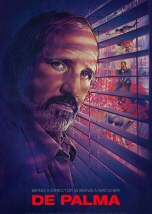
In the annals of Hollywood film since the artistic glories of the New Hollywood era, few have a better reputation and body of work in the field of suspense films exploring the contemporary darkness in American life than Brian De Palma. Here, the great film writer and director takes, us in his own words, through his professional life and a career that redefined film horror and suspense. All the while, he also confesses the challenges of working in Hollywood and the price even the great artists pay for being a part of it.
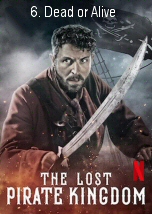
The Caribbean is home to a notorious band of British pirates called the Flying Gang. They plunder merchant ships, sailing from the Americas to Europe and Africa. England's King George I has had enough, so he comes up with a shock tactic to end piracy. It's an offer from the King, a pardon, clemency for those who turn their backs on piracy. Those who refuse will be hunted down and hanged. Two pirates, Blackbeard and Charles Vane stand the King's man, Woodes Rogers. Who will win the final battle?
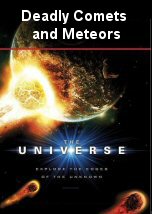
Right now cosmic forces prowl the universe and threaten man's very existence. They're asteroids and comets; they've left their imprint on planet Earth, literally. Initially helping to build planets through violent collisions, during this fiery bombardment period they may have even seeded Earth with water and the building blocks for life. Since the turbulent formation of the solar system, these space rocks have continued to impact Earth. Some have been so violent that they've led to mass extinctions, including one that wiped out the dinosaur. New theories suggest that asteroid and comet dust harbour deadly viruses that may have triggered some of our worst pandemics. The possibility of future collisions remains a legitimate threat yet despite their dangers, asteroids and comets may hold vital natural resources, which could actually preserve







Moving through landscapes where myth and history constantly overlap, Hughes follows the rise of kingdoms and empires, encounters the world of King Midas, and traces how Anatolia became a crossroads connecting cultures across continents. Presented here with both episodes combined into a single video, the series offers a sweeping archaeological journey into the places where some of humanity’s most important ideas, beliefs and institutions first began to take shape.