Nathan Fielder returns with a daring new season that elevates the concept of constructed reality to extraordinary extremes. This season dives even deeper into ethically charged scenarios, where real people rehearse life-altering choices inside meticulously engineered simulations. As the line between performance and authenticity dissolves, the series confronts our deepest questions about control, identity, and the limits of preparation. Disturbing, brilliant, and darkly hilarious—it’s an experience like no other. The opening three episodes raise the stakes immediately. A father struggles to reveal a devastating truth to his son—but the rehearsal begins to unravel his own sense of self. A woman prepares for a proposal that may never arrive, as emotional tension distorts her reality. And in a startling turn, Fielder inserts himself into the most personal rehearsal yet, facing consequences he may no longer be able to manage. With emotional weight, narrative twists, and biting satire, these episodes pull you in and don’t let go.
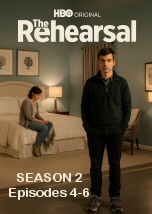
In the final arc of the season, Nathan Fielder pushes the boundaries of simulated reality to a disturbing new level. What begins as a controlled exercise in human rehearsal quickly unravels, as the participants lose sight of where the performance ends and real life begins. Nathan’s interventions grow increasingly invasive, blurring the lines between creator and subject, until the emotional weight of the experiment turns on him. With each scene, the series peels back another layer of reality, revealing unsettling truths about identity, manipulation, and control. By the final episode, the line between authenticity and artifice collapses—leaving viewers questioning everything they’ve witnessed.
Eugene Levy, a celebrated actor and self-confessed travel skeptic forces himself into the discomfort of jetting across the globe, visiting dazzling destinations he would normally avoid. With his trademark wit and unease, he peels back the gloss of travel, dipping toes into local customs, natural wonders, and cultural rituals, transforming each journey into a quietly emotional reckoning with what it means to explore, to connect, and to grow. In episodes 1 through 4, the adventure starts in the Arctic north of Finland, where he tries ice fishing, feeds reindeer, rides in a husky sled and chases the aurora borealis. Then he plunges into the Costa Rican jungle, sleeping high among trees and confronting wild creatures. In Venice he lounges at a historic palazzo, bonds with a gondolier and reflects on his life and family. Finally, a helicopter drops him into the stark desert at Amangiri in Utah, where he absorbs breathtaking landscapes and engages with the Navajo Nation while battling his own nerves.
In the last four episodes, Eugene Levy’s journey turns into a celebration of contrast and courage. In the Maldives, he tries to find his sea legs at a luxurious private island resort that promises anything, anytime, anywhere. In South Africa, he experiences a powerful encounter with an elephant that changes the way he sees connection and empathy. In Portugal, he delights in rich Iberian cuisine, uncovering the soul of local traditions. Finally, in Tokyo, he steps into the ring as a sumo referee, embracing the balance between discipline, culture, and humor in a city bursting with life.
Jean Hargadon Wehner discusses how she came to remember years later the sexual abuse she suffered at Archbishop Keough High School. She also talks about what happened when she reported the abuse to Church officials and how she realized she was connected to the death of Sister Cathy Cesnik. As the can of worms is opened on the hidden world in the high school and the people begin to talk about what happened behind closed doors. With the Jean’s accusations, Abbie Schaub, Gemma Hoskins, and Tom Nugent learn about a story of a graveyard and a source nicknamed 'Deep Throat' who could hold the key.
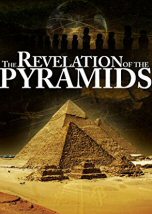
An apocryphal view on the pyramids, starting in awe at the amazing achievement of the Pharaonic architecture and sculpture, most specially at Gizeh, given Cheops's pyramid's size, weight, incredibly precise carving, four pairs of slightly shifted half sides, stunningly precisely measured shapes and symmetry. Then it questions and challenges conventional Egyptology beliefs, which it calls unproven or even impossible to verify, such as the absence of machines, a wharf duration of only 20 years or accidental equinox-orientation. Next it elaborates the theory that other major pyramid technology sites in Precolombian America, Easter Island and China can't coincidentally lie on two lines intersecting at Gizeh, even if not contemporaneous and without known contacts in their ages, and have several improbable things in common, like some of their cultures. Elaborate mathematical theories and measurements indicate the Egyptians must have known some astronomy, pi and the golden number












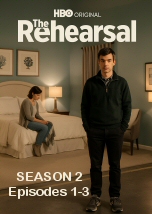









The opening three episodes raise the stakes immediately. A father struggles to reveal a devastating truth to his son—but the rehearsal begins to unravel his own sense of self. A woman prepares for a proposal that may never arrive, as emotional tension distorts her reality. And in a startling turn, Fielder inserts himself into the most personal rehearsal yet, facing consequences he may no longer be able to manage. With emotional weight, narrative twists, and biting satire, these episodes pull you in and don’t let go.