


Last Watched

"Science"  Sort by

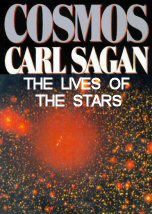
The Lives of the Stars

   1980    Science
The simple act of making an apple pie is extrapolated into the atoms and subatomic particles (electrons, protons, and neutrons) necessary. Many of the ingredients necessary are formed of chemical elements formed in the life and deaths of stars (such as our own Sun), resulting in massive red giants and supernovae or collapsing into white dwarfs, neutron stars, pulsars, and even black holes. These produce all sorts of phenomena, such as radioactivity, cosmic rays, and even the curving of spacetime by gravity. Cosmos Update mentions the supernova SN 1987A and neutrino astronomy.
Series: Cosmos
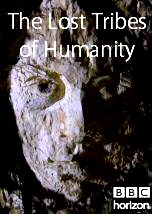
The Lost Tribes of Humanity

   2017    History
Alice Roberts explores the latest discoveries in the study of human origins, revealing the transformation that has been brought about in this field by genetics. Traditional Palaeoanthropology, based on fossils, is being transformed by advanced genome sequencing techniques. We now know that there were at least four other distinct species of human on the planet at the same time as us - some of them identified from astonishingly well-preserved DNA extracted from 50,000-year-old bones, others hinted at by archaic sections of DNA hidden in our modern genome. What's more, we now know that our ancestors met and interacted with these other humans, in ways that still have ramifications today. Alice uses these revelations to update our picture of the human family tree.

The Lost Worlds of Planet Earth

   2014    Science
This episode explores the palaeogeography of Earth over millions of years, and its impact on the development of life on the planet. Tyson starts by explaining that the lignin-rich trees evolved in the Carboniferous era about 300 million ago, then explains on the nature of plate tectonics that would shape the landmasses of the world and the asteroid impact that initiated the Cretaceous–Paleogene extinction event, leaving small mammals as the dominate species on earth. Earth's landmasses are expected to change in the future and postulates what may be the next great extinction event.
Series: Cosmos: A Spacetime Odyssey

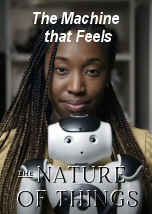
The Machine That Feels

   2021    Technology
The film explores how artificial intelligence (AI) is catching up to us in ways once thought to be uniquely human: empathy, emotional intelligence and creativity. AI has the potential to reshape every aspect of our world – but most of us are unaware of what looms on the horizon. This documentary shows viewers what they need to know about a field that is advancing at a dizzying pace, often away from the public eye. Have AI the power to disconnect us from fellow humans? What does it mean when AI makes art? Can really AI interpret and understand human emotions? How is it possible that AI creates sophisticated neural networks that mimic the human brain?
The documentary includes interviews with global leaders, commentators and innovators from the AI field, including Geoff Hinton, Yoshua Bengio, Ray Kurzweil and Douglas Coupland, who highlight some of the innovative and cutting-edge AI technologies that are changing our world.

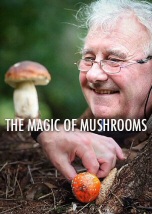
The Magic of Mushrooms

   2014    Science
Professor Richard Fortey delves into the fascinating and normally-hidden kingdom of fungi. From their spectacular birth, through their secretive underground life to their final explosive death, Richard reveals a remarkable world that few of us understand or even realise exists - yet all life on Earth depends on it. In a specially-built mushroom lab, with the help of mycologist Dr Patrick Hickey and some state-of-the-art technology, Richard brings to life the secret world of mushrooms as never seen before and reveals the spectacular abilities of fungi to break down waste and sustain new plant life, keeping our planet alive. Beyond the lab, Richard travels across Britain and beyond to show us the biggest, fastest and most deadly organisms on the planet - all of them fungi. He reveals their almost magical powers that have world-changing potential - opening up new frontiers in science, medicine and technology.

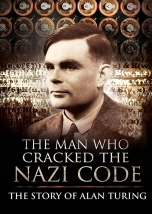
The Man Who Cracked the Nazi Code

       History
One of the main battles of the Second World War took place inside the brain of a mathematician called Alan Turing. During the war, the allies' key objective was to crack the German army's encrypted communications code. Without a doubt, the key player in the game was this interdisciplinary scientist and a long-forgotten hero.
Alan Turing's breakthroughs, his story and tragic destiny, gives us a chance to look at the Second World War from a different angle.
Leaving Neverland

Leaving Neverland

2019  Culture
Rotten

Rotten

2018  Nature
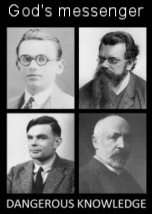
Dangerous knowledge

Dangerous knowledge

2007  Science
The Story of Maths

The Story of Maths

2008  Science
The Truth About

The Truth About

2018  Medicine