Stonehenge was shaped over centuries, but to what purpose? Was it a temple to the sun, or the moon, an astronomical calendar, or a shrine to dead ancestors? Now Stonehenge may be about to give up some of its secrets. For the first time in nearly half a century a new archaeological dig the sacred stone circle. And the men who are leading the excavation are well aware of the significance of this moment. The film exposes an investigation into a radical theory that Stonehenge, far from being a place of burial as is commonly assumed, was in fact a place of healing. The investigation takes in forensic testing of bones excavated over the past decades and hard-won permission for the first dig in 50 years at the Henge, watched live online by millions of viewers around the world. Does the theory of the healing stones bear up to modern-day forensic science?
Using cutting-edge research, a dedicated team of archaeologists has compiled the evidence to fill in a 400-year gap in man's knowledge of the bluestones of Stonehenge. By combining innovative 3D scanning techniques, traditional field archaeology and novel laboratory analysis, the team has discovered where the stones were quarried and where they first stood. Professor Alice Roberts shows how the team made its discoveries and joins Professor Mike Parker Pearson to piece together the final parts of the puzzle, solving one of the toughest challenges ever faced by archaeologists.
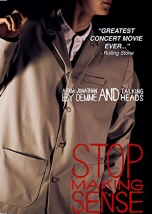
Over the course of three nights at Hollywood's Pantages Theater in December 1983, filmmaker Jonathan Demme joined creative forces with Jordan Cronenweth and Talking Heads... and miracles occurred. Following a staging concept by singer-guitarist David Byrne, this euphoric concert film transcends that all-too-limited genre to become the greatest film of its kind. A guaranteed cure for anyone's blues, it's a celebration of music that never grows old, fueled by the polyrhythmic pop-funk precision that was a Talking Heads trademark, and lit from within by the geeky supernova that is David Byrne. This circus of musical pleasure defies the futility of reductive description; it begs to be experienced, felt in the heart, head, and bones, and held there the way we hold on to cherished memories. On those three nights in December 1983, Talking Heads gave love, life, and joy in generous amounts that years cannot erode, and Demme captured this act of creative goodwill on film with minimalist artistic perfection. Stop Making Sense is an invitation to pleasure that will never wear out its welcome.
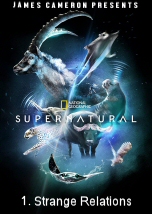
Witness the secret powers of extraordinary animals, experience the world as they do and see the SUPER/NATURAL side of nature as never before. Executive produced by James Cameron and narrated by Benedict Cumberbatch, this series uses the scientific innovations and leading-edge filmmaking technology to reveal the secret powers and super-senses of the world’s extraordinary animals. See flowers in bee-vision to eavesdropping on conversations between elephant seals to soaring the length of a football field with glow-in-the-dark squirrels. They say in nature that only the strongest survive. But when cooperation and communication bring animals and plants together and superpowers combine even the most vulnerable can become unstoppable. If you think you know nature, think again.
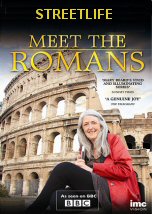
In this programme, Mary descends into the city streets to discover the dirt, crime, sex and slum conditions in the world's first high-rise city. This Rome is not the marble Rome we know, but a vast, messy metropolis with little urban planning, where most Romans lived in high-rise apartment blocks with little space, light, or even sanitation. Forced outdoors into the city streets, she reveals where they went to hang out, get drunk, have sex and get clean. She looks at the Forum as a place of gamblers, dentists and thieves, and she explores the lustiness of Roman bar life and jokes. Finally, exploring law and order from the bottom up, Mary examines how this city really worked. She meets Ancarenus Nothus, an apartment dweller who lived in fear of the rent collector; Notorious Primus, who wrote about his three great pleasures in life - baths, wine and sex; and Unlucky Doris, a seven-year-old girl killed in one of Rome's many fires.
As Chris bulks up for ‘Thor: Love and Thunder’ he needs to build a body that looks right for an immortal god. But, he also wants the kind of muscles that are scientifically proven to help him stay strong and healthy as he grows older in real life. Teaming up with extreme sports guru Ross Edgley, he trains for a grueling 100-foot rope climb challenge, changing him from an ornament into an instrument.












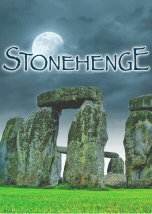






The film exposes an investigation into a radical theory that Stonehenge, far from being a place of burial as is commonly assumed, was in fact a place of healing. The investigation takes in forensic testing of bones excavated over the past decades and hard-won permission for the first dig in 50 years at the Henge, watched live online by millions of viewers around the world. Does the theory of the healing stones bear up to modern-day forensic science?